
Refine by
Sample Temperature Articles & Analysis
226 articles found
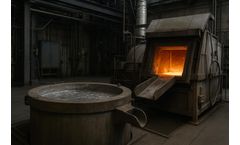
Total batch cycle time: 6-10 hours depending on initial impurity levels and target specifications. Temperature and Atmosphere Control Precise temperature management determines refining effectiveness and process economics. ...
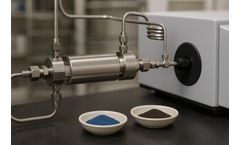
Catalysts prepared by impregnation exhibited a broader operational temperature window, higher apparent turnover frequencies, and superior selectivity toward N2 compared with their ion-exchanged counterparts.The competition between SCR and AMO was shown to be highly sensitive to both temperature and catalyst composition. At low temperatures, SCR ...

Laboratories often encounter variability due to improper sample handling, temperature fluctuations, or delays in processing. Small mistakes in dilution, pipetting, or the use of contaminated glassware and reagents can produce false positives or negatives. ...

Materials often owe their performance to subtle differences between surface sites, yet these variations are not always easy to distinguish experimentally. As temperature changes, molecules bound to a surface respond in ways that reflect how and where they are attached. Temperature programmed desorption uses controlled heating to trigger such responses in a systematic way. When evolved gas ...

Introduction Water and pH sit at the heart of water quality decisions because when potential of hydrogen changes, metals dissolve, pipes corrode, and this is how ecosystems behave. Even when water looks clear, the pH levels can drift with weather, geology, and biological activity. This guide explains what are the optimal levels of safe drinking water parameters, why it matters, and how to ...

System Components Heating system: A graphite heating bath is used to ensure the accuracy, uniformity and stability of the temperature, and to prevent the sample from being damaged by overheating. ...
Moisture content and volatile matter : High moisture content samples (fresh sludge) require an additional evaporation step, otherwise diluting the acid solution will reduce efficiency; oily substances, after being carbonized at high temperatures, cover the sample surface and hinder the reaction. ...

Summary This blog explores how purpose-built cold storage and Gigastorage solutions serve as critical risk mitigation strategies for pharmaceutical, biotechnology, aerospace, and agricultural industries. It highlights the importance of precision-engineered environmental chambers, scientific refrigeration, and scalable infrastructure to help ensure compliance, reliability, and resilience amid ...
Pipeline blockage: Check if the vent valve is open, and use compressed air to back-purge the vacuum pipeline to remove particulate blockage. II. Heating runaway (temperature deviation > ±5?) Characteristics: The actual temperature far exceeds the set value, and the sample boils and splashes out. Solution: Temperature ...
Fully automated microwave digestion systems utilize the properties of microwaves to achieve rapid sample digestion. Microwaves are high-frequency electromagnetic waves that can penetrate samples and cause rapid vibration and rotation of polar molecules, generating a large amount of heat energy. During digestion, the sample is placed in a sealed ...
Ideally, the temperature should be below the solvent boiling point to prevent splashing losses caused by violent boiling, while being above the solvent's natural evaporation temperature to improve efficiency. ...

Unlike traditional sensors that often struggle with unstable readings in humid and variable outdoor conditions, the built-in heater and flow sensor provide constant temperature pretreatment and precise sampling flow control, minimizing the impact of high humidity and particle adhesion. ...
Programmable temperature control: multi-stage temperature rise (e.g., rise from room temperature to 150°C within 30 minutes, maintain for 2 hours, and then rise to 300°C). ...
Microwave digestion is an ideal solution for such complex matrices, using rapid microwave heating in sealed vessels to decompose oil samples under high temperature and pressure. This method ensures fast, low-loss, low-contamination digestion, and, when coupled with ICP-MS, provides accurate and efficient detection of heavy metal residues in edible ...
In modern laboratories, sample pre-treatment is a crucial part of the analytical testing process. ...

In recent years, advances in software integration and automated sample preparation have streamlined the FAME process, minimizing human error and improving throughput for large-scale projects. ...
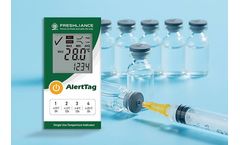
The temperature control of vaccines during transportation and storage is very important. ...

Diffuse reflectance infrared Fourier transform spectroscopy (DRIFTS) is a powerful analytical technique for the study of powdered and rough surface materials. It is widely employed for quality control, materials characterisation and catalytic studies in both research and industrial settings. However, optimal sample preparation and instrument setup are crucial to obtain the most reliable results ...
BySpecac
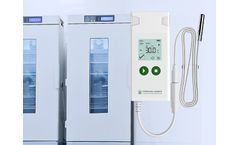
Choosing a high-precision refrigerator low temperature data logger can accurately monitor and record the refrigerator temperature to ensure the effectiveness and safety of experimental samples. ...

The fundamental principle behind MST is thermophoresis—the directed movement of molecules along a microscopic temperature gradient. When a molecule experiences a localized increase in temperature, its movement is affected by changes in its hydration shell, charge, size, and conformation. ...