
Refine by
Sampling Container Articles & Analysis
308 articles found
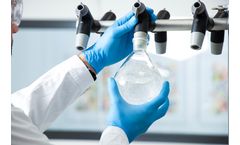
Designed to maximize performance while minimizing eco-footprint, the key features of the LyovaporTM L-210 include: • –55 °C ice condenser with 6 kg capacity — ideal for processing samples containing mainly water. • EcoStreamTM technology — minimizes eco-footprint with natural coolants (GWP of just 3). ...
ByBUCHI
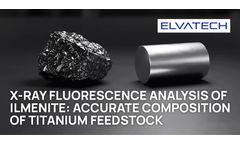
Ilmenite and Its Significance: Where It’s Used and Why Composition Matters Ilmenite is a mineral—the primary source of titanium—occurring as iron–titanium oxide (FeTiO3). It is a raw material for producing titanium dioxide (TiO2), a widely used white pigment, and for metallic titanium. About 95% of all mined titanium feedstock is processed into TiO2 pigment used in paints ...
Fully automated microwave digestion systems utilize the properties of microwaves to achieve rapid sample digestion. Microwaves are high-frequency electromagnetic waves that can penetrate samples and cause rapid vibration and rotation of polar molecules, generating a large amount of heat energy. During digestion, the sample is placed in a sealed ...
Obtaining precise results in X-ray fluorescence (XRF) analysis requires thorough and proper sample preparation. For liquid samples, meticulous preparation ensures high accuracy and reproducibility of measurement outcomes. This article covers essential aspects of liquid sample preparation and handling procedures for XRF ...
Test if the emergency stop button functions properly. 2. Sample container selection Material compatibility: Glass (such as borosilicate glass), polytetrafluoroethylene (PTFE) or quartz containers should be preferred to avoid direct contact between metal containers and graphite plates (which may cause galvanic corrosion). ...
Clean the vents: Remove dust or fiber residue from the cooling fan and ventilation ducts to ensure efficient heat dissipation. Optimize sample loading: Control the sample volume to no more than 1/3 of the digestion tube capacity, and ensure that the container is placed stably. 2. ...

In modern laboratories, efficiency, accuracy, and traceability are non-negotiable. As labs handle increasingly complex workflows and growing sample volumes, manual data entry and paper-based tracking systems are no longer sustainable. One powerful way to improve operational performance is by integrating barcoding technology with a Laboratory Information Management System (LIMS). This integration ...

Our kinetic analyses indicate that while traditional reaction buffers containing 10mM Mg²⁺ are sufficient for plasmid templates, complex genomic DNA samples benefit from supplementation with 0.5-1.0mM Mn²⁺, which enhances the enzyme's processivity on supercoiled substrates. ...
Our kinetic analyses indicate that while traditional reaction buffers containing 10mM Mg²⁺ are sufficient for plasmid templates, complex genomic DNA samples benefit from supplementation with 0.5-1.0mM Mn²⁺, which enhances the enzyme's processivity on supercoiled substrates. ...

Magnetic field separation of beads from samples accelerates purification processes beyond traditional chromatographic methods. ...

Latex Agglutination Assays: The Role of Dyed Polystyrene Particles Latex agglutination is the change in agglutination capacity observed when a sample containing a specific antigen is mixed with antibodies coated on the surface of latex particles. Agglutination can also be reversed by coating latex particles with specific antigens and testing the ...

Sample fusion of non-metal solids is conducted routinely in daily analytical life. This report presents the use of quartz crucibles as an alternative to platinum crucibles for automatic fusion ...

Diffuse reflectance infrared Fourier transform spectroscopy (DRIFTS) is a powerful analytical technique for the study of powdered and rough surface materials. It is widely employed for quality control, materials characterisation and catalytic studies in both research and industrial settings. However, optimal sample preparation and instrument setup are crucial to obtain the most reliable results ...
BySpecac

Liquid particle counters are like silent guardians in industries where fluid purity is critical. From pharmaceuticals to water treatment and semiconductor manufacturing, these devices ensure that tiny, often invisible particles don’t compromise product quality, safety, or efficiency. Let’s break down how they work, where they’re used, and what makes them so ...
Transcription free integration solution for AB Sciex LC MS-MS instruments and the iSoft Telepath system for routine Vitamin D Analysis. The following automation solution was prepared in collaboration with Craig Webster and Rachel Henderson at the Heartlands Hospital in Birmingham and is an example of the type of integration possible between Mass Spectrometry instruments and Clinical LIMSor ...

Traditional RNA sequencing methods typically analyze bulk samples containing thousands to millions of cells, which can obscure the unique characteristics of individual cells. ...
Cost and Throughput: Financial constraints play a significant role in method selection. 16S rRNA sequencing is generally more economical and allows for high-throughput analyses, while metagenome sequencing is more expensive due to the complexity of data generated. Sample Complexity: For samples with a well-defined set of known microorganisms, 16S rRNA sequencing ...
The following list encompasses instruments that are commonly used for environmental analysis: Avance III 400MHz NMR: applied for Component Analysis, Micro-analysis, Surface Analysis, Structure Identification, Performance Analysis, Toy Analysis, Polymer Material Analysis, Spice Analysis, Food Analysis, Environmental Analysis, Mineral Element Analysis, Analysis of Metal Materials Avance III 600MHz ...

Whether it’s choosing the location for a new home or rotating crops that feed an entire country, soil sampling data is used to make important, long-lasting decisions. Recording soil sampling data accurately and properly handling the collected samples can save time, reduce cost and streamline ...

Although intrinsic fluorescence detection is a powerful tool, it has some limitations, such as potential interference from quenchers or signal overlap when the sample contains large amounts of aromatic amino acids. Therefore, intrinsic fluorescence detection is often combined with other analytical methods (such as circular dichroism, X-ray crystallography, or ...