
Refine by
Scaling Control Articles & Analysis
317 articles found
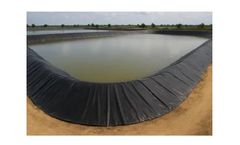
EarthShield's 2026 evaluation focuses on factory-direct, B2B-grade HDPE geomembrane solutions for large-scale anti-seepage projects across three representative sectors: commercial aquaculture, dam seepage control, and mining tailings containment. ...

Through successful projects for internationally recognized tire brands including Pirelli, Michelin, and Zhongce Rubber, CADAIR has developed extensive experience in treating large-volume, low-concentration VOC emissions generated by tire manufacturing processes.This article explores how leading tire manufacturers control VOC emissions and why CADAIR's technologies have become a ...
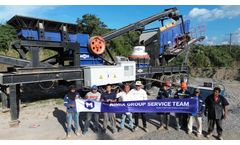
Modernizing an aggregate crusher plant involves more than just meeting local emission standards; it requires a comprehensive strategy that addresses dust control, noise reduction, and resource recycling. As urban centers expand closer to quarry sites, the social pressure to minimize the "industrial footprint" has intensified. ...
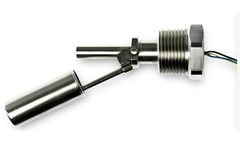
In a wastewater evaporator, it’s easy to focus on the heat source, tank materials, or evaporation rates. But one small component often determines whether the system runs smoothly or experiences costly downtime: the level sensor. By monitoring liquid levels inside the tank, sensors keep the system balanced, prevent overfills, and protect equipment from damage. A level sensor measures how ...

Advantages include stable supply and consistent quality, lower cost than fresh juice, and suitability for large-scale production.Orange Pulp is produced from fresh oranges through peeling, segmenting, dicing, blanching, and pasteurization to achieve standardized pulp particles with a size of 2–6 mm. ...
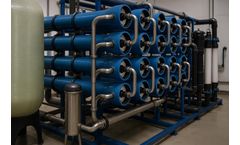
Elevated hardness, alkalinity, or silica levels indicate a risk of scaling, which reduces permeate flow and increases required operating pressure and cleaning frequency. ...
Surface preparation standards include:Abrasive blasting (e.g., to SSPC‑SP10 / SA 2½ standard) to remove mill scale, rust, oils, and contaminants. Solvent cleaning to remove grease and lubricants. ...

The loupes bring the surgical field into clear view, delivering enhanced magnification, clarity, and control where millimeter-scale accuracy matters.Representative cases include:Pediatric tumor removal: magnification allowed sharp delineation of an Adeyole cystic tumor compressing a developing brain, enabling precise dissection and controlled ...
This allows immediate adjustment of dosing and better control of system performance.Real-time pH monitoringConductivity trackingMeasuring the oxidation-reduction potentialRemote dashboard accessAutomated chemical dosingAutomation reduces chemical waste, extends equipment life, and helps avoid unexpected failures via real-time signals. ...
Catalyst deactivation studies are central to maintaining efficiency in industrial chemical processes, including petroleum refining, petrochemical production, syngas and hydrogen manufacture, environmental catalysis for emissions control, and large-scale chemical synthesis such as ammonia and methanol production. ...

Buying a hydroseeder can seem like a daunting prospect, but asking the right questions early on can help save you and your company thousands of dollars, and prevent major headaches down the road. Learn how to find the right fit for your needs with a handy checklist of questions to get you started when it comes to evaluating equipment, capacity, and features, and ...

Fly control failures at scale are rarely caused by a lack of effort or an absence of products. ...
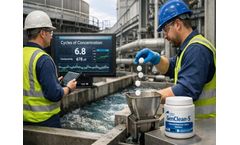
Industrial facilities operating cooling towers face a persistent challenge: balancing water conservation with system reliability. The answer lies in maximizing cycles of concentration (COC), but achieving this without compromising equipment integrity requires sophisticated chemistry and monitoring protocols. Genclean-S tablet technology represents a breakthrough approach that enables facilities ...
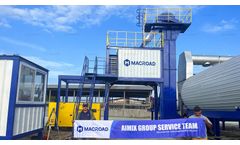
This approach often led to inconsistencies and inefficiencies.With intelligent data systems, every stage of asphalt production—from aggregate feeding to bitumen mixing and temperature control—is now monitored in real time. The control system collects data on energy consumption, material use, and environmental performance. ...

The exponential growth of artificial intelligence, cloud computing, and edge computing infrastructure has pushed data center cooling systems to their operational limits. As facilities scale to meet unprecedented thermal loads, the traditional approach to data center cooling water treatment faces mounting challenges. These include persistent biofouling, Legionella contamination ...

Even with challenges, the process stands to reap rewards in terms of energy savings and lower chemical use Nitrogen removal is one of the most energy-intensive and chemically demanding parts of wastewater treatment. As utilities and industries look for ways to meet ever-tighter nutrient limits with smaller carbon footprints, shortcut nitrogen removal has emerged as a compelling option. The ...
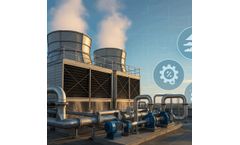
Cooling towers represent one of the most critical—and water-intensive—components across commercial and industrial operations, consuming up to 3% of total freshwater usage globally. For sustainability directors managing facilities ranging from power generation, general manufacturing plants to commercial office complexes, data centers, and healthcare facilities, the challenge extends ...
The commercial/industrial cooling tower landscape has evolved dramatically over recent years, yet many water and wastewater treatment professionals are still applying yesterday’s solutions to today’s complex operational challenges. With stricter environmental regulations, rising water costs, and increasing demand for operational efficiency, cooling tower management requires a more ...
Dust management is a critical concern across construction, mining, industrial, and agricultural operations. While the terms "dust suppression" and "dust control" are often used interchangeably when considering controlling dust on worksites, it's important to understand why they are distinct in their ...
Cooling systems are critical for large plants, power stations, and refineries for improving operational efficiency. They control temperature, improve processes, and protect efficiency. However, these systems can harbor dangerous bacteria, the most concerning being Legionella. Legionella is more than just another waterborne microorganism. It is the bacterium that causes Legionnaires’ ...