
Refine by
Scr Catalyst Articles & Analysis
22 articles found
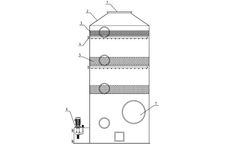
Nitrogen Oxides (NOx) Reduction: Nitrogen oxides are a group of pollutants that contribute to smog and respiratory issues. Selective catalytic reduction (SCR) and selective non-catalytic reduction (SNCR) are two common methods to reduce NOx emissions. SCR uses a catalyst and ammonia or urea to convert NOx into nitrogen and water, while SNCR ...
The chief objective of which is to reduce NOx gases, hydrocarbon gases, and particulate matter (PM) released from the exhaust of diesel engines.From the first emission standard, Euro I, to the current iteration, Euro VI, engine design changes have seen NOx levels and PM levels reduced by 95% and 97% respectively.The introduction in engines of Selective Catalytic Reduction (SCR) ...
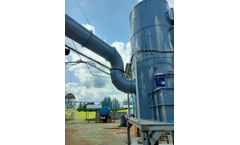
Thermal oxidizers are commonly used to remove VOCs and other organic compounds from air streams. 5. Selective Catalytic Reduction (SCR) System: Selective catalytic reduction (SCR) uses a catalyst to convert nitrogen oxides (NOx) into nitrogen and water vapor. SCR systems typically use ammonia or urea as a reducing agent that ...

Passive NOx Adsorbers (PNA) are a novel technology designed to reduce NOx emissions during the Diesel engine cold start period by adsorbing them at low temperature and thermally desorbing them once the downstream SCR catalyst becomes active. Despite the growing industrial interest in this technology, the mechanisms behind the NOx adsorption and the effects of the ...
For our compact CHP units with turbo engines we offer an emissions reduction solution with SCR catalyst fully integrated into the CHP unit’s sound absorbing case. ...

Learn more information about Tri-Mer&rsquos;s hot gas filtration. The micronized catalyst offers a larger surface area for reaction than conventional SCR, with virtually no diffusion restriction. The catalyst particles are micro-porous, and due to their small size, they catalyze the gas phase reactions without diffusion and ...
Tri-Mer’s integrated glass furnace emissions system is less costly than ESP ducted to a stand-alone SCR. UltraCat Catalyst Filter projects have been awarded primarily on initial price and operating cost, with superior performance an important added benefit. ...
Catalyst filters feature the same fibrous construction as the standard version, but have nanobits of catalyst embedded throughout the filter walls. Distribution across the entire wall thickness, as opposed to just a catalyst layer, creates a very large catalytic surface area. The walls that contain the catalyst are about 3/4 ...
Learn more information about Tri-Mer&rsquos;s hot gas filtration. The micronized catalyst offers a larger surface area for reaction than conventional SCR, with virtually no diffusion restriction. The catalyst particles are micro-porous, and due to their small size, they catalyze the gas phase reactions without diffusion and restriction ...
Dust filters remove the particles, scrubbers are used above all to reduce corrosive substances, and ammonia injection with or without catalysts (SCR or SNCR) is used to reduce emissions of nitrogen oxides.To monitor and control the scrubbing process, concentrations of SO2, HCl and/or HF are often measured to provide signals to the injection of the scrubbing ...
ByOPSIS AB
Catalyst filters feature the same fibrous construction as the standard version, but have nanobits of catalyst embedded throughout the filter walls. Distribution across the entire wall thickness, as opposed to just a catalyst layer, creates a very large catalytic surface area. The walls that contain the catalyst are about 3/4 ...

That’s what we’re doing in Southern California with our selective catalyst reduction (SCR) and gas turbine silencer technology that is being applied to an 80-year old natural gas turbine plant. ...

Abstract The catalytic performance of various transition metal (M = Cu, Mn, and Ni) cobaltites prepared by nanocasting method were investigated for the selective catalytic reduction (SCR) of NO under lean burn conditions. KIT-6 was used as a hard template in the nanocasting method for preparation of catalysts. ...

The denitration processes for removal of NOx are classified into two groups: in one, NOx is absorbed by means of solutions, and in the other NOx is reduced to N2 by means of a reducing gas under the presence of a catalyst. Selective catalytic reduction (SCR) is a chemical process that changes the oxides of nitrogen into N2 and H2O. The reactions take place at a ...
Stringent mercury regulations have resulted in the following choices: Activated carbon injection ahead of the existing precipitator Activated carbon injection ahead of a new fabric filter Non-carbon sorbents Halogen addition to the fuel and capture of oxidized mercury in the scrubber SCR catalyst with higher conversion rate of elemental mercury to the ...

LGD F200 applications NH3 Slip in SCR process control The hot wet ammonia slip measurement in a high water background in the exhaust gas of combustion process with Selective Catalytic Reduction (SCR) technology as used on automotive test beds and fossil fired power plants. In power plants, the ammonia slip is measured downstream the SCR ...

MHI has developed and demonstrated an effective Mercury Removal System that is integrated with the SCR and FGD. This technology uses the injection of ammonium chloride (NH4Cl) into the ductwork, upstream of the SCR catalyst and provides NOx control and improved oxidation of elemental mercury. ...

The boiler is equipped with low NOx burner technology, flue gas recirculation, and Selective Catalytic Reduction (SCR) technology for the reduction of NOx emissions when burning natural gas. The SCR system uses a vanadium/titanium catalyst with anhydrous ammonia as the reductant. ...
The effects of a zeolite urea-selective catalytic reduction (SCR) aftertreatment system on a comprehensive spectrum of chemical species from diesel engine emissions were investigated in this study. ...

The selective catalytic reduction of nitric oxide with hydrocarbons in an oxygen-containing simulated flue gas has been investigated for a series of copper oxide and cerium oxide alumina supported catalysts at 600–775 K. The activity of these catalysts for the reduction of NO by methane or propane has been investigated in simulated flue gas. The effects of ...