
Refine by
Scrubber Control Articles & Analysis
66 articles found
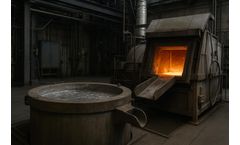
Benefits include improved process consistency, safety, and labor cost reductions. Emission Control Integration Emission streams from lead refining require integrated control. Key targets include: Particulate emissions: lead fume and dust; controlled by ventilation with baghouse filtration to SO2: generated during antimony sulfide refining at ...
Problem Improving combustion and pollution control at Engelhard’s metal recovery incineration plant. ...
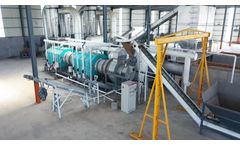
Pyrolysis, being the most common method, involves heating organic materials in an oxygen-limited environment, requiring a precisely controlled system to achieve optimal temperatures and residence times. Equipment designed for pyrolysis typically includes more sophisticated systems for heat management and emissions control. ...

Condensers: Used to cool down and condense the gases into liquid products. Scrubbers: Remove impurities from the syngas. Control Systems: Monitor and regulate the process parameters. ...
To address this challenge, advanced emission control systems, including scrubbers and catalytic converters, can be integrated into the machinery to capture and neutralize pollutants effectively. ...
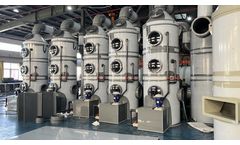
“NOx scrubber” refers to an air pollution control device used to reduce or eliminate nitrogen oxide (NOx) emissions from industrial processes, power plants, and other sources. ...
The choice depends on factors like energy efficiency and heating uniformity. Emission Control: Compliance with environmental regulations is non-negotiable. Ensure that your chosen plant has robust emission control systems, including scrubbers and filters, to minimize environmental impact. ...
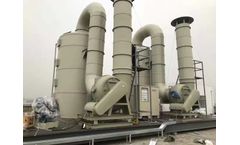
Various combinations of technologies and equipment can be used to achieve effective flue gas treatment and meet environmental standards. The role of wet scrubbers in flue gas treatment processes The role of the wet scrubber (Wet Scrubber) in the flue gas treatment process is mainly to remove particulate matter and gaseous pollutants in the flue ...
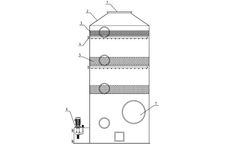
Industrial Processes: Various industrial processes, such as those in the chemical, pulp and paper, and metal smelting industries, may generate flue gases containing sulfur dioxide or other pollutants. Flue gas scrubbers can be employed to control emissions and comply with regulatory standards. ...
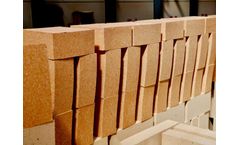
Dust ControlImplementing effective dust control measures is crucial to prevent particulate matter from escaping into the air. ...
The integration of efficient emission control systems, such as scrubbers and catalytic converters, ensures that harmful byproducts are minimized. ...
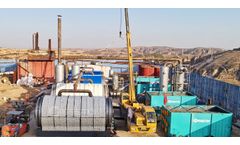
Furthermore, integration of emission control systems, such as scrubbers or filters, ensures compliance with environmental regulations and minimizes the release of pollutants into the atmosphere. ...
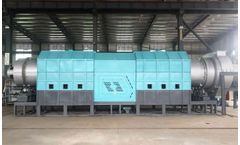
Equipment that integrates emission control systems, such as scrubbers or filters, to minimize air pollutants may come at a higher price. ...
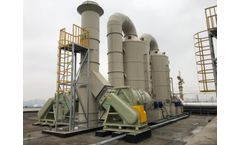
Introduction A vertical fume scrubber, also known as a vertical scrubber tower or vertical wet scrubber, is a highly efficient air pollution control device utilized in industrial settings. ...
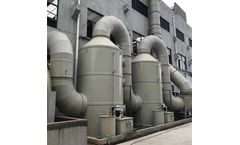
What Is The Scrubber System In A Chemical Plant? The scrubber system, also known as a gas scrubber or AIR POLLUTION CONTROL DEVICE, is a specialized apparatus used in chemical plants to eliminate harmful pollutants and unwanted substances from industrial exhaust gases. ...
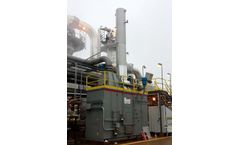
Lowering the oxidation temperature to between 350°F (177°C) and 850°F (454°C) offers many benefits: Decreased fuel usage Lower cost of construction materials Reduced thermal cycling Fewer Greenhouse Gas (GHGs) emissions; Carbon Monoxide (CO), Nitrogen Oxide (NOx) Smaller equipment footprint Benefits of Anguil’s CATOX Capable of 99.9% destruction efficiency ...
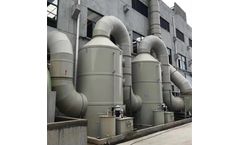
In addition to their effectiveness, wet scrubbers have several other advantages over other air pollution control technologies. ...
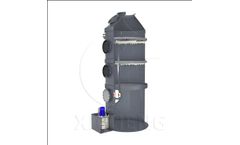
The most effective method of waste-to-energy (WTE) flue gas treatment: Wet scrubbers are a type of air pollution control equipment that are used to remove particles and gases from industrial exhaust gases before they are released into the atmosphere. Here's how wet scrubbers work: Gas enters the scrubber: The exhaust gas enters ...
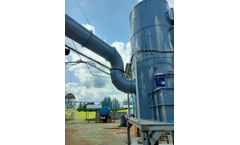
Several types of equipment are used to treat factory exhaust, depending on the specific pollutants that need to be removed. 5 common types of fee processing equipment 1. Wet scrubber: wet scrubber is a type of air pollution control device that uses a liquid (usually water) to remove pollutants from a gas stream. The gas stream is forced through ...
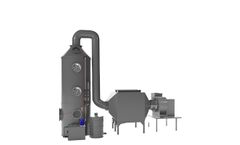
Internal structure and workflow: 1. The chlorine gas scrubber can ensure that the leaked chlorine gas is absorbed in time and treated harmlessly. ...