
Sediment Analyzer Articles & Analysis
22 articles found

Bailey's Creek Pilot Study In 2009, the first commercially-produced SediMite pellets were applied to a small test plot of PCB-impacted sediments of Bailey's Creek, a brackish intertidal salt marsh system. Pre- and post-application samples were analyzed for sediment contaminant concentration, carbon content, benthic community, and bioavailable ...

AUC uses centrifugal force and centrifugation time to analyze the sedimentation behavior of molecules in the solution, which can provide important information about the structure, interactions, and purity of the drug. ...

AUC uses centrifugal force and centrifugal time to analyze the sedimentation behavior of molecules in solution, providing important information about protein structure, interactions, and purity. ...

Objectives include: a) Train community members in environmental monitoring and observing natural events and pollution discharges to the Sonora River; b) Characterize water and sediment quality at community-discussed locations of concern; c) Identify pollution sources (existing and historic mines, sewage, etc.); d) Establish a dialogue with the Cananea Mine to improve mining ...
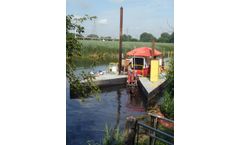
Sitelab Corporation was hired by an environmental contractor to analyze 100 sediment samples collected from a post-dredge area covering a 1 mile stretch of river in Hammond, Indiana. ...

He stopped, took a water sample and measured the water level. He then analyzed the sediment concentration and made a quantitative estimation of soil loss through river runoff. ...

PAHs are major drivers of risk at many urban/industrialized sediment sites. The USEPA currently recommends using measurements of 18 parent + 16 groups of alkylated PAHs (PAH‐34) to assess the potential for sediment‐bound PAHs to impact benthic organisms at these sites. ASTM Method D7363‐13 was developed to directly measure low‐level sediment pore water PAH concentrations. These concentrations ...

Organochlorine pesticides (OCPs) are characterized by ubiquity, bioaccumulation and persistence in the environment and are of worldwide concern. Sixteen surface sediment samples were analyzed for hexachlorocyclohexanes (HCHs) and dichlorodiphenyltrichloroethanes (DDTs) to provide information on the levels, distribution and sources of these compounds after ...
Inputs of P are the sum of the external P load from the hydrological basin, the IPL, and P in atmospheric precipitation; outputs of P are the sum of sedimented P, and the removal of P in water and biomass, and the resulting IPL‐MB, is 26.4 ± 4.9 t/yr. Additionally P concentrations in sediment cores (SC) are analyzed, and the historical release of ...
After the release, water, fish and sediment samples were collected and analyzed for perfluoroalkyl sulfonates (PFSA). ...
Whole frog tissue, water, and sediment were analyzed for more than 90 current‐use pesticides and pesticide degradates using gas chromatography–mass spectrometry. ...
Sediments along the river Saale, one of the main tributaries of the river Elbe, were characterized with the yeast estrogen screen to elucidate possible sources of endocrine‐disrupting compounds that might contribute to the downstream contamination of the river Elbe. At two sampling sites, elevated levels of estrogenic activity up to 55,000 ng ethinylestradiol equivalents per ...
To investigate the occurrence and bioaccumulation of organic contaminants of emerging concern (CECs) near four major wastewater ocean outfalls in the southern California Bight, more than 75 pharmaceutical and personal care products, current‐use pesticides, and industrial/commercial chemicals were analyzed in sediment and liver tissues of hornyhead turbot ...
Thus far, there is little knowledge about the historical pollution of the environment by pharmaceuticals. In the present study, sediment columns from three lake sites adjacent to wastewater treatment plants were collected, further divided in 2‐ or 2.5‐cm slices, and analyzed for 15 pharmaceuticals by liquid chromatography‐tandem mass spectrometry. In addition, ...
The Washington State Department of Ecology annually conducts sediment quality monitoring in Puget Sound as a component of the Puget Sound Ecosystem Monitoring Program. Sediment samples are analyzed to determine the concentrations of about 170 chemical and physical variables. A Sediment Chemistry Index (SCI) was derived using the ...

The grazing study consists of six watersheds in the Central Mississippi Valley wooded slopes and the row crop study site consists of three watersheds in a paired watershed design in Central Claypan areas. Runoff water samples were analyzed for sediment, total nitrogen (TN), and total phosphorus (TP) for the 2004 to 2008 period. ...

Experiments were conducted to determine the accuracy and precision of Sulfur measurements in soils and sediments using the handheld Niton XRF analyzer. Site sampling Assistant Professor Michael Berger and student Ling Zou of Simmons College sampled the area collecting soil and sediment from various locations to establish a baseline of materials ...
Simulated rainfall (76 mm h–1) was applied to 3-m2 sections of larger field plots with 2 to 7% slope, usually within 2 d of application, to collect runoff during 30 min. Runoff was analyzed for concentrations of sediment, dissolved reactive P (DRPC), bioavailable P (BAPC), and total P (TPRC). ...
Here, for the first time, 8 yr of continuous near-surface hydrologic-response and sediment-transport data are analyzed to show trends in the catchment's long-term behavior. The datasets include precipitation, temperature, solar radiation, soil-water content, infiltration, water discharge, and sediment discharge. Potential and actual ...
Sorption of commonly used herbicides by wetland sediment can provide important information for herbicide fate modeling. ...