
Refine by
Sediment Filtration Articles & Analysis
110 articles found

Aside from that, the standard components of a typical wastewater treatment system include some kind of filtration, clarifier, chemical feed, and control panel, among others. The components may vary depending on the process and the needs of a plant, and a few additional features and technologies can be added when a plant requires some form of customization for their water ...

Project Overview Ongoing construction on this Georgia project location, resulted in temporary, but erosive soil exposure. In many areas, the water concentrates and becomes a drainage area forthe larger construction site during storm events. As fall set in, and construction continued, sediment control solutions were needed to help mitigate sediment migration from the project site onto neighboring ...

Quantum Disinfection™ (QD) is a revolutionary technology that utilizes principles from quantum mechanics to achieve unparalleled disinfection capabilities. This innovative approach harnesses the movement of electrons to create catalytic active surfaces that can instantly disintegrate any microorganism upon ...

Water traveling from municipal sources to a building’s taps undergoes a complex journey influenced by everything from the quality of the source water to the building’s internal distribution network. Even water that meets national safety standards can encounter challenges as it passes through aging pipes, is affected by shifting climates, and interacts with building infrastructure. ...
Water systems are critical to healthcare operations, but they also present significant challenges that affect energy use, infrastructure, and equipment performance. Issues like sediment buildup, biofilm formation, and poor system balance can drive up costs, waste energy, and compromise long-term sustainability. By addressing these challenges proactively, hospitals can improve efficiency, reduce ...
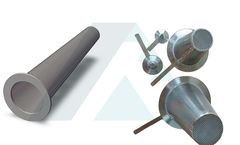
Basket Strainers Basket strainers provide a larger filtration area compared to other designs, making them suitable for systems with higher debris loads. 3. ...

Coolant is also frequently described as cooling lubricant or cutting fluid. Many manufacturing companies rely on coolant in their manufacturing processes. These coolants decrease the heat generated by friction in machining processes and also act as a lubricant between the workpiece and the tool. ...

Stormwater runoff enters through a kerb inlet that removes litter, into a filtration pit that removes sediments, then filters through the planting bed to a collection pipe and to an underground store for irrigating planting beds during dry ...
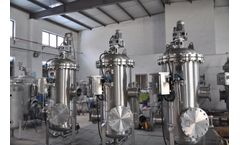
YUBO's Approach to Wastewater Treatment YUBO offers a tailored approach to mining wastewater treatment, focusing on: Consultation and Design: Understanding client needs and site-specific challenges to design customized filtration solutions. Advanced Filtration Technologies: Utilizing state-of-the-art filtration systems including self-cleaning ...
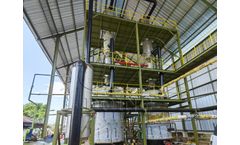
Waste oil recycling and regeneration to diesel means removing the impurities in the waste oil by sedimentation, distillation, catalyst refining, filtration and other methods. The specific waste oil to diesel refinery process is as follows: 1. Sediment the waste oil so that the impurities fall and separate. The sedimentation ...
As an infection preventionist, ensuring patient safety is a top priority. Access to clean and safe drinking water is crucial throughout patient care, making plumbing a critical component in maintaining a safe healthcare environment. In this blog, we will discuss the importance of plumbing in infection prevention, plumbing equipment associated with increased infection risk, and strategies to ...
What is corrosion? Corrosion is the degradation or deterioration of a material caused by a reaction to its environment. In building plumbing systems, corrosion can occur in our piping systems and water-bearing equipment due to reactions, chemicals, and impurities in the water. These processes result in uniform corrosion, pitting, cracking, or erosion, ultimately causing the breakdown and ...
Biofilms, intricate communities of microorganisms including bacteria, fungi, and other microscopic entities, thrive on surfaces through a remarkable process of collaboration and self-protection. Encased within a self-produced, slime-like matrix, these microorganisms firmly anchor themselves to a variety of surfaces, from the moist lining of a water pipe to the hard enamel of our teeth. While ...

The first step is accurately gauging the total effluent volume and flow rate with a survey to size the treatment capacity properly. In parallel, estimate if your production processes or volumes could expand, meaning greater effluent generation. The treatment selected must have adequate capacity. Quantifying both the current flow requirements and potential increases lets us identify and design ...
LiquiTech worked with the hospital to implement a solution that included the installation of a LiquiTech® Copper-Silver Ionization System and a LiquiTech® Sediment Filtration System, hot water system improvements, and ongoing LiquiTech services, including proactive maintenance, monitoring, and water quality testing. ...
Partnering with LiquiTech, the university implemented an innovative solution to install a LiquiTech® Sediment Filtration System on the cold water supply. By preventing sediment from entering the building, the cold water system quickly returned to non-detect Legionella levels. The combined power of copper-silver ionization for the hot water ...
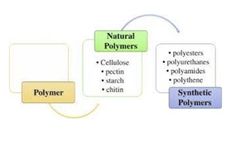
Divalent cations often act as bridges between negatively charged surfaces, which promote agglomeration into larger flocs easily separated using sedimentation, clarification or filtration methods. Selecting an appropriate weak electrolyte polymer requires careful consideration since it must effectively treat the water while meeting environmental standards when ...

These aggregates, known as flocs, settle more easily and can be removed through sedimentation or filtration. Sedimentation Sedimentation is a physical water treatment process where water is allowed to sit undisturbed, allowing suspended particles to settle at the bottom. The clarified water is then carefully decanted or drawn ...

Water treatment plants: The open channel measuring principle is used to measure the flow of water in various stages of water treatment, such as sedimentation, filtration, and disinfection. 2. Irrigation systems: The open channel measuring principle is used to measure the flow of water in irrigation canals and channels to ensure that crops receive the right amount ...
This pre-treatment process usually involves sedimentation, filtration, and chemical treatment to remove any residual contaminants. ...