
Refine by
Sediment Turbidity Articles & Analysis
46 articles found
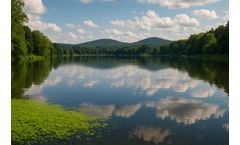
Temperature profile: Defines thermocline depth and mixing potential; a shallow thermocline signals reduced mixing and rising bloom risk, especially during autumn turnover. Turbidity: Indicates sediment resuspension and light availability; storm events can reset bloom dynamics by redistributing nutrients within 24–48 hours. ...

When the time came for a new water line through Denver Water (Colorado) to be installed, a sediment control perimeter device was needed to protect the limits of disturbance from sediment intrusion. Bowman Construction Supply out of Denver, CO worked with their contractor Powell Restoration to submit approximately 4,000 LF of WattleFence for approval in lieu of traditional silt fence and standard ...

In general, a basic cooling tower water treatment system typically includes some types of: ✭ clarification ✭ filtration and/or ultrafiltration ✭ ion exchange/softening ✭ chemical feed ✭ automated monitoring Filtration and Ultrafiltration The Filtration and Ultrafiltration are the most crucial steps in the water treatment process, both of which help remove suspended particles from the water. ...

Regulatory bodies set specific turbidity limits to ensure that water bodies can support diverse ecosystems without suffering from excessive sedimentation. ...
This, in turn, disrupts the entire aquatic food chain. Sediment Transport: Turbidity plays a role in sediment transport within water bodies. Excess sediment stirred up by human activities can lead to increased turbidity, negatively impacting aquatic habitats and water quality. ...
Turbidity Meter Working Principle Turbidity meters operate on the principle of light scattering. ...
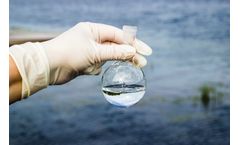
People get confused because TSS and turbidity are related to each other One reason for the confusion is that TSS and turbidity are different but related. TSS are actual physical particles in the water (like sediment), and turbidity is the effect on light caused by those particles (and anything else that affects light). ...
ByPhathom

Filtration is a process that removes sediment, organic material, and turbidity from water. Softening, on the other hand, removes hardness from water, which can cause scale buildup in equipment. ...
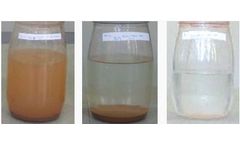
What is Sustainable Flocculation? In most standard drinking water and wastewater treatment systems, there is a flocculation process that is used to reduce the concentrations of solids within the effluent stream. This particular process makes use of substances that aid in the clumping together of suspended particles among other contaminants in a clarifier system. Sustainable flocculation ...

In addition, the use of Polyacrylamide also helps to reduce sediment and turbidity generated during water treatment, thereby reducing wastewater discharge and further easing environmental pressures.Economy And Energy Saving: The Cost-Effectiveness Of Polyacrylamide In Water Treatment The economic advantages of Polyacrylamide are also one of the reasons for its ...

The Netherlands Description: Sediment is being removed from a navigation channel and placed in IJmeer to create new land for the city of Amsterdam. ...
Description: Contaminated sediments must be removed and a new basin dredged for a terminal for LNG Canada. Nearby eelgrass beds should be protected from sedimentation caused by sediment spill from the dredging works, especially if those sediments are contaminated. Three SediMeter SM4 are deployed in the nearby eelgrass beds to ...

Dry conditions have a hand in the genesis of wildfires, and the fires in turn compromise the availability of freshwater resources Close on the heels of the great Australian wildfires earlier this year, 2020’s cataclysmic fire season in the western United States has shattered records. Both the duration of fire seasons and the number of major wildfires have been increasing over recent ...

As water flows through the pipe, chitosan lactate dissolves in the water and coagulates sediment particles. The dissolution rate will depend on the various conditions, resulting in inconsistent and often unpredictable dose rates. ...

The finished system was installed by our local partner and consisted of a bag filtration unit to deal with any sediment or turbidity and three UV light disinfection units in parallel to kill the bacteria. ...
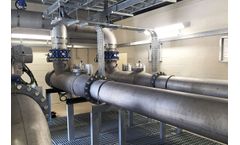
The finished system was installed by our local partner and consisted of a bag filtration unit to deal with any sediment or turbidity and three UV light disinfection units in parallel to kill the bacteria. ...

More intense fires can severely damage watersheds by killing ground vegetation, altering hydrology, and changing soil structure, dynamics, and erosion. High turbidity from sediment entering a stream can bring an excess of nutrients, metals, and other toxins sequestered in the affected soil and vegetation. ...

The selection of the test species and the design of the bioassay depends on the origin and the characteristics of the sample. Soil or sediment samples, coloured or turbid samples of surface and wastewaters, or totally transparent samples from deep-well monitoring systems, all require different approaches. ...
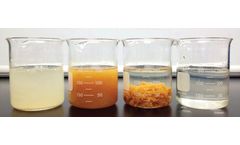
The larger these clumps become, the faster they will fall out of suspension in the sedimentation/clarification stage.In this case, ZeoTurb acts as a flocculant media. ...
In most standard water treatment systems, there is a flocculation process that is used to reduce the concentrations of solids within the effluent stream. This particular process makes use of substances that aid in the clumping together of suspended particles. There are several different substances that have been used for decades, but research continues looking for more. Ideally, newer flocculants ...