
Refine by
Seed Coating Articles & Analysis
24 articles found

Dr. Zobayed has over 25 years of expertise in the tissue culture industry and he's the mastermind behind Segra Internationals plantlet production efforts in Canada. Today he'll be going through the overall process of tissue culture initiation, multiplication and acclimation of tissue culture cannabis plantlets. He'll also review the various methods of tissue culture production including explant ...

Anthocyanin is one of the important pigments that determine the color of flowers, fruits and seed coats of angiosperms. It is found in the vesicles of plant epidermal cells and appears orange, red to blue. ...
B. amyloliquefaciens and Microbacterium oleovorans isolates were shown to effectively reduce F. verticillioides propagules and fumonisin content in maize kernels at harvest when applied as seed coatings. Several bacterial and fungal strains belonging to Streptococcus, Bifidobacterium, Lactobacillus, Butyribrio, Phenylobacterium, Pleurotus, SacActivated ...

Enzymes like amylase, protease, and lipase are used to promote seed germination, root growth, and nutrient uptake. Enzymes for Soil Fertility: Soil enzymes play an essential role in maintaining soil health and fertility. ...
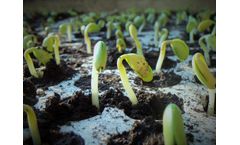
Advantages of heating mats in seed germination Germinator and heated seedbed. Is seed germination uneven and inconstant? ...

Perlite: The Versatile Mineral You know those little white rocks you see in soil and potting mixtures? That’s perlite! As a growing medium, its benefits include improved aeration, water retention and drainage, but perlite’s uses go far beyond gardening. This non-decaying additive is used to aerate any medium with which it is mixed—and this includes cement, loose-fill ...
To address these limitations, an islet transplantation approach using an acellular vascular graft as a vascular scaffold has been developed, termed the BioVascular Pancreas (BVP). To create the BVP, islets are seeded as an outer coating on the surface of an acellular vascular graft, using fibrin as a hydrogel carrier. ...
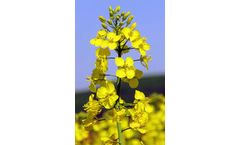
Seed coat plays an important role in many biological processes, such as nutrient transport, controlling seed size and resisting biotic and abiotic stresses. Seed coat contains many secondary metabolites such as pigment, lignin, and fiber, and the synthesis of these secondary metabolites is inseparable from the ...

The research showed that endophytes, bacteria or fungi, that can live inside plants that were taken from poplar trees can be inoculated into crop soil or seed coatings to perform the same function. The endophytes are natural components of poplar trees, not a lab genetic mutation or designed microbe! ...

The work grew out of Marelli's previous research on using silk coatings as a way to extend the shelf life of seeds used as food crops. ...

Additionally, CELLvo™ HC-A and competitor cells were seeded on StemBioSys’ CELLvo™ CD Matrix and TCP for one passage. ...

It has good granulation effect on wood chips, rice husk, cotton stalk, cotton seed coat, weeds and other raw materials. Roatry dryer After granulation, the moisture and strength of the material are not up to the standard, so it must be dried. ...
In organic farming, a simple cover crop of nitrogen-fixing legumes is planted and grown for around three months before the main crop goes in. Seed inoculants are simply a powdery form of Rhizobia. Seeds are dampened and then coated with this powder prior to planting. This introduces an abundant population of nitrogen-fixing Rhizobia into the ...

Based on this analysis, Petitioners argue that each coated seed product is in fact a separate unregistered pesticide that has not been properly evaluated under FIFRA. ...

The authors studied the effects of thiram, a fungicide used for seed coating with known effects as endocrine disruptor. Red‐legged partridges (Alectoris rufa) (n=16 pairs/treatment group) were feeding wheat treated with 0%, 20% or 100% of the thiram application rate used in autumn (25 days) and late winter (10 days) mimicking cereal sowing periods. ...
A site‐specific ecological risk assessment (ERA) was conducted to examine the simultaneous use of genetically modified corn (Bt corn) with a neonicotinoid seed coating, clothianidin, and use of a granular insecticide, tefluthrin, to protect crops from pest damage. ...
The present study investigated the fate and toxicity of clothianidin applied every other year as a corn seed‐coating at two different rates, i.e., 0.25 and 0.50 mg/seed, in an agricultural field undergoing a corn‐soybean annual rotation, and conservation tillage. ...

An experiment in Spain found that when captive partridges consumed neonic-coated seeds, they had fewer chicks and suppressed immunity. And one analysis concluded that birds might be poisoned if they eat just one or two seeds. ...
ByEnsia

To study the effect of the particle size in the seed layer on the growth and resultant photoconversion efficiency, we prepared various seeded FTO substrates by repeating the seed layer sol-gel coating process. It was found that changing the number of coating process merely increases the particle size of the ZnO ...
Dry bean market classes differed for cancer multiplicity (white kidney vs. navy, 1.05 vs. 1.87 tumors per animal, P = 0.004), but anticancer activity was not associated with ORAC, phenolic or flavonoid content, seed coat color, or nutrient content. Dry bean market classes from the Andean center of domestication (COD) reduced cancer multiplicity more than those ...