
Refine by
Seedling Root Articles & Analysis
19 articles found

The root system of plug seedlings and the root clusters formed by the matrix network is very firm. Regardless of manual or mechanical transplantation, root clusters are not easy to spread and be injured. After transplanting, the embolized seedlings can grow quickly without delaying the growth of traditional ...
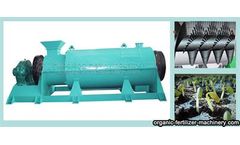
The organic fertilizer granulator adopts the microbial fermentation technology to make the manure of livestock and poultry, urban garbage, etc. into deodorized and sterile organic fertilizer with high fertilizer efficiency and without burning roots and seedlings, which is used in the grain field, fruits, vegetables and flowers, and is suitable for the technical ...
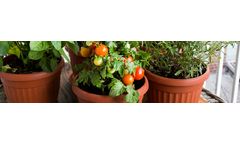
If you are just starting out, buy an advanced seedling in a small pot, but steer away from seeds or small seedlings. ...

What’s worse, without proper disposal, sheep manure would generate heat to consume oxygen in soil and burn seedlings and root, causing serious damages to crops production. Therefore, composting sheep manure fertilizer is an effective animal manure management tool that reduces volume, kills pathogens and weed seeds, and also improves soil health and ...

We think these observations will be useful since we are starting to use on our property seeds from other locations on the island, in an effort to increase the Koa and Ohi’a specimen diversity. After using the CI-600 Root Imager for the last four months we are learning that we may increase our planting survival rate by placing seeds directly in previously prepared planting ...

Here, mixture effects of zinc (Zn), cadmium (Cd) and copper (Cu) on barley (Hordeum vulgare L.) root elongation were analysed using oxidative stress parameters. The hypothesis was that toxic mixture effects on plant growth are better explained by biochemical parameters than by exposure information, because the former excludes interactions among metals for root ...
To develop a quantitative risk assessment model for predicting the potential impact of halloysite nanotubes supported palladium nanoparticles (HNT‐PdNPs) on plant life, we investigated their effect on seed germination, seedling development and mitotic division on root tip cells of two lots of Raphanus sativus L. with different vigour. The results evidenced that ...
Previous studies found a significant effect of BPA on levels of mineral nutrients in plant roots, but the underlying mechanism remains unknown. To determine how BPA influences root mineral nutrients, the effects of BPA (1.5, 3.0, 6.0, 12.0, 24.0, 48.0 and 96.0 mg L−1) on activities of critical respiratory enzymes (hexokinase, phosphofructokinase, pyruvate kinase, ...
Here, the effects of BPA on the antioxidant system [superoxide dismutase (SOD), peroxidase (POD), catalase (CAT), ascorbic acid (AsA), proline, reduced glutathione (GSH)], reactive oxygen species [ROS, hydrogen peroxide (H2O2), superoxide anion (O2—)] accumulation and membrane lipid peroxidation [malondialdehyde (MDA), cell membrane permeability] in soybean seedling ...
In the present work, the effects of BPA on the biomass (fresh and dry weight), absorptive function (activity and absorptive area), and mineral element levels in soybean (Glycine max L.) seedling roots treated with 1.5 mg L‐1, 3.0 mg L‐1, 6.0 mg L‐1, 12.0 mg L‐1, 24.0 mg L‐1, 48.0 mg L‐1, and 96.0 mg L‐1 BPA were investigated. Treatment with 1.5 mg L‐1 BPA ...
Here, the effects of combined BPA and Cd pollution on soybean seedling roots were evaluated in pot experiments. The combined treatment with BPA and Cd at the low concentrations (1.5 mg/kg BPA and 0.2 mg/kg Cd) improved soybean seedling root growth. However, the other combined BPA and Cd treatments, including the combined ...
In the present study, the effects of BPA on the growth and nitrogen nutrition of roots of soybean seedlings were investigated by using a root automatic scan apparatus and biochemical methods. It was found that when soybean seedlings were treated with 1.5 mg/L BPA, the growth of roots was improved, the content of ...

The goal of this study was to examine the effects of wind and wind blown sand abrasion damage on cotton (Gossypium hirsutum L.) seedling biomass partitioning to leaves, stems, and roots. Seedlings of three cotton cultivars were exposed to no wind (untreated controls) or sand abrasive flux densities of 0, 0.1, 0.25, 0.35, and 0.5 g cm–1 width s–1 ...
Based on results from our survey of regional soils and plants for cesium (Cs), we sought to confirm Ti as a valid soil contamination indicator reasoning that there are three sources of Ti associated with plant samples: (i) contamination during laboratory processing, (ii) vascular uptake via roots, and (iii) field soil residue on shoot surfaces. Our experiments showed that: (i) ...

In Arabidopsis, T1 transformants showing two prominent phenotypes: completely purple seedlings and seedlings with green leaves and purple roots. The partially purple seedlings grown in pots produced fertile and viable seeds of two distinguishable colors, purple and brown. ...

Observations were made on seed germination, root, shoot and seedling length, and dry biomass. Seed germination and dry biomass showed no effect of aluminum, chromium and combined treatment. Root, shoot and seedling length of both the varieties showed significant (P<0.05) decrease as compared to control. The growth was also ...
The effect of these metals was studied on seed germination, root length, shoot length, seedling length and dry biomass. Aluminum and chromium alone, and combined together showed no effects on germination and dry biomass. Chromium alone was found toxic to root, shoot and seedling length. However, application of different ...
Abstract: The study deals with the effect of metal toxicity (aluminum, chromium and combination of both the metals) on seed germination, root length, shoot length, seedling length and dry biomass of Vigna radiata and V. sinensis. Chromium adversely affected the seedling by significantly reducing the growth whereas aluminum did not show such ...
‘Neelum’ was assessed at germination and seedling growth after having subjected it to different concentrations of CuSO4 and ZnSO4. Germination was not affected by any of the metal tested, whereas initial growth was strongly inhibited by increasing concentrations of ZnSO4. Seedlings developed toxicity symptoms in the presence of both metals but more chlorotic and ...