
Refine by
Sewer Evaluation Articles & Analysis
10 articles found
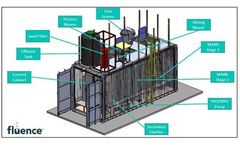
The system was tested with domestic wastewater diverted from Stanford’s sanitary sewer. Treatment performance was evaluated according to two benchmarks: California Title 22 standards for non-potable water reuse (T22) and a Total Nitrogen limit of 10 mg-N/L. ...

Concrete distribution and sewer networks are being corroded at an alarming rate partly because of a commonly used additive in the domestic drinking water and wastewater treatment process according to published reports in the journal Science. ...

The practical evidence of the sediment transport performance of this part of the sewer system, dependent on different load cases, should present a basis for further analysis, for example regarding flushing measures. A positive side-effect of the investigation was the description of the amount of pollutants caused by different weather conditions in combined sewer ...
This paper introduces a cause and effect oriented sewer degradation evaluation approach to support decisions on inspection frequencies and priorities. ...
This paper introduces a cause and effect oriented sewer degradation evaluation approach to support decisions on inspection frequencies and priorities. ...
Linking urban development and urban drainage models is a more and more popular approach when impacts of pavement of urban areas on sewer system performance are evaluated. As such an approach is a difficult task, this is not a feasible procedure for everyday engineering practice. ...
Modelling of wastewater temperatures along a sewer pipe using energy balance equations and assuming steady-state conditions was achieved. ...
The use of such modelling tools allows the evaluation of sewer capacity and the likelihood and impact of pluvial flood events. ...
The antiepileptic drug carbamazepine is a useful anthropogenic marker in groundwater to detect and quantify sewer exfiltration. In 2003 its application on a city wide scale enabled the identification of a trunk sewer in extremely bad structural status with an exfiltration (of wastewater into groundwater) rate in the adjacent area of around 5% compared to an ...

We evaluated the integrated model and the two traditional models by applying them to a sewer system of Taipei metropolis during three past typhoon events (NARI, SINLAKU, and NAKR). The performances of the models were evaluated by using predictions of a total of 6 h of sewer flow stages, and six different ...