
Shellfish Marine Articles & Analysis
8 articles found

By containing turbidity and limiting how far it spreads, silt curtains help: Maintain light penetration for seagrass and benthic plants Reduce gill clogging and smothering effects on fish and invertebrates Protect nearby reefs, wetlands and spawning areas from silt deposition This is why silt curtains are often mandatory near seagrass meadows, shellfish beds or ...
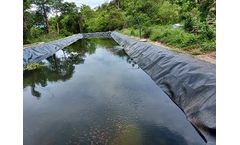
Because fish can swim, although marine fish usually have a habitual distribution in populations. But one of the characteristics of natural creatures is the flexibility of survival. ...

” Microplastics - plastics smaller than 5mm - are a pollution issue and are eaten by fish and shellfish. For marine creatures and birds it's been shown to block digestive tracts, sometimes causing starvation. ...

Endocrine Disrupting Compounds (EDCs), including 17‐α‐ethinyl estradiol (EE2) and 4‐nonylphenol (4‐NP), enter coastal environments primarily in effluents of wastewater treatment facilities, and have become ubiquitous in marine surface waters, sediments and biota. Although EE2 and 4‐NP have been detected in marine shellfish, the kinetics of ...

Along with fellow researchers, Pedro Fiorda and Oscar Frumento, Gaspar is conducting field research in the marine protected area of Peninsula Valdes, Northern Patagonia, Argentina. ...
Along with fellow researchers, Pedro Fiorda and Oscar Frumento, Gaspar is conducting field research in the marine protected area of Peninsula Valdes, Northern Patagonia, Argentina. ...
Exposure to mercury (as neurotoxic monomethylmercury (MeHg)) occurs primarily through consumption of finfish, shellfish, and marine mammals, and regulatory limits for MeHg concentrations in fish tissue have steadily decreased as information on its health impacts has become available. ...

Cases of non-cholera Vibrio illness are typically associated with exposure to shellfish from marine coastal areas (U.S. Food and Drug Administration, Center for Food Safety and Applied Nutrition, 2009), not landlocked states such as Colorado. In 2004, a 2.8-fold increase in the incidence of non-cholera Vibrio cases in the Tri-County Health Department (TCHD) ...