
Shellfish Water Articles & Analysis
11 articles found
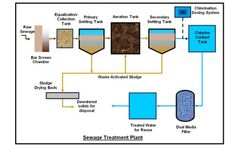
It might surprise you to know that we all drink and bathe in recycled water. The water we flush down the toilet is turned into potable water, and it is the job of sewage treatment plants to make this water fit for human consumption or release into rivers and oceans. ...

Project: First Nation Community Location: Nanoose Bay, British Columbia Capacity: 120 m3/d (30,000 gpd) Contract: Design-Supply-Install-Operate Key Features: Modular and Expandable; Odor and Noise Abatement, Environmentally Sensitive Discharge;(SHellfish Bearing Waters); Good Neighbor (Unobtrusive – no odour or noise, no visual impact) The ...

To store dry ice, you need to use a special storage box (dry ice incubator), but there will still be losses. A good storage box (dry ice incubator) can reduce the loss to 6‰, and the price will be relatively high. If there is no special box, ordinary foam boxes can be used for storage. In addition, try not to cut a whole piece of dry ice into small pieces or granules. Cut into small pieces ...
Replace sandblasting This method is better than sandblasting because dry ice is soft enough not to damage the surface below. Dry ice quickly sublimates into the air, and only cleans up the substances that need to be removed. Dry ice cleaning eliminates equipment damage in two ways. First of all, dry ice will not erode or wear equipment surfaces like traditional grit media or even wire brushes. ...

Determination of Mercury (Hg) in Water by Hand-Held, Portable Cold Vapor Atomic Fluorescence SpectrometryWater is the most familiar and most abundant compound on Earth, making up 71% of its surface area.[1]It is a vital component for all known forms of life and is the aquatic habitat for thousands of species of microalgae, fish and shellfish. [2] With the ...

Chitosan, a partially deacetylated polymer obtained from the alkaline deacetylation of chitin, extracted from shellfish has been reviewed for its application in water and wastewater. ...

Escherichia coli are often used as faecal indicator bacteria (FIB) to provide a measure of microbial pollution in recreational and shellfish harvesting waters. However, although model forecasts for predicting the concentrations of FIB in surface waters are becoming more robust, they suffer from an inconsistency in quantification methods and an ...
Sources of faecal pollution in coastal recreational waters may be identified by analysing different host associated microorganisms or molecular markers. However, the microbial targets are often present at low numbers in moderately impacted waters, and often exhibit significant temporal and spatial variability in waters with fluctuating faecal ...
Faecal contamination sources were identified in coastal areas around the Guerande-Atlantique peninsula using two microbial source tracking (MST) methods: (i) Bacteroidales host-specific 16S rRNA gene markers measured by real-time PCR and (ii) F-specific bacteriophage (FRNAPH) genotyping. Both methods were used on 63 water samples from 7 water courses. HF183 ...
We demonstrated experimentally that water salinity, water temperature and infection with P. marinus modulated oyster defence mechanisms, and lobsters relative sensitivity to the effects of pesticides. This information will improve the understanding of resistance to pathogens as well as the potential effects of environmental changes to affect disease ...

With the introduction of the Urban Wastewater Treatment Directive, Shellfish Directive and Bathing Waters Directive, which are aimed at significantly improving wastewater treatment, particularly in coastal areas, Southern Water initiated plans to upgrade its wastewater management system to meet or exceed specifications. ...