
Refine by
Silage Production Articles & Analysis
22 articles found
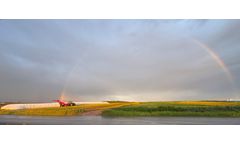
So, for many dairy farms – particularly those in colder or remote regions – bagging their silage is a strategic tool for ensuring feed security and maintaining optimum milk production throughout the year. ...
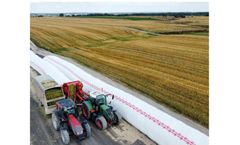
“The problem with conventional silage storage methods is excessive exposure to oxygen, which leads to rapid silage deterioration. ...
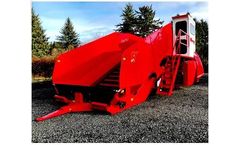
Dairy farmers are bagging silage to reduce spoilage by up to 30%, increase nutrient value and milk production, improve herd health, and potentially earn environmental carbon credits. For dairy farmers, “good feed promotes good production” is a guiding principle that has a direct cause-and-effect impact on milk tank volume. ...
Dairy farm consultants and equipment suppliers weigh in on the benefits of properly packed bags, as well as feed management tips to obtain the highest nutrient density feed to promote herd health and production. Silage is critical to dairy farm operations. Compared to hay production, silage increases the potential yield of ...
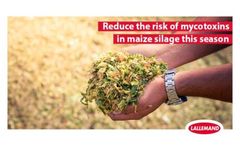
When the clamp is opened, oxygen will penetrate faster, re-activating the yeasts and leading to aerobic spoilage and wasted silage,” says Mrs Colahan. “New metagenomic trial data which looked at bacterial levels in maize silage treated with Magniva Platinum Maize over a 10-day period, found that after being exposed to oxygen, the pH of the treated ...

Plant’s power: 500 kW/h Daily feeding: pig slurry; corn silage; rye meal Goal: Reduce the product’s viscosity into digesters to increase the concentration of Dry Matter To see video, please click ...
Plant’s power: 800 kW/h Daily feeding: horse manure with straw, grass silage, corn silage Goal: to increase the gas production and reduce the viscosity To see video, please click ...
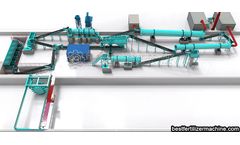
Process flow of organic fertilizer production line: 1. Fermentation Fermentation is the first step in the production of organic fertilizer regardless of its configuration. ...

Background Over the last 60 years, dairy cattle have been selectively bred to maximise milk production and as a result, cows have become extremely efficient at converting food such as grass, silage, hay and concentrates into agricultural products such as milk and meat. At the same time, feed quality, ration formulation and herd management have ...
Background Over the last 60 years, dairy cattle have been selectively bred to maximise milk production and as a result, cows have become extremely efficient at converting food such as grass, silage, hay and concentrates into agricultural products such as milk and meat. At the same time, feed quality, ration formulation and herd management have ...

An 8-yr field experiment was conducted in southern Alberta, Canada, to determine the effects of different rates of manure on NO3–N accumulation in two irrigated soil types and NO3–N leaching to shallow groundwater. An annual cereal silage was grown at each site and irrigation was based on soil moisture depletion. ...
Increasing numbers of dairies in northeastern United States are classified as confined animal feeding operations (CAFOs). Many dairy farmers in New York (NY) abandoned conventional and adopted zone tillage (ZT) in 4-yr corn (Zea mays L.) silage-alfalfa (Medicago sativa L.) rotations on highly erodible land to comply with NY CAFO plans. Farmers now question optimum ZT depth because of increased ...
Barley was grown (1999–2007) as silage on an irrigated clay loam soil in southern Alberta where organic amendments and fertilizer were annually applied for 9 yr in the fall of 1998 to 2006. ...
Our objective was to evaluate plant, animal, and soil responses when integrating winter cover crop forages into no-till corn (Zea mays L.) silage production. Three cover crop treatments were established no-till after corn silage in September 2006 and 2007 at Columbus, OH: annual ryegrass (Lolium multiflorum L.), a mixture of winter rye (Secale ...
Increasing numbers of dairies in northeastern United States are classified as confined animal feeding operations (CAFOs). Many dairy farmers in New York (NY) abandoned conventional and adopted zone tillage (ZT) in 4-yr corn (Zea mays L.) silage-alfalfa (Medicago sativa L.) rotations on highly erodible land to comply with NY CAFO plans. Farmers now question optimum ZT depth because of increased ...
Barley was grown (1999–2007) as silage on an irrigated clay loam soil in southern Alberta where organic amendments and fertilizer were annually applied for 9 yr in the fall of 1998 to 2006. ...
Due to a lack of surface residue and organic matter inputs, continuous corn (Zea mays L.) silage production is one of the most demanding cropping systems imposed on our soil resources. ...
Maize (Zea mays L.) stover has been identified as an important feedstock for the production of cellulosic ethanol. Our objectives were to measure hybrid effect and combining ability patterns of traits related to cellulosic ethanol production, determine if germplasm and mutations used for silage production would also be beneficial ...
This field study determined compost effects on corn (Zea mays L.) silage production, nutritive value, and soil characteristics for three growing seasons following incorporation of dairy manure compost at 0, 35, 70, and 105 Mg dry matter (DM) ha–1. ...
Hail damage can be a serious problem on corn (Zea mays L.) grown for silage. The value of corn grown for silage is a function of both the yield and quality of the forage produced. ...