
Refine by
Site Characterization Data Articles & Analysis
11 articles found
Introduction: Why Chloride Plumes Behave Differently Chloride contamination presents a unique challenge in groundwater systems. Unlike many organic contaminants, chloride does not degrade, volatilize, or readily bind to soil. Once introduced into the subsurface, it moves with groundwater, often persisting for decades. ...
ByLiORA

The British Columbia Protocol 9 for contaminated sites is used in the establishment of groundwater local background concentration. ...

Data captured and presented in an intuitive dashboard can allow the site operator to make informed decisions that address the regulatory and business priorities for your operation. ...
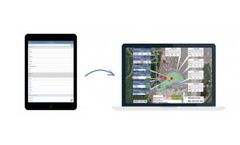
Environmental remediation and compliance monitoring are time sensitive and dependent on quick access to reliable, actionable information. Data visualization is often the most appropriate means of decision support for day-to-day monitoring and site characterization. ...

Typically, the treatability study will come after a Site Characterization is performed. Site Characterization will provide data on the type and extent of ...

Project Description The Udhampur-Srinagar-Baramulla Rail Link (USBRL) project is a railway line linking the Kashmir Valley to the rest of India through the Himalayas. At 110 km long, this section consists of 88 km through tunnels and 11 km over bridges and viaducts. The Chenab River Bridge will be a concrete-filled truss steel arch bridge 359 m above the river valley, with a main span of 467 m ...
EPA added a new focus area on high-resolution site characterization (HRSC) to their Contaminated Site Clean-Up Information (CLU-IN) website. ...

Theprimary goal of this approach is tstreamline site characterization, provide more accurateconceptual models of contaminant distribution tpermit more accurate and effective remedyselection. ...

The identification of DNAPL source zones located beneath the water table is critical to ultimately achieve site remediation and aquifer restoration. This paper provides a comparison of the advantages and disadvantages of many of the methods being used for detecting and delineating DNAPL contaminant source zones. The objective is to determine which options are best to pursue based ...

EPA expects that a presumptive remedy, when available, will be used for all CERCLA sites except under unusual circumstances. Accordingly, EPA has determined that, when using presumptive remedies, the site characterization data collection effort can be limited, and the detailed analysis can be limited to the presumptive remedies ...
With this information (together with other site characterization data) and a clear understanding of sampling objectives, then appropriate location, screen length, well diameter, slot size etc. for the monitoring well network can decided. ...