
Refine by
Skin Wound Articles & Analysis
27 articles found
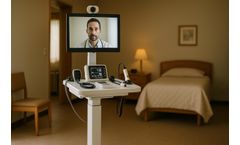
This capability covers primary care and semi-acute diagnostics, including comprehensive vital signs, ECG, ultrasound, heart and lung assessments with multi-filter stethoscopes, ENT imaging, wound and skin assessment, and more. Nevertheless, wide-scale utilization is limited to a subset of highly engaged providers, PHNs, and GP clusters.An asset already in ...

Precision in formulation and copper levels is essential.Zinc: Skin, Hooves, and DefenseZinc is critical for tissue integrity and immune response, including skin and hoof health, wound healing, colostrum production, and disease resistance. For newborn lambs, zinc strengthens primary barriers against illness by supporting skin and ...

In surgical tissue recovery, focus is on controlling infection, managing inflammation, and ensuring wound closure. Beneath the surface—anatomically and biologically— the extracellular matrix (ECM) is undergoing remodeling ensure long-term tissue integrity. The ECM is a dynamic, biologically active network that orchestrates the entire process of tissue repair, remodeling, and ...

Human dermal fibroblasts-neonate (HDF-n) are specialized cells derived from the dermis layer of neonatal human skin. These fibroblasts play a crucial role in skin structure, function, and repair. ...

Consequently, prolidase deficiency has been linked to various medical conditions, including skin disorders, chronic wounds, and certain genetic disorders. In the pharmaceutical and nutraceutical sectors, Native Porcine Prolidase is used as a dietary supplement to support skin health, wound healing, and collagen synthesis. ...
Some of the most important benefits of Royal Jelly include: Strengthens the immune system and increases white blood cell levels Improves brain function, increases learning power and memory Reduces inflammation and improves diseases such as arthritis and asthma Promotes skin health and prevents wrinkles or premature aging Improves fertility in women and men Reduces fatigue ...

Recombinant human collagens are an efficient scaffold for bone repair when combined with a recombinant bone morphogenetic protein in a porous, sponge-like format, and when presented as a membrane, sponge or gel can serve as a basis for the engineering of skin, cartilage and periodontal ligament [2]. Skin injury treatment Recombinant human collagen can be used in ...

Understanding the different wound types is essential for proper wound care. Here are some common wound types:Scrapes: A superficial wound caused by friction of skin against a hard surface. ...
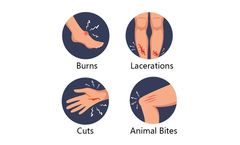
And as the body get age, the skin wounds become more frequent. It's time to understand the advantage wound care for for optimal healing. ...
The skin wound closure strip is an adhesive medical tape used to close minor skin incisions.It is designed to bring together the skin on both sides of the wound to facilitate the healing process. ...

Features of Nano Dressings Dressing is a kind of medical material that can replace damaged skin or tissue, and can promote wound healing and tissue repair, such as gauze, bandage, sponge. ...

In recent years, scientists have explored its potential use in treating rheumatoid arthritis and cancer. Cocklebur extract and skin protection Cocklebur extracts, extracted from the fruit of a plant often considered a poisonous weed, have shown potential to protect the skin, speed wound healing and fight wrinkles due to its antioxidant and ...
Recently, silver nanoparticles have been frequently used in many textiles, keyboards, wound dressings, and biomedical equipment. As a hot spot in the research of antibacterial materials, silver nanoparticles have the advantages of high efficiency and broad-spectrum, not easy to produce drug resistance and high safety. ...
Further animal experiments showed that the natural adhesive d-SMG promoted the healing of acute skin injuries and diabetic chronic wounds, and the effect was better than alginate dressings widely used in clinical practice. ...

The patient was presented with an absence of epidermal potential and poor dermal structure, including good support for skin grafts. A dermal substitute offered benefits in this case. The nature of the injury (traumatic abrasion from the road) caused concern for maintaining a healthy wound bed. ...

Dr. Linda Benskin, a PhD wound specialist nurse with a pediatrics background, volunteered for five years in rural West Africa teaching village health workers, treating medical patients, and managing wounds. ...
Once the wound bed is cleaned and thoroughly debrided, surgeons can create a template by pressing the NovoSorb BTM against the wound bed. ...
Dermal substitutes are often used for patients who have sustained: Partial and full-thickness wounds Pressure ulcers, diabetic ulcers, venous ulcers, chronic ulcers, and vascular ulcers Surgical wounds (donor sites/grafts, post-Mohs surgery, post-laser surgery, podiatric, and wound dehiscence) Trauma wounds (abrasions, ...
When trauma to the skin occurs, large areas of both the skin’s surface (epidermis) and deeper layers (dermis) may be destroyed. In many cases, large full-thickness wounds may require temporization due to the lack of suitable donor sites for primary skin grafting. ...

You use the instrument to hold the skin closed around the wound during suturing. Also called clamps, the forceps are ratcheted to securely hold dense tissue. ...