
Refine by
Sludge Analysis Articles & Analysis
54 articles found

Summary This case study evaluates the financial viability and effectiveness of Sludge RX in reducing sludge volumes and restoring loading capacity in a wastewater lagoon system. ...

A big manufacturer of packaging systems made of plastic uses 30 injection molding machines. The manufacturer of the injection molding machines recommends to change the hydraulic oil once per year although the machines are equipped with hydraulic filter systems. Because of the big oil volume 1000 l – 3000 l per injection molding machine the company decided to change the oil only once every ...

This feasibility analysis delves into the various aspects of an oil sludge recycling project, focusing on market potential, technical considerations, economic viability, and environmental benefits. ...

Based on the sludge incineration and disposal project of an urban sewage treatment plant in Changzhou City, this paper summarizes the main pollution problems and control measures in the process of sludge drying and incineration from the perspective of disposal technology, and provides a reference for the pollution control of similar projects. The wet sludge with moisture ...

Climate change studies Stable Isotope Analysis Monitoring nitrogen pollution in coastal waters Measuring isotopically labelled species in wastewater Specialised inlet technology for denitrification studies Enzyme Activity Studies Real-time analysis of dissolved gases in enzymatic solutions Direct measurements of reactants and products in real-time ...
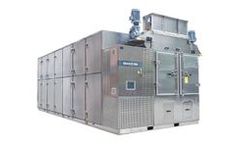
Sludge is a by-product of the process of sewage treatment and water purification, and its main components include floccules composed of various microorganisms and organic and inorganic particles. The vast majority of sludge has the value of resource reuse. In 1995, the World Water Environment Federation (water environmental feder-action WEF) renamed the sludge as biosolids (biosolids), which is a ...

It is proposed to build a sludge thermal drying plant in the reserved land for a power plant in Chongqing. ...
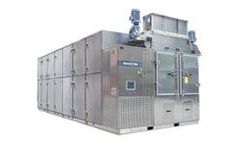
Sludge is a by-product of the process of sewage treatment and water purification, and its main components include floccules composed of various microorganisms and organic and inorganic particles. The vast majority of sludge has the value of resource reuse. In 1995, the World Water Environment Federation (water environmental feder-action WEF) renamed the sludge as biosolids (biosolids), which is a ...
Sludge is a by-product of the process of sewage treatment and water purification, and its main components include floccules composed of various microorganisms and organic and inorganic particles. The vast majority of sludge has the value of resource reuse. In 1995, the World Water Environment Federation (water environmental feder-action WEF) renamed the sludge as biosolids (biosolids), which is a ...
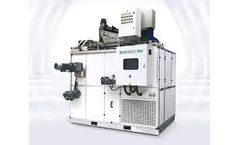
In recent years, the amount of sludge has also increased significantly with the rapid improvement of sewage treatment capacity in China, In 2019, the output of urban wet sludge was close to 50 million tons, nearly twice that of 2010, and the 10-year average compound growth rate from 2010 to 2019 reached 7.3%. After years of exploration, China's sludge treatment and disposal industry has mainly ...
Technical status, investment cost and profitability analysis of sludge treatment industry in China Key words: sewage treatment plant sludge treatment and disposal sludge drying incineration Sewage treatment training camp phase V - MBR process skill improvement In recent years, the amount of sludge has also ...
The third stage – the chemical treatment process – causes the precipitation of PO4. The spectrophotometric analysis of these compounds (known as UV/Vis spectroscopy) is governed by the standard German process for water, wastewater, and sludge analysis (DIN 38405) as well as a variety of other standards. ...

After the AOP process, chloride ion concentration and biodegradability of the treated wastewater was increased to 2,762 mg/L and 0.46 from an initial value of 2,131 mg/L and 0.29, respectively. The wastewater and sludge analysis showed oxidation and adsorption as the major mechanisms for organics removal. ...
The enhancement of sludge dewaterability is of great importance for facilitating the sludge disposal during the operation of wastewater treatment plants. ...
In 2014, 25% of the sludge produced at Swedish municipal wastewater treatment plants was applied to agricultural land. ...
The performance of a vertical flow constructed wetland for combined sewer overflow treatment (CSO CW) has been evaluated. The full-scale site has been monitored for 3 years for major pollutants and for two load events for a range of micropollutants (metals, metalloids and polycyclic aromatic hydrocarbons (PAHs)). Performance were predominantly high (97% for total suspended solids (TSS), 80% ...
The DHS reactor demonstrated removal efficiencies of 64.2 ± 7.5% and 55.3 ± 19.2% for total chemical oxygen demand (COD) and total nitrogen, respectively, with an organic loading rate of 0.97 ± 0.03 kg-COD m−3 day−1 and a nitrogen loading rate of 0.57 ± 0.21 kg-N m−3 day−1. 16S rRNA gene sequencing analysis of the sludge retained in the DHS also corresponded to ...
In long-term continuous operations, both ferric chloride and aluminum sulfate effectively mitigated membrane fouling, with the corresponding growth rate of transmembrane pressure decreased to 0.08 and 0.067 kPa/d, respectively. Sludge particle sizes analysis demonstrated that the decrease of particle sizes lower than 50 μm was the main reason for membrane fouling ...
Safe emptying and disposal of fecal sludge from pit latrines in rural areas has become a priority for the Government of Bangladesh. ...
This study examines the conversion of sludge via energy recovery from gasification/combustion for thermal treatment of dewatered sludge. The present analysis is based on a chemical equilibrium model of thermal conversion of previously dewatered sludge with moisture content of 60–80%. ...