
Refine by
Sludge Dewaterability Articles & Analysis
35 articles found
Innovation in Water Remediation, A look to Specialized Electrocoagulation for Water Hardness Removal Hardness in water can be characterized into its primary constituent mineral components, typically calcium and magnesium. Excess water hardness in a water supply creates many issues for industry, utilities and life in general. Calcium and magnesium which are the principal sources of ...
Electrocoagulation is an advanced, yet reliable and cost efficient process harnessing the conductivity of the water source, along with a direct electrical current between metal electrodes to create chemical reactions to remediate the water source.Listed below are some of the advantages of this process: – Does not increase TDS levels– Does not affect permanent hardness– Reduced ...
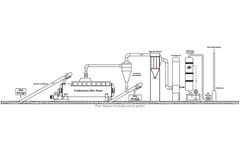
Sludge dryer can dry the material with 90% water content to finished product at one time. In view of the characteristics of easy to form cohesive block in the process of sludge drying, the material plate structure of the general single channel dryer is changed, and the combined self-cleaning device is adopted, which greatly expands the application range of the single channel dryer, not only can ...
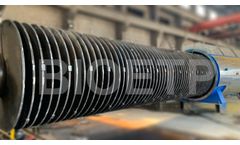
The disc type sludge dryer is composed of a horizontal shell and a rotor with heating. A plurality of heating discs are installed on the rotor, and an angle-adjustable pusher is installed on the rotor. The material is heated, and the material can be pushed along the direction of the discharge end. The steam distribution device inside the rotating shaft can evenly distribute the steam to each ...
Therefore the quantity of sludge was doubled and the dewaterability of the sludge reduced with the addition of secondary treatment. ...
Each line is capable of treating 50 dry tonnes of sewage sludge per day. The choice of THP system was made using a sophisticated cost model that ensures that the performance of the equipment meets the financial criteria and cost of ownership of the Private Finance Initiative (PFI). The contract is to produce an enhanced treated sludge through pre-treatment ...
Since August 2015 approximately half of the generated Waste Activated Sludge has been treated by a Cambi Thermal Hydrolysis B6-4 system, while the thickened Primary Sludge stream is by-passing THP and is mixed with the hydrolysed WAS stream before entering the 4 digesters. The 4 other conventional digesters have treated the remaining sludge ...

In this study a natural mix of microalgae grown in wastewater of municipal character was co-digested with sewage sludge in mesophilic conditions, in both batch and semi-continuous modes. ...
The dewaterability of excess sludge significantly improved upon pretreatment with Fenton's reagent in this study. After 0.9 g/L of Fe2+ and 5.0 g/L of H2O2 were added to the sludge, and reacted for 2 h at pH = 4, the specific resistance to filtration (SRF) of the excess sludge decreased from an initial value of 29.74 × 10¹² ...
The enhancement of sludge dewaterability is of great importance for facilitating the sludge disposal during the operation of wastewater treatment plants. ...
To lower energy consumption at a sewage treatment plant (STP), primary settling could be enhanced to direct more chemical oxygen demand (COD) to anaerobic digestion (AD) for increased biogas production and decreased aeration. Primary settling can be chemically enhanced by applying flocculation aids (FAs). FAs are refractory compounds that may affect all sludge treatment facilities. In this ...
Bioleaching is a promising technology for removal of metals from sludge and improvement of its dewaterability. Most of the previous studies of bioleaching were focused on removal of metals; bioleaching in cold environments has not been studied extensively. In this study, Acidithiobacillus ferrooxidans and Acidithiobacillus thiooxidans were acclimated at 15 °C ...
The AB process is a promising technology for achieving maximal energy recovery from wastewaters with minimum energy expenditure and therefore inherently reducing excess sludge production. Characterization of this novel sludge and its comparison with the more conventional B-stage sludge are necessary for a deeper understanding of AB treatment ...
The potential benefits and mechanisms of potassium ferrate pretreatment and calcium chloride addition on sludge dewaterability were investigated in this study. The capillary suction time (CST) was used to evaluate sludge dewaterability. ...
Dewatering of sludge from sewage treatment plants is proving to be a significant challenge due to the large amounts of residual sludges generated annually. In recent years, research and development have focused on improving the dewatering process in order to reduce subsequent costs of sludge management and transport. To achieve this goal, it ...
Bioleaching using an iron-oxidizing bacterium, Acidithiobacillus ferrooxidans, and its biogenic flocculants was evaluated to improve the dewaterability of chemically enhanced primary treatment (CEPT) sewage sludge. CEPT sludge in flasks was inoculated with A. ferrooxidans culture, medium-free cells and the cell-free culture filtrate with and ...
The potential benefits of zero-valent iron-activated persulfate (Na2S2O8) oxidation in enhanced dewaterability of sludge, along with the associated mechanisms were investigated in this study. The sludge dewaterability was evaluated in terms of specific resistance to filtration (SRF) and water content. Based on these indexes, it ...
The concentrations of volatile suspended solids and total suspended solids in the sludge were less than those reported after anaerobic digestion of conventional primary and secondary sludge mixtures, and hence dewatering of the waste stream may be required for some applications. The nutrient content in terms of total Kjeldahl nitrogen and total phosphorus was ...
The enhancement for sludge anaerobic digestion and dewaterability were investigated in sludge pretreated by microwave (MW) and its combined processes. The results showed that microwave and its combined processes can efficiently release soluble organic matter and thus enhance anaerobic digestion of sludge. The cumulative ...
Anaerobic digestion of waste activated sludge was conducted to gain insight into the mechanisms underlying change in sludge dewaterability during its anaerobic digestion. Unexpectedly, the results indicated that sludge dewatering properties measured by capillary suction time only deteriorated after 10 days of anaerobic ...