
Refine by
Sludge Lime Articles & Analysis
28 articles found

Lime precipitation effectively removes heavy metals but has the disadvantage of creating large amounts of sludge that is 95% lime and 5% metal for which disposal may be difficult. ...
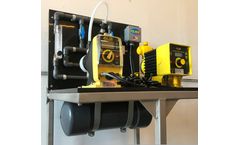
These chemicals give off electrostatic charges that join together separate sludge particles. By joining together, the particles release water contained in the sludge and leave behind a more concentrated sludge mass. While sludge conditioning is important for successful dewatering, sludge stabilization works to ...
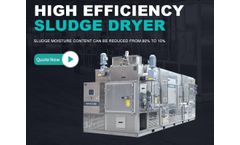
Shincci: Based on the fundamentals, deep research on sludge drying technology Channel: Water TreatmentKeywords: sludge treatment and disposal, sludge dryerAs the terminal link of sewage treatment and the key and difficult point of water pollution prevention and control, sludge treatment and disposal has been concerned by the ...

A study published in Environmental Science & Technology showed that it is much more effective at reducing the particles in wastewater sludge than common methods such as lime stabilization or thermal drying. Fluence anaerobic waste-to-energy solutions can be applied to ordinary food waste as well as more complex biomasses and high-COD wastewater, and ...

Location of the plant Moscow/ RUSSIA Scope of work Industrial Wastewater Treatment Contract Date 2008 Completion Date 2009 Flowrate of the plant: 1.200 m3/day Inlet Pollution Parameters: COD: 1.000- 1.500 mg/ L SS: 200- 400 mg/ L PH: 1-13 Outlet Discharge Values: COD: < 800 mg/ L SS: 50 mg/ L PH: 6,5- 8,5 Units of the Plant: Physical Treatment Screening Equalization Basin ...

Co-processing lime-dried sludge (LDS) in cement kilns is an appropriate technique to solve the problem of LDS disposal and promote the sustainable development for cement industry. ...
This study examined the effects of anaerobic digestion (AD), with or without liming as a post-treatment, on P release from Fe- and Al-precipitated sludges originating from primary WWTPs. ...
At the same time, lime is one of the commonly used additives in the sewage sludge treatment primarily to stabilize the sludge. In doing so, the question arose how desirable is such addition of lime if the sludge is subsequently incinerated, and the generated ash is further used in the production of cementitious ...
The treatment and disposal of sewage sludge is a growing problem for sewage treatment plants. One method of disposal is to use sewage sludge as partial replacement for raw material in cement manufacture. Although this process has been well researched, little attention has been given to the thermal properties of cement that has had sewage ...

In particular, for Lot 1 a pilot inertization plant of sludge/soil/waste and for Lot 2 a pilot soil washing plant of sludge/contaminated land. ...

Abstract This paper summarizes ERG’s experience of supplying odour control for sludge dryers, sludge pasteurizers, sludge lime stabilization and biogas treatment and indicates areas for improvement. Keywords Odour control, chemical scrubbing, carbon filters, waste water, OdorgardTM, sludge dryers, ...

The concentrations of pollutants are obtained from toxicity characteristic leaching procedure (TCLP) extracts of the lime sludge and fly ash generated. A comparative study of five different indices (unweighted arithmetic leachate pollution index, arithmetic leachate pollution index, unweighted multiplicative leachate pollution index, multiplicative leachate ...
Sewage sludge produced during municipal wastewater treatment has to be treated efficiently in order to reduce impacts on the environment and on public health. In Germany and many countries, large quantities of sludge are reused in agriculture in order to recycle nutrients and organic material. ...

Finally, the modified protocol was used to assess C. elegans' growth and reproduction in soil amended with a limed sewage sludge. We conclude that the C. elegans modified protocol is a promising tool for the assessment of soil toxicity as well as that of mixtures with complex matrices. ...
Chloride is important in promoting corrosion in cooling water systems, which leads to reducing the efficiency of heat transfer surfaces and shortening equipment life. Ultra–high lime with aluminium process (UHLA) is a potential new technology that has the ability to remove chloride and sulfate from recycled cooling water in addition to removing the majority of scale–forming ...
Basic Oxygen Furnace (BOF) sludge is one of the by–products generated during process of steel making. It has very high level of iron oxide and lime content. However, the high moisture content of the BOF sludge (35–40%) is a major obstacle in its recycling. ...
In the present study an attempt has been made to recover phosphorus in the presence of poly P and to disintegrate sludge through combinative treatment. Primarily the sludge was treated by thermal method at a temperature range of 40° to 90°C. During thermal treatment, enhanced biological phosphorous removal (EBPR) sludge releases poly P and is ...

Over the last thirty years, whether it is drinking water, processed water or waste water, the company has acquired genuine expertise in handling dry reagents specifically for water and sludge treatment such as: hydrated lime, activated carbon, quicklime, microsand, etc. ...
The Rotomite-6000-C also increases the customer’s return on investment (ROI) by cutting sludge management costs, increasing user productivity, and enhancing the unit’s maneuverability for the removal of toxic and non-toxic solids. ...
Large volumes of treated sewage sludge (biosolids), although low by world standards, are increasingly being recycled to land, primarily to replace plant nutrients and to improve soil properties; they are used in agriculture, forestry, and composted. ...