
Refine by
Sludge Pathogen Articles & Analysis
20 articles found
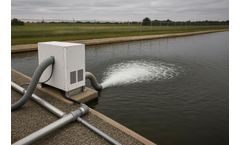
Higher ORP levels help reduce contaminants, contributing to clearer water, fewer pathogens, and reduced algae growth. The prolonged suspension of nano bubbles also improves gas retention, supporting enhanced biological activity with lower energy demand.Major Performance AdvantagesIncreased dissolved oxygen levelsBetter water clarityEnhanced ORP performanceReduced algae ...
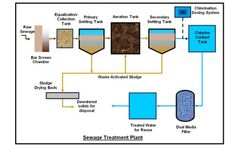
The water is then released, leaving behind a sludge/slurry. The sludge is a by-product of primary treatment and can sometimes be repurposed as a fertiliser, but it requires treatment such as de-watering to stabilise it. Incineration is the most likely destination for heavily contaminated sludge. Secondary treatment ...
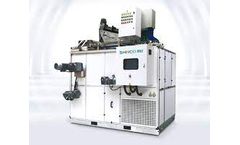
Drying the sludge has the following advantages: (1) Reduction: Due to the high water content of the sludge, the volume is large and fluid. ...
Sludge Digestion Now that the sludge is more compact and easier to handle, wastewater treatment plants can start to address the pathogens and bacterial hazards in the sludge. ...

Valorising sludge and slurry Municipal waste treatment plants, among other processes, generate sludge and slurry-type waste that requires treatment. It is necessary to apply different technologies in line with the characteristics and components of the waste to be treated. Waste can be processed and valorised using waste-to-product methods, thereby generating fuels or products that can be used as ...
ByTECAM

You don't have to worry about harmful microorganisms and pathogens in the sludge that will affect the environment and people. The microorganisms in wastewater treatment are the normal flora of nature and are not infectious. ...

Each line is capable of treating 50 dry tonnes of sewage sludge per day. The choice of THP system was made using a sophisticated cost model that ensures that the performance of the equipment meets the financial criteria and cost of ownership of the Private Finance Initiative (PFI). The contract is to produce an enhanced treated sludge through pre-treatment ...

Depending on the prevalence of helminth infections in communities, up to 1.0 × 10³ ova/larvae can be presented per litre of wastewater and 4 gm (dry weight) of sludge. Multi-barrier approaches including pathogen reduction, risk assessment, and exposure reduction have been suggested by health regulators to minimise the potential health risk. ...
At South East Water wastewater treatment plants (WwTPs) in Victoria, Australia, biosolids are stockpiled for three years in compliance with the State guidelines to achieve the highest pathogen reduction grade (T1), suitable for unrestricted use in agriculture and landscaping. ...

“These microbes form flocs and settle out as activated or secondary sludge… Sludge thickening is done by all [wastewater treatment plants] to increase solids content and sludge.” Larger wastewater treatment operations anaerobically digest thickened sludge, using bacteria to break it down and reduce volume, ...
Ammonia sanitisation is a promising treatment alternative for inactivation of pathogens in fecal sludge intended for agricultural use. Inactivation of Ascaris eggs and Salmonella spp. was studied in fecal sludge at ≥28 °C treated with low doses of urea, and in fecal sludge at ≤17 °C treated with high doses of ammonia ...
Conventional bacterial indicators present serious drawbacks giving information about viral pathogens persistence during sludge hygienization treatments. This calls for the search of alternative viral indicators. ...
A simple treatment method, Safe Sludge disinfection, was developed to disinfect pathogens in fresh fecal sludge using the ammonia naturally present in excreta. ...
The requirement for enhanced stabilization processes to obtain a more stable, pathogen-free sludge for agricultural use is an increasing challenge to comply with in the waste hierarchy. With this in mind, the Routes European project (‘Novel processing routes for effective sewage sludge management’) is addressed to assess ...
Legislation in Sweden and the European Union concerning the use of sewage sludge in agriculture is under revision and future concentration limits for pathogens in treated sludge are likely to be expected. ...
These principles have been put into full practice in 20 plants around the world at plants ranging from 5 mgd to 150 mgd. In this case the mixed raw sludge is both thermally hydrolysed and sterilised to give a digester feed that is optimised for digestion, dewatering and pathogen control. ...
ABSTRACT The first full-scale plant for sludge disintegration through Cambi thermal hydrolysis was started up in Hamar, Norway at the end of 1995. It is the first plant with a new design where sludge is directly heated by live steam. During the last 3 years the plant worked with an availability of over 99 %. ...
Abstract Historically, the focus sewage sludge digestion was to stabilise the sludge and reduce the odour emitted. Pathogen reduction, solids destruction and biogas production then became important. ...
ABSTRACT Thermal hydrolytic pretreatment of wastewater sludge followed by mesophilic anaerobic digestion poses significant benefits in terms of sludge minimization and pathogen reduction; however, high levels of volatile fatty acids (VFA) in digester effluent reveal an interruption in the efficient conversion of organic material to methane gas. ...
Abstract This paper reports on the ability of an enzymatic pre-treatment to significantly improve the conditioning of wastewater sludges (biosolids) significantly using by a polymeric flocculant. Experiments used anaerobically digested biosolids samples from two different municipal wastewater treatment facilities, and a formulation containing several different hydrolytic enzymes. ...