
Refine by
Smart Water Network Articles & Analysis
13 articles found
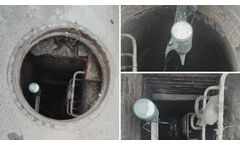
A city required accurate and reliable monitoring of the sanitary and storm water levels in manholes to enhance water management efficiency, prevent flooding, and proactively monitor infrastructure for maintenance requirements. ...

Due to global warming, the water industry has been facing turmoil for a long period of time. From time to time, the industry had to face huge challenges that complicated short and long-term planning decisions. The industry will also inevitably have to go through several changes in the coming years due to rapid urbanization, growth in population which subsequently increases customer demand, and ...

The monitoring of wastewater quality plays a crucial part in identifying existing or emerging problems within sewer networks and new technological advances are transforming the future of wastewater management, offering the ultimate smart sewer septicity solution for sewer networks. ...
ByCoftec
Established in 2010, SWAN’s five-layered model of a Smart Water Network (see figure below) is based on the following: The physical layer consisting of pipes, pumps, valves etc. ...
The swift spread of the Coronavirus disease (COVID-19) across the globe has resulted in unexpected and at times, under planned for, impacts. In some countries, the outbreak has moved businesses to halt on-site operations and urged employees to work from home. The water industry, however, is quickly adapting to the new reality and leveraging remote capabilities to continue supplying clean and safe ...

In the frames of West Balkan Green Point project we participate at water network developing programme of Pristina Regional Waterworks. The programme includes reduction of the energy consumption, optimization of network pressure, continuous monitoring of water losses, and identification of causes and places of pipeline failures. As first step, a survey of the area, the network and the current ...
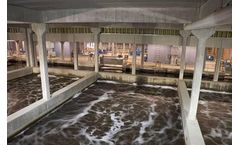
Industries such as municipal water and water resource recovery authorities, or those that have water efficiency as a key driver — relying on large volumes of water for processes. ...
I found many presentations that have enriched my work as a researcher in the field of water infrastructure engineering and I invite you to read my takeaways from the panellists’ practical experiences in the context of the digital water network. My expertise is in developing optimisation models for solving real-world water ...

This is evident in the quickening shift towards smart networks, which are enabling companies to be proactive in terms of network management, leading to significant reductions in leakage. One important development in smart sewer network management comes from global technology company IBM, which has used machine ...

It is building a "vision of what its future water company could look like" in order to be fit for AMP7. Part of this vision is a digital transformation and the application of smart data-driven technologies. In Newmarket Anglian Water have created a test bed for new technologies. GUTERMANN's fixed network technology was tested ...

Substantial works were undertaken to divert runoff and tidal ingress, and a ‘smart’ hydrometeorological monitoring system was installed to enable prompt diversion of excess water during periods of high rainfall. Sewer level monitoring is undertaken in real-time and intelligent raingauges (smart sensors) combine with radio telemetry to ...

The integration of water processes with information and communication technologies systems offers huge opportunities in terms of efficiency gains, improved security, and overall sustainability. However, as this new field of water management – often denoted as ‘Smart Water Network’ (SWN) ...
It has been in use at HaGihon, the Jerusalem utility, since mid 2009. Water utilities collect considerable real-time data from their networks, e.g. by means of a SCADA system and sensors measuring flow, pressure, and other data. ...