
Refine by
Smoke Extraction Articles & Analysis
19 articles found

Introduction A well-designed soldering workstation is essential for maintaining operator safety, product quality, and workplace productivity in electronics manufacturing environments. While factors such as lighting, ergonomics, and tool placement often receive significant attention, ventilation is frequently overlooked despite being one of the most important elements of workstation design. ...
Introduction Modern electronics manufacturing environments require clean, safe, and flexible workstations for soldering operations. Whether in PCB assembly, repair stations, laboratories, or electronics production lines, soldering processes generate fumes containing flux vapors, fine particulate matter, and volatile organic compounds (VOCs). Without proper ventilation, these contaminants can ...
Introduction Electronics manufacturing facilities rely heavily on soldering processes for PCB assembly, component installation, rework, and repair operations. While these processes are essential for production, they generate flux vapors, solder smoke, fine particulate matter, and volatile organic compounds (VOCs) that can compromise indoor air quality if not properly controlled. ...
Introduction Electronics manufacturing processes such as manual soldering, wave soldering, and rework operations generate fumes containing flux vapors, fine particulate matter, and volatile organic compounds (VOCs). Although soldering fumes may appear less intense than welding fumes, prolonged exposure in enclosed workspaces can significantly affect indoor air quality and operator health. ...
Introduction Welding operations across manufacturing environments generate airborne contaminants that must be effectively controlled to maintain safe working conditions. These contaminants include fine metal particulates and gases that can remain suspended in the air if not captured at the source. In fabrication shops and production facilities, improper control of welding fumes can lead to poor ...
Introduction Welding operations across manufacturing industries generate airborne contaminants in the form of metal fumes, gases, and ultrafine particulate matter These emissions, if not properly controlled, can accumulate within the workspace and expose workers to hazardous substances. In high-production environments such as fabrication shops, automotive plants, and heavy engineering ...
Introduction Fabrication shops rely heavily on welding processes such as MIG, TIG, and arc welding to manufacture structural components, assemblies, and custom metal products. While these processes are essential to production, they generate significant amounts of welding fumes consisting of fine metal particles and gases. In enclosed or semi-enclosed fabrication environments, these contaminants ...
Introduction Welding operations in industrial workshops generate fumes that contain fine particulate matter and hazardous gases. These fumes, if not effectively controlled, can accumulate in the workspace and expose workers to unsafe conditions. While many workshops install extraction systems, a significant number still experience poor performance due to design flaws, incorrect usage, or ...
Introduction Welding processes generate a complex mix of airborne contaminants, including metal fumes, gases, and ultrafine particles. These contaminants are produced directly at the welding arc an dean quickly disperse into the surrounding workspace if not effectively controlled. In industrial environments where welding is performed continuously, this leads to poor air quality, reduced ...
Introduction Welding operations are a critical part of industrial fabrication, but they generate hazardous fumes composed of fine metal particulates and gases. These fumes, if not effectively controlled, disperse into the work environment and expose workers to harmful contaminants. In fabrication shops where multiple welding stations operate simultaneously, this issue becomes significantly more ...
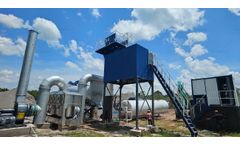
If elevated temperatures increase solvent vapor risk, effective vapor capture and extraction systems near the injection location prevent ignition and minimize odor or smoke. Hence, review schematics and measured extraction rates. Also, require materials compatibility and maintenance intervals for injectors and nearby linings. ...
ByMacroad
Why Smoke Control Is Critical in Metal Cutting Metal cutting processes such as plasma cutting, laser cutting, oxy-fuel cutting, and abrasive cutting release smoke and fine particles into the air. ...
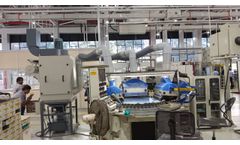
Knowing the exact locations of pollutant sources helps determine where extraction systems should be placed.Choose the Right Type of Extraction SystemThe choice of system depends on the type and volume of fumes you need to remove. ...

Our product range is Dehumidification Unit, Air Handling Unit, Hygienic Air Handling Unit, Heat Recovery Unit, Jet Fan and Smoke Extraction Fan, Pressurization Fan, Box Type Fan, Round And Rectangular Duct Type Fan, Roof Type Fan, Kitchen Exhaust Fan With Filter and Exproof ...
Firstly, the exhaust function of exhausting wastes such as smoke and broken layers. Secondly, it provides the amount of oxygen necessary for burning bean. ...

The requirement Our brief was to produce a thermally buoyant smoke layer in order to test the efficiency of the high level smoke extraction system, activating the VESDA smoke detection system, but without activation of the sprinkler system: We supplied smoke generating equipment, an operator and technical ...
Concept were commissioned by Westfield’s to produce a thermally buoyant smoke effect within the siding complex in order to verify the performance of the smoke detection and smoke extraction system. The equipment used; ViCount 5000 / 180 / 1.7kw smoke generator, stainless steel deflector plate, ...

Together these particles and gases form a “smoke” that can impair breathing or cause nausea, dizziness, or irritate the eyes, nose, and throat. ...

In order to create such variants, growers rely on a special extraction process using butane, an extremely flammable gas. To reduce the risk of explosions, cannabis businesses that manufacture solvent-processed extracts must adhere to rulings on closed-loop extraction systems (WAC 314-55-104). Using Butane for THC Extraction ...