
Refine by
Sncr Articles & Analysis
35 articles found
CADAIR Integrated Hazardous Waste Flue Gas Treatment Process CADAIR has developed a complete treatment process designed specifically for hazardous waste incineration exhaust.Step 1: High-Efficiency Baghouse Dust Collection Before entering the RTO, exhaust gas passes through a high-performance bag filter.Benefits include:Removal of particulate matter Protection of ceramic heat storage media ...
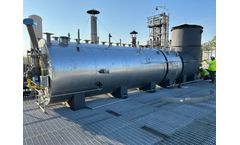
The Challenge Many industrial furnaces operate in oxygen depleted conditions, emitting high levels of ammonia, NOx, and other nitrogen-bearing compounds. This presents a significant challenge for manufacturers striving to meet air quality regulations and limit carbon output. Emission streams that contain nitrogen bearing hazardous air pollutants (HAPs) cannot be thermally treated in a ...
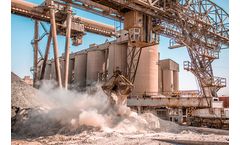
NH3 emissions (slip) must be monitored if an SNCR process is used to reduce the NOX emissions. There are also often requirements on continuous or periodic measurements of HCl, HF, and TOC emissions, as well as periodic monitoring of dioxins and metal emissions.From an emissions perspective, the situation at a cement industry is often similar to that of a waste-to-energy plant, ...
ByOPSIS AB
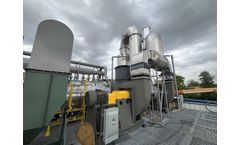
In select applications, a fourth stage of the MS-DFTO has been added to provide Selective Non-Catalytic Reduction (SNCR) as a safety factor to ensure even fewer NOX emissions. Experience has shown that these fourth SNCR stages are not necessary and rarely used even when supplied as the NOX emissions have always met permit requirements without the need for this ...

The company attaches great importance to environmental protection while vigorously improving the economic benefits of the enterprise and paying attention to product quality. The company leaders, in line with the principle of creating a good production and living environment for the employees and the surrounding residents, collect and deal with the waste gas generated in the operation process and ...
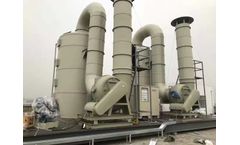
Selective catalytic reduction (SCR) or selective non-catalytic reduction (SNCR) systems reduce nitrogen oxide emissions by reacting with ammonia or urea in the presence of a catalyst. ...
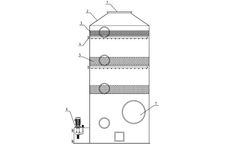
Selective catalytic reduction (SCR) and selective non-catalytic reduction (SNCR) are two common methods to reduce NOx emissions. SCR uses a catalyst and ammonia or urea to convert NOx into nitrogen and water, while SNCR injects ammonia or urea directly into the flue gas to chemically reduce NOx. ...
· Monochromaticity with spectral width down to 0.001nm ensures high precision and anti-interference from background Applications: · HCl, HF in waste incineration · NH3 slip in thermal power plant SCR, SNCR · NH3 and HF monitoring in fertilizer plant · HCl in the pharmacy industry AQMS-1000 An ambient monitoring system that complies with US EPA ...

Environmental sustainability is the only viable path for the future of the industry. The only possible answer is to implement technologies that combine maximum efficiency in eliminating emissions and waste with the highest efficiency in its implementation and use, in order to avoid damaging the productivity of your industrial processes. With regards to air pollution treatment, there are ...
ByTECAM
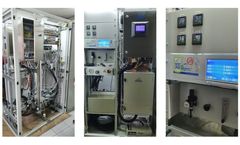
ENVEA and its local distributor RSI Electro have designed a turnkey solution, based on the MIR 9000H – a Heated Multi-Gas NDIR-GFC analyzer perfectly adapted for wet sample gases in corrosive applications such as DeNOx (SCR / SNCR) as well as the MIR 9000e – a new generation of NDIR-GFC Multi-Gas Analyzers offering multi-gas measurement of the N2O (required for this ...
ByENVEA
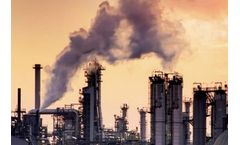
The problem of NOx emissions The problem with Nitrogen compounds (NOx) emissions is that they contribute to generating the greenhouse effect. For example, N2O causes 300 times more damage than CO2. In addition, NOx combines with the humidity of the air in the atmosphere and is the cause of acid rain and is therefore very dangerous for the environment. ...
ByTECAM
Coal combustion power plant - MIR 9000, PCME STACK 602, PicoFlow, WEX India’s Ministry of Environment, Forest and Climate Change (MoEFCC) targeted significant reduction of particulate matter (PM), sulfur oxides (SOx) and nitrogen oxides (NOx) emissions from coal fired power plants. Other key stakeholders in this air pollution mitigation project are the Central Pollution Control Board ...
ByENVEA
The chemical sector is a sector with high environmental risk. Emissions elimination in the chemical sector has become a critical issue in the recent decades. The excess of pollutants in the atmosphere derived from production processes brings consequences and harmful effects for the environment and for people’s ...
ByTECAM
SCR DeNOx installations are common for large coal fired power stations, SNCR technology can often be found in small to mid-size incineration plants and power stations utilising CFB boilers. What we do In order to control both SCR and SNCR systems, these processes require monitoring throughout. CODEL offers a range of products that can monitor both ...
In power plants and various other combustion processes waste NOx reduction, referred to as deNOx, is typically achieved by selective catalytic reduction (SCR) or selective non-catalytic reduction (SNCR). In SCR process, Ammonia (NH3) is injected into the gas flow from the combustion process; this reacts with NOx in the flue gas, in the presence of a catalyst, to form H2O and N2. ...
Dust filters remove the particles, scrubbers are used above all to reduce corrosive substances, and ammonia injection with or without catalysts (SCR or SNCR) is used to reduce emissions of nitrogen oxides.To monitor and control the scrubbing process, concentrations of SO2, HCl and/or HF are often measured to provide signals to the injection of the scrubbing agent, typically lime ...
ByOPSIS AB

Selective Non-Catalytic Reduction (SNCR) is a mature, effective, and affordable technology that breaks NOx in furnace-flue gas down into nitrogen gas (N2), water, and carbon dioxide, using ammonia or urea as a reagent. The SNCR technology does these things well, and we’re always looking to improve it. ...
This chamber is also fitted with an SNCR de-NOx kit. This unit was fitted as a precaution but never used as the combustion process proved to be extremely efficient. ...
As a cost-effective heated analyser, the MIR 9000H is also an ideal solution for process control to monitor ammonia slips in SCR/SNCR processes, where either ammonia or urea can be used. It is important to emphasise that in the case of urea, MIR 9000H takes into account the N2O which is created as a byproduct. ...
ByENVEA
As a cost-effective heated analyser, the MIR 9000H is also an ideal solution for process control to monitor ammonia slips in SCR/SNCR processes, where either ammonia or urea can be used. It is important to emphasise that in the case of urea, MIR 9000H takes into account the N2O which is created as a byproduct. ...
ByENVEA