
Refine by
So2 Articles & Analysis
756 articles found
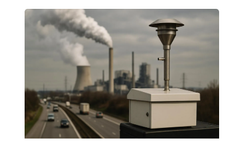
This application note highlights peer-reviewed studies that demonstrate benefits beyond traditional 24-hour methods.The Importance of Metals in Source ApportionmentWhile organics and ionic species contribute to source attribution, many undergo atmospheric chemical transformations (for example SO2 to sulfate), complicating source linkage. Metals, in contrast, do not chemically ...

States have increased enforcement through fenceline monitoring in major industrial clusters, with ambient standards for SO2 and NO2 set at 80 µg/m³ (24-hour basis) and broader continuous monitoring expectations across sectors. ...

States have increased enforcement through fenceline monitoring in major industrial clusters, with ambient standards for SO2 and NO2 set at 80 µg/m³ (24-hour basis) and broader continuous monitoring expectations across sectors. ...
States have increased enforcement through fenceline monitoring in major industrial clusters, with ambient standards for SO2 and NO2 set at 80 µg/m³ (24-hour basis) and broader continuous monitoring expectations across sectors. ...
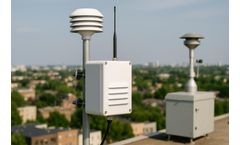
Yes, they are the primary tools for indicative monitoring.What pollutants can be measured through indicative monitoring? PM1, PM2.5, PM10, CO, NO2, SO2, O3, and CO2.Original: ...
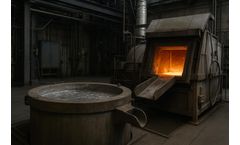
Key targets include: Particulate emissions: lead fume and dust; controlled by ventilation with baghouse filtration to SO2: generated during antimony sulfide refining at 0.5-1.0 kg SO2 per kg sulfur; controlled by wet scrubbers with lime slurry achieving >95% removal. ...
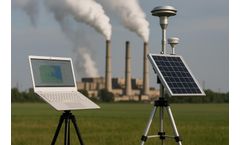
The following pollutants have special meaning in model runs: SO2 - Triggers a 4-hour half-life decay when the Urban dispersion coefficient is used; computes the distribution of daily maximum 1-hour concentrations in accordance with the National Ambient Air Quality Standards (NAAQS) when the 1-hour period is the only short-term averaging period NO2 - Required to use special ...
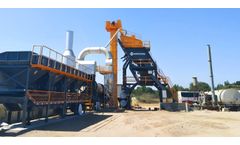
Premium portable asphalt plant manufacturers deliver measurable returns through multi-fuel burners and intelligent automation that cheaper alternatives cannot match. In remote regions with volatile fuel supply chains and tightening emission regulations, advanced combustion technology eliminates operational vulnerabilities that expose contractors to catastrophic shutdowns and regulatory penalties. ...
ByMacroad
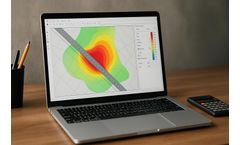
For example, a value of 64 corresponds to SO2 as the pollutant type.Run the model.Output will now reflect concentrations in parts per million (ppm) that correspond to the selected molecular weight of the inert gas. ...

Urban planning increasingly treats air quality as an infrastructure input, leveraging multi-source data to reduce exposure, bolster resilience, and guide investment in healthier, more equitable cities.Key data types and their valuePollutant concentration data: monitoring commonly tracked pollutants include PM2.5, PM10, NO2, O3, SO2, and CO. PM2.5 is particularly problematic due ...

One of the primary concerns is the release of harmful pollutants, including particulate matter, nitrogen oxides (NOx), sulfur dioxide (SO2), and volatile organic compounds (VOCs). These emissions contribute to air pollution, smog, and acid rain, which can negatively impact human health and ecosystems. ...
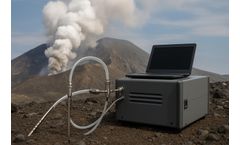
By measuring key gases such as CO2, SO2, H2S, H2, CO and H2O, quadrupole MS supports time-resolved interpretation of emissions in active environments.Portable systems are particularly valuable in field campaigns, where rapid analytical feedback can improve sampling decisions and help capture transient gas-composition changes that might be missed by delayed laboratory ...

Vegetation can trap particulate matter, absorb gases such as SO2 and O3, and cool urban heat islands, but these benefits depend on species type, placement, climate, and city-level emission loads. ...

The scope of required pollutants and compliance benchmarks under NCAP is specified by the National Ambient Air Quality Standards (NAAQS), which establish standardized monitoring requirements including PM2.5, PM10, NO2, SO2, CO, NH3, ozone and Pb. In practical deployments, air-quality monitoring projects typically involve solution providers and system integrators tasked with ...

Problem Improving SO2 Removal from AV Cell’s plant in Canada. ...

Suncor Energy approached Osprey/FTL with an emission problem from their Stuart Oil Shale project in Queensland Australia, extracting crude oil from oil shale using a new ...
Ammonia (NH3) is an alkaline gas that negatively affects air quality, promoting the formation of secondary PM2.5 and interacting with other pollutants such as nitrogen oxides (NO?), sulfur dioxide (SO2), and volatile organic compounds (VOCs). These interactions have significant consequences for human health and ecosystems, as highlighted by the WHO. ...

System: Pilot Plant - Venturi Scrubber & Carbon Filter Application: Pilot trials, scrubber hire, or proof of concept demonstration plant Scrubbing of particulate, soluble acid gas contaminants (HCl, H2S, SO2, etc) or ammonia VOCs Design flowrate 1,000 m3/hr ...
Client: Confidential customer Site: Sohar, Oman Application: Antimony oxide production facility: flue gas desulphurisation plant ...
Client: Confidential Battery Technology Manufacturer Site: Poland Application: >98% efficiency SO2 scrubbing of 900 mg/Nm3 Particulate removal >90% efficiency of 15mg/Nm3 Inlet gas flow 13,500 Nm³/hr ...