
Refine by
Soil Amendment Articles & Analysis: This-Year
13 articles found

These characteristics can help improve crop productivity, particularly in degraded or nutrient-deficient soils. When incorporated into soil, biochar can reduce nutrient leaching and increase fertilizer-use efficiency. The material also contributes to improved soil aeration and aggregate stability. As a result, farmers may experience more ...
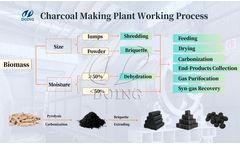
These could be in the catering and barbecue industry, industrial smelting, or agricultural soil amendment. Different application scenarios impose varying requirements on the charcoal's fixed carbon content, calorific value, and shape. ...
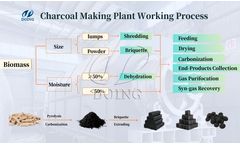
Primary Applications of Biochar: ①Premium Fuels: Processed into machine-made charcoal, barbecue briquettes, hookah charcoal, and similar products, the market selling price is significantly higher than that of ordinary bio-coal. ②Agriculture & Environmental Protection: Utilized for soil amendment, slow-release fertilizers, and carbon sequestration (carbon sink ...
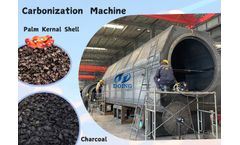
It can be utilized in fields such as soil improvement, carbon sequestration, industrial fuel substitution, and adsorption for water treatment, transforming low-value waste into useful resources. ...
Charcoal itself has multifaceted applications: as a domestic or industrial fuel, as a soil amendment for nutrient retention, and as a precursor for activated carbon. ...
Traditional disposal methods, including landfilling and open incineration, contribute to soil degradation, water contamination, and the emission of hazardous gases. ...
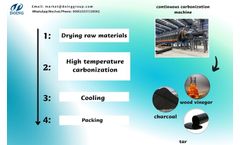
Such high-quality biochar possesses broader application value in fields such as soil amendment and adsorption-based purification. 3. Extending Equipment Lifespan and Reducing Maintenance Costs Under the high-temperature conditions within carbonization furnace, wet feedstock generates substantial amounts of water vapor. ...
The charcoal, also known as biochar, can be used in various industrial applications, including as a soil amendment in agriculture or as a carbon-rich material for the production of activated carbon. ...
Biochar, a carbon-rich byproduct of biomass pyrolysis, is gaining recognition for its multiple benefits, including soil enhancement, carbon sequestration, and renewable energy production. ...
Biochar and Its Expanding Applications Biochar is primarily known for its application as a soil amendment. When added to soil, biochar enhances fertility, improves water retention, and increases crop yield. This ability to improve soil health has made biochar a staple in sustainable agriculture. However, its uses extend beyond ...
A study published in Nature demonstrated that biochar-amended soil not only increases soil carbon storage but also further sorbs atmospheric CO₂, with calcium and magnesium in biochar reacting with CO₂ to form stable inorganic carbonate minerals. ...
Similarly, biochar can be utilized as a soil amendment, promoting carbon sequestration and enhancing soil health. ...
Industrial operations generate tough wastewater—and outdated treatment methods often cannot keep up. If contaminants are not properly removed, they threaten compliance, equipment reliability, and the environment. Leading companies are searching for smarter, more efficient technologies that deliver cleaner water, reduce operational burdens, and provide long-term ...