
Refine by
Soil Characterization Articles & Analysis
59 articles found

In the fast-growing food processing industry, infrastructure quality is paramount. Modern food plants require robust engineering solutions to ensure longevity, operational efficiency, and compliance with stringent hygiene standards. Ocean Non Wovens recently played a pivotal role in a transformative food plant project in Uluberia, Howrah, supplying and installing 1,900 square meters of our Ocean ...
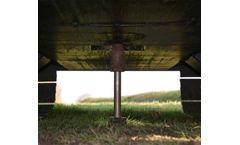
Introduction While in certain parts of the world Standard Penetration Testing (SPT) is the most widely used geotechnical soil investigation method, it has drawbacks. Cone Penetration Testing (CPT) is also a well-proven soil investigation method and is in many instances a more appropriate method than ...
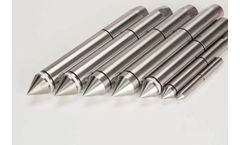
Introduction Cone selection is often not given much thought when selecting equipment for a Cone Penetration Testing (CPT) job. It is, however, quite important to consider the soil type that will be encountered as well as the investigation aims of the project. The CPT cone used can have huge impacts on the resulting data quality and applicability and should therefore be carefully considered. This ...

Climate change studies have been increasingly common and important in recent years. The impact of human activities on the environment, global warming, and sea level rises have been well documented and debated, and whilst we have gained a deeper understanding of these issues in recent years, there is still so much more to learn. In this article, we discuss how the pQA from Hiden Analytical can be ...

British Columbia’s Protocol 4 is applied in situations where the concentration of substances exceeds the desired numerical soil standards described under Contaminated Sites Regulation (CSR). It is applied to investigate and remediate contaminated sites to conduct soil relocation in such areas. ...

What is Contaminated Soil Sampling? Use of a proper contaminated soil sampling method is vital to obtain a representative sample of soil waste. A representative sample of soil waste is necessary to accurately characterize (hazardous or non-hazardous) your stabilized waste piles. ...

What is Heavy Metals Contaminated Soils Site Characterization? The EPA requires a Toxicity Characteristic Leaching Procedure (TCLP, EPA Method 1311) test to characterize heavy metals contaminated soils and determine how they should be disposed. Soils exhibiting hazardous characteristics, typically leaching ...

Vista Clara’s Helios Core and Soil Analyzer (formerly named Corona) brings an unprecedented level of accuracy, flexibility and portability for robust measurements of hydrologic properties across a wide range of core sizes and lithology. By combining advanced NMR technology with low-field, high-bandwidth operation, Helios delivers laboratory precision in a field portable lightweight rugged ...

As part of any Brownfields project, preliminary soil and groundwater tests characterize the nature and amount of contaminants present. ...

Abstract :Two polluted soil samples were assessed for both acute (Microtox®,Daphnia magna,Thamnocephalus platyurus) and chronic (Pseudokirchneriella subcapitata) toxicity, as well as for genotoxicity (Mutatox®). Bioassays were performed on soil water leachates and on soil solvent extracts to characterize not only the ...
We hired and managed several subcontractors for Demolition, Concrete Crushing, Surveying, Compaction Testing, Asbestos & Universal Waste. ERC self-performed the in-situ soil mixing, waste characterization & sampling, disposal, backfill import & placement, grading & restoration. The project had multiple constituents as waste streams including haz ...

A new study published in the Soil Science Society of America Journal investigated the field performance of 5 soil moisture instruments in heavy clay soils. ...

Ongoing site contamination Groundwater and soil samples were collected and analyzed in 2015 and 2016, producing analytical data which confirmed that widespread soil and groundwater contamination still existed at the site. ...
Ongoing Site Contamination Groundwater and soil samples were collected and analyzed in 2015 and 2016, producing analytical data which confirmed that widespread soil and groundwater contamination still existed at the site. ...
The Topp Equation in 1980 quantified an analytical relationship between soil moisture and a measurable parameter characterizing the storage and distribution of the energy in soil using radio frequencies called the dielectric permittivity, in which soil is the dielectric. ...

Similar conclusions can be drawn from pyrolysis gas chromatography analysis (Py-GC), which enables the characterization of soil organic matter quality from a chemical-structural point of view. ...
The goal is to be able to produce ethanol from not only the fermentation of the fruit, but the stems, leaves, and roots. Soil moisture sensors are used in this research to characterize the hydrological requirements of the biomass crops. ...
Loktak, one of the largest freshwater lakes of India, is known for floating islands (Phumdi), being made up of a heterogeneous biomass of vegetation and soil. This ecological site represents an exclusive environmental habitat wherein the rhizospheric microbial community of Phumdi plays a key role in biogeochemical cycling of nutrients. A culture-independent whole genome shotgun sequencing ...

MWH carried out this comprehensive investigation in order to characterize soil, geology, surface water, and groundwater and identify possible source areas and potential contaminant migration pathways. ...

However, metabolite mixtures formed during different stages of MENA (bio)transformation in soil were characterized using high‐resolution mass spectrometry in parallel with zebrafish embryo toxicity assays, which demonstrated statistically significant mortality during the onset of azo‐dimer formation. ...