
Refine by
Soil Decontamination Articles & Analysis
16 articles found
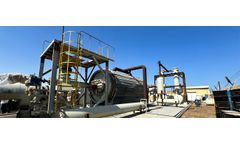
By enabling the remediation of hydrocarbon-contaminated soils and residues, while simultaneously recovering usable energy, the technology intersects with both environmental restoration and climate finance. ...

Introduction To Biostimulation In the fascinating field of environmental science, one of the technologies gaining traction is biostimulation. It’s a novel approach that leverages nature’s own mechanisms to solve human-made problems, like soil ...

Proper management of rainwater must allow: to avoid an aggravation during a flood or on-going soil erosion; to better participate in the best possible way to recharge the phreatic water; not to degrade the ecosystem with hydrocarbons and other pollutants, drained by rainwater, such as water from runoff on an electrical transformer, which is charged with dielectric oil; ...

In a project commissioned by the Global Environmental Facility and the United Nations Development Programme, EDL carried out a full-scale soil decontamination demonstration at a former US airbase in Vietnam. The trial successfully treated 150 tonnes of soil contaminated with Poly-Chlorinated Dibenzo-p-Dioxins and Dioxin-like Poly-Chlorinated ...

’ ‘We previously obtained this information from the DINOloket, from the environment department’s groundwater research during soil decontamination or from the Province of Gelderland, which also had insight into groundwater levels. ...

Ecomesure proposed to set up a network of surveillance sensors (air quality and noise) to enhance construction site management as a solution for REMEA, a company that specialises in soil decontamination. We provided web platform services (EcomSaaS) for environmental data monitoring : data visualisation, mapping, storage, downloading, remote control, ...

Furthermore, routine inspections for pathogens on soil in the field or seeds to be planted need to be done to prevent diseases caused by soil-borne or seed-borne pathogens. ...

The Solution: CETCO's QUIK-SOLID is a granular polymer that rapidly absorbs and retains large volumes of aqueous solutions, including low-level radioactive sludge, decontaminated wastewaters and contaminated soils with excess liquids. Having been successfully bench-tested in other applications, it was determined that QUIK-SOLID^ superior quality and proven ...
ByCETCO

An experimental programme was undertaken to reclaim the soils contaminated with petroleum hydrocarbons. Two types of locally available soils, clay with low compressibility and poorly graded sand, were chosen for the study. ...
An experimental programme was undertaken to reclaim the soils contaminated with grease in this study. The performance of surfactant to remove the petroleum grease from soil and its effect on restoring the geotechnical properties was quantitatively evaluated. Locally available soil (clay with medium plasticity) was contaminated with varying ...
Bioremediation, or the use of micro-organisms to decontaminate soil or groundwater, is being increasingly seen as an effective, environment-friendly treatment for oil-contaminated sites. ...

The other surfaces and materials tested included the floor tiles, kitchen platform, grinding stone, utensils used, the rice and spices ( masalas ) used, batteries, medicines taken, the soil outside the house, etc. The unit of analysis for bulk materials such as soil and powders is ppm . ...

Decontamination companies and researchers in France are working to restore polluted soil using treatments that range from biological methods to soil washing and incineration. ...
Common treatment technologies for fuels in soil, sediment, and sludge include biodegradation, incineration, SVE, and low temperature thermal desorption. ...
The same equipment could probably meet stricter requirements with minor modifications, if necessary. Decontaminated soil retains its physical properties. Unless being heated to the higher end of the LTTD temperature range, organic components in the soil are not damaged, which enables treated soil to retain the ability to support ...

The “pollutant” was commercially available kerosene at a level of 5% by weight in the soil. The soil was initially moisture-free.Results are presented as the time needed to produce either 80 or 100% decontamination. These times depend on the position in the soil—the higher the steam-flow velocity, the shorter the times to ...