
Refine by
Soil Enhancement Articles & Analysis
291 articles found

Agricultural Applications of Biochar Biochar has attracted considerable attention within the agricultural sector due to its capacity to improve soil quality. Its porous structure enhances water retention, nutrient availability, and microbial activity. These characteristics can help improve crop productivity, particularly in degraded or nutrient-deficient ...

Road failure is rarely caused by the pavement surface itself. In most cases, deterioration begins deep beneath the roadway, within the base, sub-base, and subgrade layers that support the entire structure. Even the most carefully engineered pavement design will eventually fail if it is built on weak, unstable, moisture-sensitive, or poorly compacted base. Traditional road construction practices ...
Charcoal itself has multifaceted applications: as a domestic or industrial fuel, as a soil amendment for nutrient retention, and as a precursor for activated carbon. ...
Biochar has applications ranging from industrial fuel to agricultural soil enhancers, offering a market that continues to expand as sustainability becomes a global priority. ...
The rice hull carbonizer enables the transformation of this agricultural residue into biochar, which can be applied to soils to enhance fertility, improve water retention, and lock carbon into stable forms for decades. ...
Biochar, a carbon-rich byproduct of biomass pyrolysis, is gaining recognition for its multiple benefits, including soil enhancement, carbon sequestration, and renewable energy production. ...

In today’s construction sector, the focus is on the durability and longevity of materials used in engineering projects. In this context, polyester geotextile stands out as a frequently preferred material in construction projects and infrastructure works. In this article, you will find answers to questions such as what is polyester geotextile and what are its ...
Polypropylene geotextile stands out in the construction industry today with its durability and various advantages. In this article, we will delve into the features and benefits of polypropylene geotextile in ...
Biochar and Its Expanding Applications Biochar is primarily known for its application as a soil amendment. When added to soil, biochar enhances fertility, improves water retention, and increases crop yield. This ability to improve soil health has made biochar a staple in sustainable agriculture. However, its uses extend beyond ...
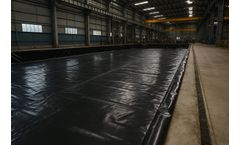
Effluent containment systems: prevent leakage of industrial wastewater into surrounding soil Subgrade isolation: protect foundation layers from moisture and chemical infiltration Drainage channel lining: ensure controlled flow of liquids with minimized seepage losses Chemical storage zones: act as a barrier against aggressive substances HDPE liners are particularly effective in ...
These innovations focus on optimizing heat transfer, enhancing feedstock handling, and increasing the overall sustainability of the process. ...
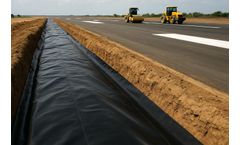
Ocean HDPE Liner (400 micron) was selected to act as a barrier within the pavement and drainage system, delivering enhanced subgrade moisture control, drainage efficiency, and containment performance under extreme dynamic loads, fuel exposure, and environmental variation. ...
The process involves heating the feedstock in a low-oxygen environment to create a solid, carbon-rich material that can be used for soil enhancement or other industrial applications. The carbon within biochar is highly stable, remaining locked in the material for hundreds or even thousands of years. ...
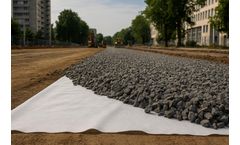
Urban redevelopment in constrained urban environments requires geosynthetics to stabilize soils, improve drainage, and support long-term infrastructure performance. ...
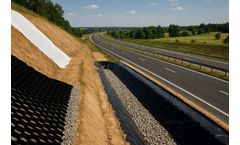
The Indian infrastructure sector is expanding rapidly, with highways, railways, industrial corridors, smart cities, and water-management systems driving demand for soil stabilization, drainage control, erosion prevention, and enhanced structural durability. Geosynthetics provide engineered polymeric solutions that address weak soils, heavy ...

Geosynthetics, particularly geotextiles and geogrids, have become integral to modern infrastructure development due to their ability to enhance soil performance, improve load distribution, and extend the service life of pavements and foundations. ...
Broader Geosynthetics Applications Soil stabilization: improved shear strength in weak or expansive soils Erosion control: surface protection for embankments and slopes Drainage improvement: geotextiles and geocomposites maintain permeability while reducing soil migration Environmental protection: lining systems in landfills and water ...
Project Overview Project Name: Road Project Location: Guwahati, Assam Product Supplied and Used: Ocean Uniaxial Geogrid 40 kN Quantity: 5,000 SQM Client Sector: Public road infrastructure (urban and peri-urban connectivity) Guwahati is the primary gateway to Northeast India and a critical logistics and mobility hub for Assam and surrounding states. Rapid urban growth, increasing traffic ...
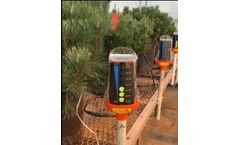
The coin-flip mechanism provides an immediate visual reference of the soil water potential, allowing growers to quickly assess plant water stress and irrigation needs in real time. ...
This transformation not only reduces agricultural waste but also creates a renewable energy source and soil conditioner. The use of efficient equipment such as a palm kernel shell charcoal machine allows for continuous production and stable carbonization, ensuring consistent biochar quality. 2. Biochar: A Sustainable Solution for the Palm Oil Sector Biochar derived from palm ...