
Refine by
Solid Liquid Separation System Articles & Analysis
11 articles found

A candle filter is a pressure-driven industrial filtration system used to separate solids from liquids or gases. It consists of multiple vertical porous filter elements (“candles”) installed inside a closed pressure vessel. ...
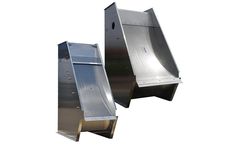
A Hydro Sieve, a static sieve screen or static wedge wire screen, is a gravity-fed screening device designed to separate solids from liquids without needing external power or moving parts. ...
Solid-liquid separation is a fundamental process employed across various industries to extract and recover valuable components from liquid streams, mitigate environmental impact, and enhance operational efficiency. One prominent solution in this realm is the screw press dewatering machine offered by Tianzhong Machinery. In this post, we will explore the significance of solid-liquid separation, ...
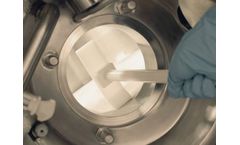
What is Solid-Liquid Separation? As the name suggests, solid-liquid separation is a method to separate solids and liquids from a mixture so that they are available as individual components, which is crucial when just one phase is needed. ...
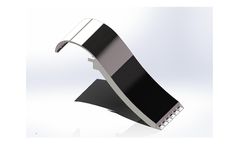
Static Filter Screener -- A solid-liquid separation device used in the process of sewage pretreatment YUBO static filter screener is a type of wedge wire self-cleaning screen filter. ...

Veolia Water Technologies engineered and designed the production process that recovers lithium carbonate and sulfate of potash from clay deposits using HPD® evaporation and crystallization systems. Lithium, a key component for fast-growing rechargeable battery markets, powers everything from consumer electronics to electric cars and energy storage ...

CWT knew from experience with the nixtamal corn process that the wastestream would be high in fats, oils and grease (FOG) and suspended solids (both dissolved and undissolved). While TSS and FOG would be easy to remove from the stream using CWT’s Gas Energy Mixing (GEM) System, the stream was still going to have high levels of BOD and COD. ...
Only a small space was available inside the building, making it necessary to operate solid/liquid separation at an HRT of 5 GPM/ft2 , and a solids loading of up to 15 lb/ft2 /hr. Currently engineers consider that it is impossible to clarify aerobic MLSS at loading over 10 lb/ft2 /hr unless membrane separations ...
The current DAF Systems are very large systems that rely on a tank with only 0.6 GPM/ft2 HRT, and consequently high amount of retention time for flotation. ...

A new wastewater treatment technology, called BioCAST, has been designed and developed for high rate and simultaneous removal of organic carbonaceous compounds as well as nitrogen and phosphorus, along with reduced sludge generation. The treatment system has two interlinked reactors containing four independent zones with different environmental conditions of aerobic, ...
The full scale GEM System has been installed in June 2010. Dual high molecular weight flocculants and GEM flotation remove TSS below 50 mg/l, FOG below 2 mg/l and produce sludge with 20% solids. ...