
Solid Waste Regulations Articles & Analysis
30 articles found
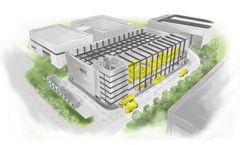
Nowadays, the Chinese government is regulating the solid waste treatment, basing on the principal of "reduction, reuse and recovery", the municipal solid waste should be source separated in advance, with separate transportation the different types of waste should be sent to specific system for ...
Numerous industrial and municipal processes generate a substance referred to as “sludge,” a semi-solid byproduct containing a mixture of liquids and solid waste. Sludge disposal is highly regulated, making it essential for municipalities and industrial businesses to treat and dispose of it in a way that complies with ...
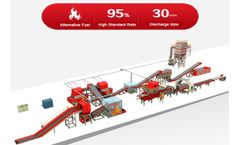
It's important for us to distinguish between solid waste and industrial solid waste because of the different treatment methods. Today, we will show you the difference and the most recycling method for your own waste. The meaning of solid waste Solid ...

In 2019, the province’s generation was about 3.9 million tons, an increase of 8.3% year-on-year, ranking sixth in the country. 40 of the 46 categories in the "Waste Directory", such as our common medical waste, waste lead batteries, and waste circuit boards, are all hazardous waste. ...
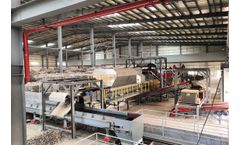
On September 1 this year, the Ministry of Environmental Protection officially promulgated the strictest solid waste law in history. The waste residue generated in the production activities of paper mill needs to be treated by themselves. As the combustible material in the waste residue of paper making is relatively high, how should paper mill processes the most troublesome waste residue of paper ...
The bill limits the ability of defendant federal regulators and pro-regulatory plaintiffs “to abuse federal consent decrees and settlement agreements to require new regulations, reorder regulatory priorities, bind the discretion of future administrations, and limit the rights of regulated entities and State, local and Tribal ...

Environmental Protection Agency (EPA) allows for alternative post-closure care solutions at the discretion of each state’s solid waste director. As long as the alternative meets EPA standards, states can accept other post-closure strategies from landfill owners. ...

The Environmental Protection Agency (EPA) proposed these regulations to ”address gaps in the regulations, provide greater flexibility for hazardous waste generators to manage their hazardous waste in a cost-effective and protective manner, and reorganize the hazardous waste generator ...
Urban India is facing huge challenges in terms of population growth and resultant infrastructural needs. Municipal solid waste management (MSWM) still remains a challenge for urban local bodies. Municipal solid waste (management and handling) rules, 2000 was a first step in India towards organising the system, but till date the systems are largely insufficient and/inefficient. Focus on the urban ...
On February 28, 2014, U.S. Environmental Protection Agency (U.S. EPA) requested a remand without vacatur of the set of rules commonly referred to as the Boiler Maximum Achievable Control Technology (MACT) rules. U.S. EPA has also requested a remand of the Commercial and Industrial Solid Waste Incineration (CISWI) rules. On May 15, 2014 the remand request was granted to U.S. EPA by the U.S. Court ...
Created out of a need for waste haulers to respond to government decisions, the CRRC has grown to a pivotal organization in California that has a hand in influencing the waste industry’s legislation issues. In the 1950s when several waste haulers in Northern and Southern California saw that pending legislation in Sacramento would impact them and the waste industry, they banded together to ...
A given cement manufacturing process can simultaneously be subject to multiple air quality regulations with varying requirements and compliance deadlines. Specifically, these requirements include the National Emission Standards for Hazardous Air Pollutants (NESHAPs) for the Portland Cement Manufacturing Industry (40 CFR Part 63, Subpart LLL; “PC MACT”); the Commercial ...
The proposal also discusses potential regulation of coal ash from power plants, although EPA is drafting regulatory requirements for coal ash in a separate rulemaking under solid waste law. ...
However, one of the 4 Rules is the Commercial and Industrial Solid Waste Incineration (CISWI) rule, and facilities may want to consider this rule as a compliance alternative to Boiler MACT. ...
Using government records, data from hazardous waste treatment companies, and on–site surveys, we evaluated the effectiveness of the current industrial solid waste management system in Ho Chi Minh City (HCMC), which was established according to the revised Law on Environmental Protection of 2005 and related regulations. ...

The 3Rs — reduce, reuse and recycle — of solid waste management (SWM) also apply to plastic bags. But only a few countries in Asia have sound SWM systems, even though all of them have regulations on solid waste. This is a result of a general misconception that managing is the same as ...
Simultaneous to the publication of the final National Emission Standards for Hazardous Air Pollutants for Boilers (the Boiler NESHAP) and the Commercial and Industrial Solid Waste Incinerator (CISWI) Rules, EPA issued a new regulation that for the first time defines what materials are a non-hazardous solid waste ...
This paper investigates the Municipal Solid Waste (MSW) trade market in the city of Bhopal, India, and presents results of field surveys conducted to determine the movement of MSW through a succession of ragpickers and traders to its ultimate destination of Recycling-Units. This waste-trade is carried out through a hierarchy of ...
The paper reports on a survey in Finnish small- and medium-sized metal engineering enterprises (SMEs) with certified Environmental Management System (EMS). Waste awareness has increased after certifying EMS and the treatment of solid waste has improved; source separation of solid waste facilitated the recovery of recyclables and their diversion from landfill. EMS has raised knowledge levels, in ...
Majority of waste management plans are severely constrained by the lack of resources to finance these services. In developing countries, collection and transportation of waste are the most costly Solid Waste Management (SWM) activities. Safe disposal invariably receives less attention. Mysore City, one of the largest cities of Karnataka (India) with a population of around 0.8 million, is facing ...