
Refine by
Solids Flow Articles & Analysis
154 articles found
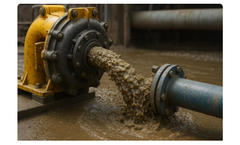
Mining slurry presents one of the most challenging transport media in industrial pumping systems due to abrasive solids that wear internal components and create unstable flow. Slurry characteristics such as particle size, solids concentration, density, viscosity, and material composition affect pump performance, wear rates, and system ...
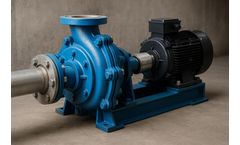
A correctly sized pump maintains stable flow, keeps solids from settling in the pipeline, and operates in a controllable range. ...

A Practical Technical Review of Environmental Fly Management for Wastewater Plants, Lift Stations, Lagoons, and Industrial Water Operations Water treatment facilities are built to manage biological load, moisture, solids, and flow control under demanding conditions. Because of that mission, many sites also create environments where nuisance flying insects can ...
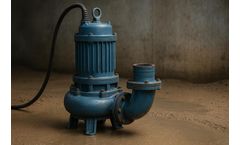
The decision is often driven by how the pump integrates with other system components rather than by the pump type alone.Pipeline length and friction losses: Longer runs increase resistance and require higher head to maintain flow.Required discharge pressure: Elevation gain and discharge distance determine the pressure the pump must overcome.Material density and particle size: Heavier slurries and ...
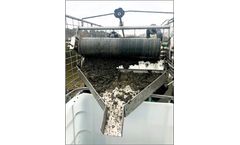
PSTs are designed to slow incoming flows, allowing heavier solids to settle as sludge while lighter materials such as oils and grease rise to the surface for removal. Under typical conditions, this stage can remove around 50–70% of suspended solids and 25–40% of biochemical oxygen demand (BOD), helping to reduce the burden on ...

Engineering Perspective Sizing is typically based on the relationship between flow rate and available screening area. However, this must be adapted to actual operating conditions. Field Considerations From a practical standpoint, the following factors are important: Variations in flow rate Organic and solids loading Risk of clogging Maintenance ...
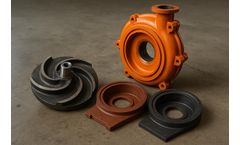
Slurry concentration: higher solids loading increases contact frequency and wear rate. Flow rate and head: higher velocity and energy elevate impact forces, accelerating wear, especially outside the best efficiency region. Warning Signs Your Wet End Needs Inspection or Replacement steady drop in efficiency under unchanged conditions higher power consumption ...

Once coke buildup reaches a critical level, it restricts flow, blocks passages, and insulates heat transfer surfaces. The reactor must be shut down completely for manual, labor-intensive, and time-consuming physical decoking. ...
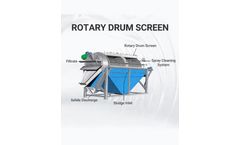
A rotary drum screen is a cylindrical screening device designed to separate solids from liquids in a continuous flow system. As the drum rotates, liquid passes through the screen surface while solids are retained and transported to a discharge point. ...
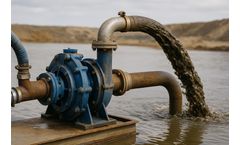
What a Pump Curve Really Tells You (and What It Doesn’t) A pump curve describes hydraulic capability under controlled test conditions. It shows flow versus head, efficiency bands and the Best Efficiency Point (BEP), and how power demand changes with flow, as well as Net Positive Suction Head required (NPSHr) and speed or impeller trims. ...

They stop when you need them most. The real problem is not the flow rate. It is solids handling. If your pump cannot move solids without choking or destroying internal parts, production slows, and downtime grows. ...

A produced water system operated in West Texas was experiencing accelerated internal degradation across multiple fittings-primarily elbows-due to high-solids loading and turbulent flow. Wall losses as high as 62% were confirmed via radiographic imaging. ...
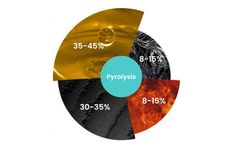
Carbon Black Production and Reintegration Carbon black accounts for approximately 30–35% of the total solid residue derived from the pyrolysis process. This fine, amorphous carbon material exhibits a high surface area and reinforcing properties similar to commercial-grade carbon black. ...

It can measure the flow of dirty and corrosive media, as well as suspended liquid-solid two-phase flows. ...

Wedge Wire Sieve Bend, DSM Static Screen - The Most Reliable and Low-Maintenance Solutions in Wastewater Treatment A sieve bend screen is a curved, gravity-fed filtration panel designed to separate solids from liquids without the use of moving parts or mechanical components. Also called a DSM static screen, this unit features a stainless steel frame with a curved wedge wire ...
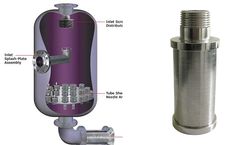
This highly efficient, corrosion-resistant filtration element plays a key role in resin retention, flow distribution, and solid-liquid separation across a range of industrial and municipal applications. ...
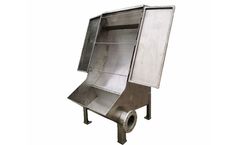
In industrial wastewater treatment, food processing, and agricultural runoff management, efficient solid-liquid separation is critical. The Hydro sieve, a static screen for solid-liquid separation, is engineered with durable wedge wire filter technology, offering a highly effective and maintenance-friendly solution for removing suspended solids ...
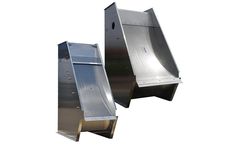
The Hydro sieve can achieve effective solid-liquid separation for modern wastewater treatment systems. How Hydro Sieve Static Screens Work Static screens directly influent a curved or sloped wedge wire surface, typically made of corrosion-resistant stainless steel. As the flow passes over the screen, solids are captured and retained on the screen ...
A rotary drum trommel screen, also called a drum screen for wastewater, is a mechanical filtration device that removes suspended solids from water. The system typically consists of a rotating cylindrical drum with perforated or wedge wire mesh that traps solid particles as wastewater flows through it. ...
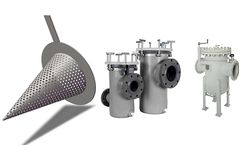
What is the difference between a temporary strainer and a permanent strainer? Strainers remove debris and solid particles from the flow to protect equipment in fluid handling systems. ...