
Refine by
Solvent Reuse Articles & Analysis
12 articles found

Against the backdrop of tightening environmental regulations and rising demand for green manufacturing, traditional treatment technologies often fail to adapt to industry-specific conditions, bringing four major challenges to enterprises: Exhaust gas contains various solvents such as benzene series, esters and ketones with distinct physical and chemical properties, placing high ...
Instead of destroying these valuable compounds through combustion, a recovery system physically separates the solvents from the air, purifies them, and allows them to be reused directly in the production process. ...
Today, industries such as lithium battery separator manufacturing, TAC film production, semiconductor fabrication, pharmaceutical manufacturing, precision chemicals, flexible packaging, and food fermentation are increasingly adopting solvent recovery technologies that combine environmental compliance with solvent reuse and cost reduction. ...
The recovered ethyl acetate features high purity and can be directly reused in production processes, substantially reducing solvent procurement costs. ...

There are still obvious solvent waste gas treatment problems in the pharmaceutical and chemical industry. ...
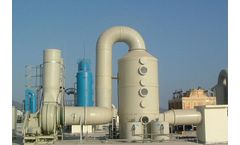
In order to achieve a good exhaust gas emission effect and reduce the pollution of the surrounding environment, after the long-term control and treatment of pharmaceutical and chemical solvents, the exhaust gas emission index has been reduced. Pharmaceutical and chemical waste gas control effect For most pharmaceutical and chemical enterprises, it is necessary to establish a ...

For instance, making battery electrodes uses N-Methyl Pyrrolidone (NMP) which is a solvent the manufacturer can recover and reuse without treatment in a pollution control device. However, this supplier had additional module manufacturing lines and multiple e-coat paint lines with curing ovens where solvent recovery was not an option. This further ...

In a single generation, the industrialized world has gone from relative environmental indifference to a protector of natural resources. Not only have consumer minds changed dramatically in the last few years, but new regulations are reflecting those concerns. Almost no industry is under closer scrutiny than solvent cleaners and similar chemicals. Proactive businesses have embraced this new role ...

The quaternary allows a chemist to place four (4) pure solvents on the pump, and then have the pump deliver the desired compositions of each of the solvents to create the gradient conditions needed. ...
The quaternary allows a chemist to place four (4) pure solvents on the pump, and then have the pump deliver the desired compositions of each of the solvents to create the gradient conditions needed. ...

Retention of water may be detrimental in the opportunity to reuse the solvent for high quality printing. For higher temperatures and multiple solvent applications, the costs associated with applying the solvent recovery technology can be more expensive than destruction, but recovery can pay for itself in about 5 years. ...

Use long-life catalysts and regenerate to extend the catalysts’ life cycle. Recycling and Reuse Recycle cooling water and, where cost-effective, treated wastewater. ...