
Refine by
Soot Particle Articles & Analysis
31 articles found

Combustion-based Equipment: Emissions from incomplete combustion of fuels in heating systems such as boilers, furnaces, and backup diesel generators.Welding and Thermal Processes: Soot particles and byproducts from incomplete combustion during welding, laser cutting, and thermal fabrication processes.Paint Shops and Curing Ovens: Particulate emissions from curing ...

Problem Improving combustion and pollution control at Engelhard’s metal recovery incineration plant. ...
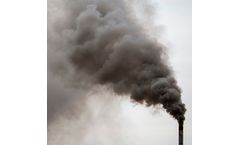
The types of pollutants can vary widely between different types of industries and between individual industrial facilities of the same or similar type, but may for example include methane (CH4), benzene (C6H6), hydrogen sulfide (H2S), and ammonia (NH3).Dust Solid substances in the emissions to air can be referred to as “dust” or “particulates”, often meaning the same thing. ...
ByOPSIS AB

Abstract: Marine industry in the past traditionally did not required any Air Pollution Control regulations for obvious reasons of locations of the ships in the open far from the residential areas and as the result the working conditions for the ships personnel where neglected as well as for passengers on the ships especially for such as cruise ships where population of passengers very dense. ...

It is an acidic, erosive gas that reacts easily with other substances to form harmful compounds, such as sulfuric acid, sulfurous acid, and sulfate particles. Sulphur oxides in the Atmosphere SOx is naturally present in the atmosphere at very low concentrations. ...

Soot can also come from cigarettes, pipes, and cigars. Soot particles are extremely small, usually less than a micron in diameter (a micron is 4.4 millionths of an inch). ...

This soot, caused mainly by the burning of fossil fuels and firewood, is often found in huge smog-like plumes known as "atmospheric brown clouds." ...
Working in tandem with the BG3, its SootTrak instrumentation measures real-time engine soot particle mass emissions and performs characterization of average soot agglomerate particle size, number and surface area. ...

Abstract. Single particle soot photometers (SP2) use laser-induced incandescence to detect aerosols on a single particle basis. ...
In this work, we exclusively characterized the BC-containing particles in urban Beijing by using a laser-only Aerodyne soot particle aerosol mass spectrometer (SP-AMS). as part of the Atmospheric Pollution & Human Health (APHH) 2016 winter campaign. ...
The observations were carried out as part of “South West Asian Aerosol Monsoon Interactions (SWAAMI)” collaborative field experiment during July 2016-May 2017, using a single particle soot photometer (SP2) that uses a laser-induced incandescence technique to measure the mass and mixing state of individual BC particles and an aerosol ...
In this study, the mixing state of refractory black carbon (rBC) at an urban site in Beijing was studied with a single 15 particle soot photometer (SP2), as well as a tandem observation system with a centrifugal particle mass analyzer (CPMA) and a differential mobility analyzer (DMA), in early summer of 2018. ...
The size-resolved mixing state of BC-containing particles was characterized by a single particle soot photometer (SP2) and their mass spectra was measured by a soot particle mass spectrometer (SP-AMS). ...

During combustion, all candles release some carbon particles (soot) that become airborne and can lead to respiratory problems, even penetrating your bloodstream through your lungs. 11. Office and craft materials Minute particles and gases from copiers, laser printers, correction fluid, graphics and craft materials can also be a source ...
What do diesel exhaust particles, black soot, carbon black and diamonds have in common? Answer: They are all forms of the element, Carbon! While diamonds may be a girl’s best friend, diesel exhaust particles and black soot surely aren’t. It’s the difference between black (Carbon) and white (Carbon)!!! ...
Abstract: The aging of refractory black carbon (rBC) aerosol by sulfate-driven chemistry has been constrained in coal-fired power-plant plumes using the NOAA WP-3D research aircraft during the Southern Nexus (SENEX) study, which took place in the Southeastern US in June and July of 2013. A Single Particle Soot Photometer (SP2) determined the microphysical ...
For the first time, an airborne laser-induced incandescence instrument (the single particle soot photometer – SP2) was deployed to measure the hematite content of dust. ...
For the first time, an airborne laser-induced incandescence instrument (the single particle soot photometer - SP2) was deployed to measure the hematite content of dust. For the Sahel-influenced dust in the SAL. the observed hematite mass fraction of dust (Fhih) was found to be anti-correlated with the single scattering albedo (SSA. k = 550 nm, for ...

A team of four young scientists have developed a special device that collects carbon soot from engine exhaust. They then turn the collected particulate matter into different kinds of ink and paint, which they named AIR-INK. ...
In other parts of the world, it is still available on YouTube with English subtitles. Fine particles - the invisible enemy The problem with air pollution is that the fine particles most dangerous to human health are impossible to see with the naked eye. PM2.5 particles are also too small for the body’s natural defenses. They can pass ...