
Source Emissions Reporting Articles & Analysis
10 articles found
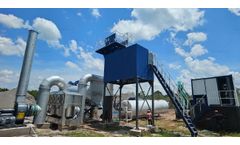
Authorities commonly require source-specific emissions inventories, stack test reports, and guaranteed particulate and gaseous limits. ...
ByMacroad

Creating emissions inventory is the first step in conducting a risk assessment. Our tools evolved to correct source emissions reports and analyze data gaps. A complete description of these steps is presented below, employing the complex and large Texas Project Source Database inventory (PSDB). ...

In 2019, the biggest source of carbon dioxide emissions in the United States came from the transportation section and energy production industry. ...
Poor air quality not only harms human health; it also impacts the structure and function of ecosystems, often far away from the emission sources. This report focuses on the deposition of airborne sulphur (S) and nitrogen (N) compounds and their negative effects on ecosystems. N- and S-containing air pollutants are released to the atmosphere by ...

EPA signs final rule requiring greenhouse gas emissions reporting. On Oct. 30, 2009, EPA issued a final rule that requires reporting of greenhouse gas (GHG) emissions from all sectors of the economy. The final rule applies to fossil fuel suppliers and industrial gas suppliers, direct GHG emitters, and manufacturers of heavy-duty ...
EPA issued a final rule in October 2009 requiring large sources of greenhouse gas emissions to report them to EPA each year beginning in 2010. ...

The EMEP/EEA Air Pollutant Emission Inventory Guidebook (formerly referred to as the EMEP CORINAIR Guidebook) provides guidance on estimating emissions from both anthropogenic and natural emission sources. It is designed to facilitate reporting of emission inventories by countries to the UNECE ...

EPA’s rulemaking approach used screening criteria to identify affected emissions source categories, including: 1) whether a source category could be covered under the Clean Air Act, 2) the ability to measure GHG emissions from the source category, and 3) the administrative burden (i.e., number of ...

INTRODUCTIONRecent public debate has focused on urban air quality, where near-source impacts are large, especially from traffic on major roadways.1,2 Our growing understanding of the health risks for populations near major roadways and major point emission sources emphasizes the critical need to study the highly localized impacts by mapping ...

Waste companies were keen that the fossil fuels saved by generating electricity from landfill gas should be offset against total greenhouse gas emissions. But environmental groups were concerned that reporting figures incorporating the offset for the energy obtained from waste would reflect a secondary benefit of waste disposal which obscures the primary impact ...