
Sox Removal Articles & Analysis
8 articles found

Gas Treatment Systems After pyrolysis, gases pass through a series of treatment units designed to capture and neutralize pollutants: Scrubbers: Wet scrubbers or dry scrubbers remove acidic gases such as SOx. Chemicals like lime or caustic soda neutralize sulfur compounds. Cyclones and Bag Filters: These systems remove particulate matter by ...
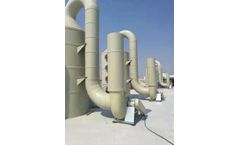
It can treat acid and alkaline waste gas economically and effectively, and the removal rate can be as high as 99% or more. [Applicable]: electronics industry, semiconductor manufacturing, PCB manufacturing, LCD manufacturing, steel metal industry, electroplating and metal surface treatment industry, pickling process, dye/pharmaceutical/chemical industry, deodorization/chlorine ...

Catalyst-embedded ceramic filters offer a way to remove NOx at lower temperatures, while simultaneously removing PM, SOx, and HCI. ...
Catalyst-embedded ceramic filters offer a way to remove NOx at lower temperatures, while simultaneously removing PM, SOx, and HCI. The technology also removes organic hazardous air pollutants, THC, dioxins, and mercury. ...
For treatment of contaminated gas, a wet removal process may be carried out first to remove dust and poisonous chemicals, but in this case, the gas temperature drops to 120-150 and must then be reheated to 600-750 F, a large heat exchanger and a considerable amount of fuel are needed. ...
Catalyst-embedded ceramic filters offer a new technological capability of removing NOX at lower temperatures, while simul-taneously removing PM, SOX and HCl. The technology also removes organic hazardous air pollutants (O-HAPS) THC, dioxins and mercury, all in a single compact system. ...
Catalyst-embedded ceramic filters offer a new technological capability of removing NOx at lower temperatures, while simultaneously removing PM, SOx and HC1. The technology also removes organic hazardous air pollutants (O-HAPS) THC, dioxins and mercury, all in a single compact system. ...
Although not yet required by MARPOL, the system was shown to be able to obtain SOx removal efficiencies of 95%. The formal certification was obtained from the Lloyd’s Register offices in London on November 2006 for larger and smaller capacity PAWDS for the processing of solid and sludge oil wastes. ...