
Refine by
Spectrometer Articles & Analysis: Older
792 articles found
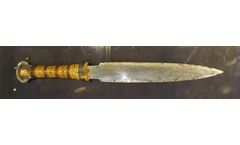
For most of human history, the materials behind great artifacts were a matter of educated guesswork. Was that dagger really made from a fallen star? How did a Roman glass cup change color from green to red? What alloys did ancient mints and silversmiths actually use? X-ray fluorescence (XRF) has quietly become one of the main tools for answering these questions. It lets scientists determine what ...

This study rigorously investigated the effect of charge-enhanced dry impregnation (CEDI) method on the physicochemical properties and catalytic performance of a ceria-supported nickel-based catalyst. The primary objective of the CEDI method was to augment the electrostatic adsorption of the nickel precursor onto the ceria support surface during the dry impregnation (DI) process. For a ...

Traditional X-ray Photoelectron Spectroscopy (XPS) is a cornerstone technique for investigating the surface chemistry of materials. However, conventional XPS systems operate under ultra-high vacuum (UHV) conditions — a controlled environment necessary for accurate measurements, but far removed from the pressures and reactive conditions most materials experience in real-world ...
In the production of galvanized rolled steel products, it is critically important to strictly control the composition of metallic coatings. Modern protective coatings on steel – from traditional zinc to complex zinc-aluminum-magnesium alloys – contain alloying elements (additions) such as aluminum (Al), magnesium (Mg) and silicon (Si). These additions have a strong influence on the ...
Following the success of our recent discussion on electrochemical mass spectrometry, we sat down with Jim Melling, Senior Applications Specialist, and Andrea Secco, Applications Specialist — both members of the Gas Applications Team at Hiden Analytical — to discuss the latest developments in the ECL-Series electrochemical cells for the HPR-40 DEMS system. In this Q&A, Jim and ...

The fast characterization of carbon black material using Raman spectroscopy is discussed here to demonstrate that Raman technology is well suited for carbon black material characterization. A portable Raman spectrometer is a very effective analytical tool for carbon black material manufacturing at-line process control and ...
ByB&W Tek
In this application note, the main ingredients of olive oil, camellia oil, arachis oil, sunflower seed oil, and colza oil are analyzed using a portable Raman spectrometer combined with chemometrics software from B&W ...
ByB&W Tek
Metrohm is proud to announce the launch of the i-Raman NxG, a next-generation laboratory Raman spectrometer designed to enhance precision and performance in routine quality control measurements. ...
ByB&W Tek
Why composition control matters Tool steel is the foundation of cutting and measuring instruments, machine parts subject to heavy wear, and dies for cold and hot forming. Even the slightest deviations in its composition can affect hardness, wear resistance, or hardenability. The result: equipment downtime, costly remelting of batches, or reduced service life of finished products. For ...

Imagine the first human settlements: people building homes, making pottery, storing water and grain. The material that made all this possible was clay. It is highly plastic, easily molded into any shape, and after firing becomes as hard as stone. Not by chance, clay tablets became the very first “pages” of human history. Even today, clay remains the foundation of entire industries: ...
Introduction In a recent article, Physics World highlighted how the integration of mass spectrometry into the electrolysis workstation is transforming electrochemical research. By synchronizing electrical signals with gas evolution data, researchers can uncover reaction pathways that were previously hidden. This capability is especially powerful for studies in carbon dioxide reduction, syngas ...

Bioinformatics: Powerful software is used to interpret the vast datasets generated by the mass spectrometer, identifying thousands of ubiquitinated proteins and creating a comprehensive map of the cell's "ubiquitome." ...
Mass Spectrometry (MS): Once separated, the molecules are sent into a mass spectrometer, which breaks them down and measures the mass of the fragments. ...
Introduction To obtain reliable and reproducible results by X-ray fluorescence (XRF) analysis, it is crucial that the sample be as compositionally uniform as possible and optimally prepared in terms of structure and surface. This is especially important when working with powdered materials—ranging from ore and coal to pharmaceutical and ceramic mixtures. In this article, we will show how ...

Available measurements before 2021 solved this with intrusive water-cooled instruments like extractive probes or laser spectrometers and demanded from the operator’s high maintenance either on cleaning or alignment. ...

The LIMS has not only reduced the workload on laboratory staff but also minimized downtime, enhancing overall productivity and operational continuity. Fieldale Farms, a family-owned business founded over 50 years ago in Northeast Georgia, has grown into one of the world’s largest independent poultry producers. Despite its growth, the company remains rooted within a 60-mile radius of its ...

At Vortex we use WRF model to produce high-resolution wind estimations. The three atmopheric reanalysis (ERA5 from ECMWF, MERRA2 from NASA and CFSR from NCEP) provides meteorological variables as wind horizontal components, temperature, pressure, humidity, etc. which are used as initial and boundary conditions for our simulations. However, the model also requires additional datasets for ...

Fusion research is the global scientific effort to replicate the energy source of the stars, right here on Earth. It’s a monumental challenge: heating hydrogen isotopes to over 100 million degrees Celsius, confining plasma hotter than the sun, and extracting more energy than the system consumes. Experimental reactors like tokamaks, stellarators, and laser-driven systems are making ...

The pharmaceutical industry is under constant pressure to ensure product integrity, regulatory compliance, and efficiency in manufacturing. As production processes become more complex, the need for real-time, data-driven quality control has never been greater. Near-infrared (NIR) spectroscopy is essential for advanced monitoring of drug manufacturing, enabling rapid, non-destructive analysis ...
Pharmaceutical manufacturers face growing challenges in ensuring product quality, maintaining regulatory compliance, and safeguarding against counterfeit drugs. Near-infrared (NIR) spectroscopy is an important tool in this arena, offering rapid, non-destructive analysis for raw material identification, impurity detection, and counterfeit screening. By integrating NIR spectroscopy into quality ...