
Refine by
Spectrometer Articles & Analysis
802 articles found
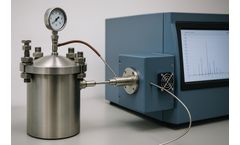
Analytical measurements were performed with the HPR-20 R&D quadrupole mass spectrometer from Hiden Analytical. The heated Quartz Inert Capillary (QIC) enabled convenient, rapid measurement of the autoclave atmosphere, while the instrument's high sensitivity reduced sample requirements. ...
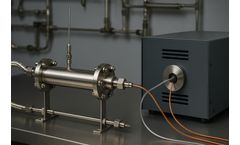
The dynamic operation of this heterogeneously catalysed process presents distinct challenges that have attracted increasing attention within reaction engineering.A capillary positioned at the center of the fixed bed enables defined sampling of gaseous samples, which are analysed by a mass spectrometer with high temporal resolution. The reactor is subjected to dynamic step changes ...
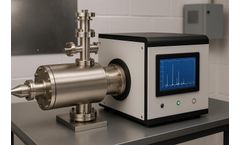
The Challenge of Overlapping Mass Peaks in Gas Analysis A mass spectrometer measures gases by converting their partial pressure into an electrical ion current. ...

Common gases include CO2, SO2, H2S, H2, CO and H2O, depending on setup and workflow.Why use a portable quadrupole mass spectrometer for volcanic fieldwork? Combines field deployability with sensitive, multi-species analysis for fast feedback and time-resolved measurements.ConclusionMass spectrometry offers sensitive gas detection, multi-species capability, and real-time ...

Time-resolved gas analysis with a quadrupole mass spectrometer – QMS, Hiden Analytical ExQ, Warrington, U.K. (now known as the QGA 2.0) – tracked the disappearance of ethanol and the appearance/consumption of intermediates (e.g., acetaldehyde, acetic acid, formaldehyde, formic acid) on the route to complete mineralization (CO2 + H2O). ...

This initiative was driven by the development and application of Ziltek’s measurement platform RemScan, a portable mid-infrared (MIR) spectrometer, initially designed for petrochemical detection but repurposed for rapid, inexpensive and precise soil carbon analysis. ...

Temperature Programmed Reduction (TPR) with quadrupole mass spectrometry (MS) addresses a long-standing challenge in catalyst characterisation: the inability to distinguish between hydrogen consumption mechanisms during reduction. Conventional temperature programmed reduction reveals when a material responds to hydrogen, but rarely explains how or why that response occurs. If quadrupole MS is ...

Catalyst deactivation studies are central to maintaining efficiency in industrial chemical processes, including petroleum refining, petrochemical production, syngas and hydrogen manufacture, environmental catalysis for emissions control, and large-scale chemical synthesis such as ammonia and methanol production. Over time, catalysts lose activity due to carbon deposition, sulfur poisoning, and ...
The STEREO (Effective point-of-use Sterilization of medical equipment using Ethylene Oxide) project was an 18-month research initiative funded by GCRF, aimed at developing an innovative on-demand production system for ethylene oxide (EO) from ethanol. The project brought together researchers from the University of Cambridge (UoC), University of Johannesburg (UJ), and Botswana Institute for ...
Hydrogen embrittlement is one of the critical barriers to the widespread adoption of hydrogen technologies, and a key aspect in understanding this phenomenon lies in accurately measuring hydrogen diffusivity in metals. In our recent study, on the relative efficacy of electropermeation and isothermal desorption approaches for measuring hydrogen diffusivity, we compared two established ...

For most of human history, the materials behind great artifacts were a matter of educated guesswork. Was that dagger really made from a fallen star? How did a Roman glass cup change color from green to red? What alloys did ancient mints and silversmiths actually use? X-ray fluorescence (XRF) has quietly become one of the main tools for answering these questions. It lets scientists determine what ...
This study rigorously investigated the effect of charge-enhanced dry impregnation (CEDI) method on the physicochemical properties and catalytic performance of a ceria-supported nickel-based catalyst. The primary objective of the CEDI method was to augment the electrostatic adsorption of the nickel precursor onto the ceria support surface during the dry impregnation (DI) process. For a ...

Traditional X-ray Photoelectron Spectroscopy (XPS) is a cornerstone technique for investigating the surface chemistry of materials. However, conventional XPS systems operate under ultra-high vacuum (UHV) conditions — a controlled environment necessary for accurate measurements, but far removed from the pressures and reactive conditions most materials experience in real-world ...

In the production of galvanized rolled steel products, it is critically important to strictly control the composition of metallic coatings. Modern protective coatings on steel – from traditional zinc to complex zinc-aluminum-magnesium alloys – contain alloying elements (additions) such as aluminum (Al), magnesium (Mg) and silicon (Si). These additions have a strong influence on the ...
Following the success of our recent discussion on electrochemical mass spectrometry, we sat down with Jim Melling, Senior Applications Specialist, and Andrea Secco, Applications Specialist — both members of the Gas Applications Team at Hiden Analytical — to discuss the latest developments in the ECL-Series electrochemical cells for the HPR-40 DEMS system. In this Q&A, Jim and ...

In this application note, the main ingredients of olive oil, camellia oil, arachis oil, sunflower seed oil, and colza oil are analyzed using a portable Raman spectrometer combined with chemometrics software from B&W ...
ByB&W Tek
The fast characterization of carbon black material using Raman spectroscopy is discussed here to demonstrate that Raman technology is well suited for carbon black material characterization. A portable Raman spectrometer is a very effective analytical tool for carbon black material manufacturing at-line process control and ...
ByB&W Tek
Metrohm is proud to announce the launch of the i-Raman NxG, a next-generation laboratory Raman spectrometer designed to enhance precision and performance in routine quality control measurements. ...
ByB&W Tek

Why composition control matters Tool steel is the foundation of cutting and measuring instruments, machine parts subject to heavy wear, and dies for cold and hot forming. Even the slightest deviations in its composition can affect hardness, wear resistance, or hardenability. The result: equipment downtime, costly remelting of batches, or reduced service life of finished products. For ...

Imagine the first human settlements: people building homes, making pottery, storing water and grain. The material that made all this possible was clay. It is highly plastic, easily molded into any shape, and after firing becomes as hard as stone. Not by chance, clay tablets became the very first “pages” of human history. Even today, clay remains the foundation of entire industries: ...