
Refine by
Spectroscopy Data Articles & Analysis
11 articles found

Infrared Spectroscopy (IR) is an experimental technique which is widely used in the fields of chemistry, biology, and material science. ...

Such analyses typically require special sample handling and highly sensitive mass spectrometry techniques.The preparation and handling of the sample is crucial for obtaining high-quality mass spectroscopy data. Protein purification, digestion, desalting, and other pre-treatment steps can significantly affect the quality of the analysis results.How Much Protein Is ...
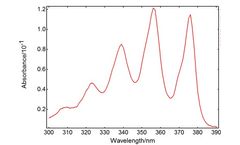
Fluorescence spectroscopy is a widespread analytical technique, often used for the analysis of a sample by defining the concentration of a chemical substance in a sample. ...

Transient absorption (TA) spectroscopy, also known as flash photolysis, is a pump-probe spectroscopic technique utilised to measure the photogenerated excited state absorption energies and associated lifetimes of molecules, materials, and devices. ...

Characterisation results show that the fresh catalyst contains highly dispersed Mo oxide species in the +6 oxidation state with tetrahedral coordination as [MoVIO4] 2− moieties. In situ X-ray Absorption Spectroscopy (XAS) shows that [MoVIO4] 2− is present during the first ODP run of the reaction cycle and is reduced to MoIVO2 in the following DP run. ...

X-ray fluorescence (XRF), X-ray photoelectron spectroscopy (XPS), and low-temperature steady-state photoluminescence spectroscopic data indicate the formation of metallic silver as well as ionic clusters. ...
Ultra–fast transient absorption spectra are inherently complex data sets to process. PyTrA is a new software system that has been written to bring together many of the most well–known techniques of analysis into one easy–to–use package. Figure of publishable quality can be generated, and advanced 3D graphs can be used to view the transient data in new ways. PyTrA ...

The mechanism of oxytetracycline (OTC) adsorption to a silty clay loam soil was investigated using sorption isotherm experiments, Fourier transform infrared spectroscopy (FTIR), and X‐ray diffraction spectroscopy (XRD). Sorption data fit well to a cation‐exchange capacity sorption model. Spectroscopic data indicate that the ...
The obtained products are characterised by Raman spectroscopy, thermogravimetric analysis (TGA), scanning electron microscopy (SEM), transmission electron microscopy (TEM) and X-ray photoelectron spectroscopy (XPS). The data from the deposition process and the characteristics of the developed materials are discussed in detail. The kinetic ...
The aim of this study was to develop a technique based on reflectance spectroscopy that is capable of evaluating small amounts of sediment dust. Laboratory simulations and two field experiments conducted in the same office environment were carried out to generate particulate dust samples based on multivariate data analyses. Spectral measurements were taken using ...
Gold nanoparticles (NPs) coated with 6-mercaptopurine-9-β-Dribofuranoside (6-MPR) have been synthesised in aqueous media by replacement of the original citrate stabiliser. Unlike virtually all other Au nano-colloids, the resulting 6-MPR-Au NPs revealed fairly strong photoluminescence with emission maximum at 580 nm and a quantum yield of 6%. The luminescence slowly blue-shifts to 514 nm after ...