
Refine by
Spectroscopy Method Articles & Analysis
84 articles found
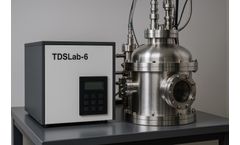
The TDSLab-6 system from Hiden Analytical, which integrates Isothermal Desorption Mass Spectroscopy (ITDMS), provides a precise method for these measurements and offers advantages over traditional electropermeation (EP) techniques. ...

With the increasing demand for precision in livestock nutrition, accurate feed analysis has never been more essential. Near-infrared (NIR) spectroscopy has enhanced quality assessment, providing rapid, non-destructive analysis of key parameters such as moisture, protein, fat, and ash content. ...

Molecular Structure Analysis Polymer structure analysis is vital for assessing their functionality and reactivity. Spectroscopic methods, including infrared spectroscopy, nuclear magnetic resonance (NMR) spectroscopy, and Raman spectroscopy, are commonly employed. These techniques identify functional groups and structural ...

Peptide drugs have specific biological activities and mechanisms of action, usually interacting with specific receptors or enzymes in the body to regulate physiological or pathological processes.Fluorescence spectroscopy is an effective method for studying the conformation of peptide drug molecules. It is also an important research tool for investigating the ...

Dynamic laser scattering Dynamic laser scattering (DLS), also known as photon correlation spectroscopy (PCS), is the most widely used method for analyzing particle size of nanoparticles. ...

The protein concentration can reflect the efficacy and safety of the drug, and it is of great significance for drug research, production, and use. Common methods for protein concentration analysis include the Bradford method, the Lowry method, the BCA method, and the ultraviolet absorption spectroscopy method.The ...

Infrared Spectroscopy (IR) is an experimental technique which is widely used in the fields of chemistry, biology, and material science. ...

Circular Dichroism (CD) spectroscopy is an experimental method used to analyze molecular structures and chirality properties, typically in the fields of chemistry, biochemistry, and biophysics. ...

This article investigates the effect of temperature on near-infrared (NIR) absorption spectroscopy and why it is crucial to control it – especially when analyzing liquid samples. These insights will help you to understand how to improve the accuracy and repeatability of NIRS measurements. ...
ByB&W Tek

NMR SpectroscopyNuclear Magnetic Resonance (NMR) Spectroscopy is also a common method for N-glycan structural analysis. By measuring the nuclear magnetic resonance signals of sugar molecules, detailed structural information, such as the conformation of the sugar ring and the linkage mode of the glycan chain, can be obtained.3. Crystallography ...

Anthocyanin analysis methods can be broadly categorized into traditional spectrophotometric techniques, chromatographic methods, advanced analytical techniques such as mass spectrometry and nuclear magnetic resonance spectroscopy, and biological assays. ...

The secondary structure of proteins mainly includes α-helices, β-pleated sheets, β-turns, and random coils, with hydrogen bonds being the main force maintaining these secondary structures.The secondary structure of proteins is key to understanding protein function and interactions. There are many methods for detecting the secondary structure of proteins, commonly used ones ...

The ATR FT-IR method (Attenuated Total Reflectance Fourier Transform Infrared Spectroscopy) is an effective method for analyzing monosaccharide composition. ...

Infrared SpectroscopyInfrared spectroscopy is an important method for identifying the structure of organic compounds, with features such as small sample size and no need for high-purity crystals. This method uses the interaction between infrared radiation and molecular substances to study the structure of peptides. ...

This article mainly discusses how to observe and analyze the conformational changes of proteins using circular dichroism.Circular Dichroism (CD) is a spectroscopic method mainly used to study the three-dimensional structure of biomacromolecules such as proteins and nucleic acids. ...

Circular Dichroism (CD) spectroscopy is a rapid, simple, and accurate method for studying protein structure in dilute solutions. ...

Infrared spectroscopy analysis is a common method of structural analysis of substances. ...
Fluorescence spectroscopy Ultraviolet and fluorescence spectroscopy is limited to the determination of a few proteins containing chromophores such as aromatic, heterocyclic or conjugated ring systems. Infrared spectroscopy Infrared spectroscopy has obvious advantages. It can identify complex systems macroscopically and measure ...
Analytical techniques used in the chemical industry for lipid analysis and characterization include gas chromatography, liquid chromatography, mass spectrometry, and nuclear magnetic resonance spectroscopy. Such methods offer critical insights into lipid components' structure, composition, and behavior, driving innovations and advancements in various chemical ...