
Spectroscopy Sample Preparation Articles & Analysis
9 articles found
Hydrogen is the most common target nucleus (1H-NMR), while other atoms such as carbon (13C-NMR) and phosphorus (31P-NMR) can also be used to obtain information on specific metabolite types by NMR techniques. Currently, 1H-NMR spectroscopy, 2H-NMR spectroscopy, and high-resolution magic angle rotation (HRMAS-NMR) spectroscopy are common. HRMAS-NMR ...
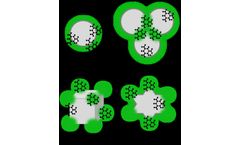
Introduction Surfaced enhanced Raman spectroscopy, (SERS), is an enhancement technique used to overcome the challenges seen with weak Raman scattering. ...

Raman spectroscopy is more versatile and can be used with a large range of wavelengths and samples in solid, liquid, gas, and gel phases (3, 4). Additionally, IR spectroscopy requires sample preparation whereas Raman spectroscopy can be performed through sample vials or packets ...
A number of gases are used in laboratories to support various applications such as Chromatography (GC and LC-MS) Spectroscopy, ELSD and Sample Preparation, to name just a few. Helium, hydrogen and nitrogen are some of the most common gases used by labs for these applications. ...
A number of gases are used in laboratories to support various applications such as Chromatography (GC and LC-MS) Spectroscopy, ELSD and Sample Preparation, to name just a few. Helium, hydrogen and nitrogen are some of the most common gases used by labs for these applications. ...
The gold standard metal measurement is Inductively Coupled Plasma Atomic Emission Spectroscopy (ICP-AES); however, sample preparation is laborious and expensive. The Xact 625 metals monitor uses non-destructive X-ray fluorescence technology. A built-in sample collection system enables near-real-time trace metal measurements in ...
Traditional wet chemical or chromatographic methods cannot be used as fast screening tools as they are time-consuming and require expertise in sample preparation and handling. However, near-infrared (NIR) spectroscopy is rapid, non-destructive, and can be used to differentiate and quantify organic compounds. With no complex ...
The gold standard metal measurement is Inductively Coupled Plasma Atomic Emission Spectroscopy (ICP-AES); however, sample preparation is laborious and expensive. The Xact 625 metals monitor uses non-destructive X-ray fluorescence technology. A built-in sample collection system enables near-real-time trace metal measurements in ...
Therefore, the analytical technique employed for this application must have the capability to accurately measure arsenic in sample digestates at the sub-ppb concentration level. A complete method has been developed for the determination of arsenic (As) in baby foods and baby fruit juices by Graphite Furnace Atomic Absorption Spectroscopy (GFAAS). This method ...