
Refine by
Spectroscopy Sampling Articles & Analysis
48 articles found

l Radiation Damage: Prolonged X-ray exposure can damage sensitive biological samples. NMR Spectroscopy: A Window into Molecular Dynamics NMR spectroscopy uses the magnetic properties of atomic nuclei to derive structural and dynamic information about macromolecules. ...

Here are some key points about CD spectroscopy.PrincipleCD spectroscopy is based on the optical activity differences after circularly polarized light (Left and Right Circularly polarized light) interacts with the sample. ...

CD spectra are based on the dependency of molecules on the differential absorption of left and right circularly polarized light.Here's how you can use circular dichroism spectroscopy to determine the absolute configuration of a molecule:1. Record the Circular Dichroism SpectrumFirst, you need to perform a circular dichroism spectroscopic analysis on your sample. ...

By measuring these absorption peaks, the chemical composition of the sample can be determined.Analysis Workflow1. Sample PreparationFor the preparation of solid samples for FTIR spectroscopy, KBr is used. ...

Infrared spectroscopy analysis of protein samples can provide abundant information about the secondary structure of proteins, making it an important tool in studying protein structure, function, interactions, and dynamic changes.Basic Principles of Infrared Spectroscopy AnalysisThe technique of infrared spectroscopy analysis ...

For example, a molecule can absorb the energy contained in the incident light, resulting in faster rotation or more apparent vibrations.Infrared Spectroscopy SamplesSamples used in infrared spectroscopy can be in solid, liquid, or gaseous states.Solid samples can be prepared by grinding the sample with an oil-like grinding agent. ...

Hydrogen is the most common target nucleus (1H-NMR), while other atoms such as carbon (13C-NMR) and phosphorus (31P-NMR) can also be used to obtain information on specific metabolite types by NMR techniques. Currently, 1H-NMR spectroscopy, 2H-NMR spectroscopy, and high-resolution magic angle rotation (HRMAS-NMR) spectroscopy are common. HRMAS-NMR ...
By analyzing the Raman scattering spectrum, scientists can identify and characterize the chemical composition of a sample. However, traditional Raman spectroscopy has limitations in terms of spatial resolution, making it challenging to study molecular structures at the microscopic level. ...

These sensors utilize advanced technologies, such as spectroscopy, to analyze soil samples and provide real-time data on nutrient levels. ...
ByJXCT

We recently launched our newest product, the IR5 FTIR Spectrometer, but what is FTIR spectroscopy? This blog post will highlight the basics of FTIR spectroscopy, discussing how it works and what the resulting FTIR spectrum can reveal about your sample. ...

Our Applications Scientist Angela Flack was recently interviewed by Chemical and Engineering News to feature in an article about how analytical chemistry can help aid the battle against food and drinks adulteration. Raman spectroscopy was highlighted due to its powerful identification and discrimination abilities, whilst also offering a non-destructive technique keeping ...
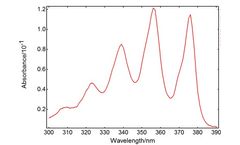
Fluorescence spectroscopy is a widespread analytical technique, often used for the analysis of a sample by defining the concentration of a chemical substance in a sample. However, measuring fluorescence from unknown samples can often be challenging even for experienced users. Below is a procedure for spectral measurements to help ...
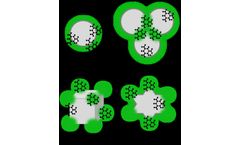
Introduction Surfaced enhanced Raman spectroscopy, (SERS), is an enhancement technique used to overcome the challenges seen with weak Raman scattering. ...
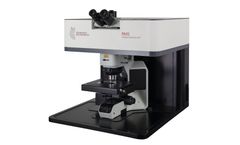
Raman spectroscopy is an analytical technique where scattered light is used to measure the vibrational energy modes of a sample. ...
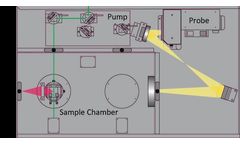
Laser Induced Fluorescence (LIF) is an optical spectroscopic technique where a sample is excited with a laser, and the fluorescence emitted by the sample is subsequently captured by a photodetector. ...
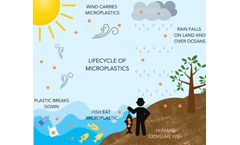
In recent years, Raman Spectroscopy has been found to be a key technique in identifying the chemical composition of ocean microplastics. ...

Personal care and cosmetic products are ubiquitous in our daily lives. Most of us wouldn’t readily go out to meet our peers without first practicing a bit of hygiene, which is why these products are so widely used. Personal care products and cosmetics are mainly applied externally (e.g., on hair, skin, and nails) as well as orally (e.g., on teeth, gums, and tongue) either for hygienic ...

Handheld 785 nm Raman is a well-established material identification technique, most notably in the pharmaceutical and defense and security markets. Now, new capabilities developed by Metrohm Raman are expected to increase the capabilities of handheld Raman in diverse industries. This article will first cover the instrumentation and then conclude with several new applications for 785 nm Raman ...
ByB&W Tek

Raman spectroscopy is more versatile and can be used with a large range of wavelengths and samples in solid, liquid, gas, and gel phases (3, 4). Additionally, IR spectroscopy requires sample preparation whereas Raman spectroscopy can be performed through sample vials or packets (3, 4). ...

Since no two elements share the same pattern of emitted wavelengths, the emission spectrum is a fingerprint that can be used to identify the elements that are present in a sample as shown in figure 1. Also, the intensity of the emitted light can be correlated to the concentration of that element in a sample. ...