
Refine by
Stationary Source Emissions Articles & Analysis
38 articles found
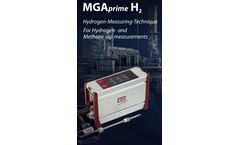
As part of the energy transition, hydrogen as an energy carrier is gaining importance, ideally produced via electrolysis using electricity from renewable sources. To continue utilizing the installed infrastructure for gas distribution and usage, hydrogen can be used as a fuel gas in addition to other applications. ...
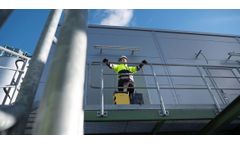
When it comes to emission monitoring from stationary sources, ensuring the accuracy and reliability of portable automated measuring systems (P-AMS) is paramount. ...

What is Industrial Carbon Capture and Storage? Industrial carbon emissions come from industrial processes and stationary emission sources, such as power stations, cement production and refineries. Industrial carbon capture and storage involves capturing CO2 at emission sources, transporting, and ...
WRPS manages one of the most challenging radioactive waste cleanup projects in US. Their focus is reducing the environmental risk posed by 56 million gallons of radioactive and chemical waste stored in 177 underground tanks near the center of the 586-square-mile Hanford ...
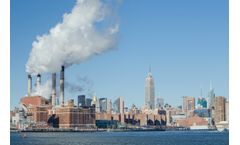
In the past, the primary origin of local air pollution has been emissions from stationary sources. These sites include power generating plants, oil refineries, chemical plants, steel factories, cement and glass manufacturing companies, space heating, and many other industries. ...

On October 12, 2016, EPA convened a public advisory committee teleconference of the Biogenic Carbon Emissions Panel. This advisory meeting discussed comments from chartered Science Advisory Board (SAB) members from the draft report on EPA’s Framework for Assessing Biogenic CO2 Emissions from Stationary Sources. The SAB ...

Many of the pollution control devices currently used to abate these emissions also emit significant amounts of carbon dioxide (CO2) and nitrous oxides (NOX). ...

Last week, Antea Group had the unique opportunity to perform a RATA (relative accuracy test audit) of the emissions from a thermal oxidizer at an ethanol production facility located in Minnesota using a state-of-the-art mobile testing laboratory. During this RATA audit, actual stack emissions levels (including NOx, SOx, CO2, CO, O2, flow rate, temperature, velocity and pressure) from the thermal ...

Dioxins and furans are produced by an incomplete combustion of organic and chlorinated compounds Generated by stationary sources such as waste incinerators, cement/metal working industry… Dispersal in the environment as aerosols, accumulation in the food chain ...
Summary: An overview of Croatian legislation in the field of air protection is given in this paper with special attention to Decree on stationary sources emission limit values. The owner's obligations concerning first, occasional and continuous emission measurements are described, especially these of Hrvatska elektroprivreda ...
ABSTRACT The work carried out by Working Group 9 within Technical Committee 264 of CEN is concerned with the development and prescription of procedures for a European Standard titled “Stationary source emissions – Quality assurance of automated measuring systems”. ...
Abstract A new method for measuring particulate matter in stationary sources has been developed by Rupprecht & Patashnick Co. ...

EPA proposed Standards of Performance for New Stationary Sources (NSPS) for emissions of carbon dioxide (CO2). The proposed standards were specific to new affected fossil fuel-fired electric utility generating units (EGUs) and were the direct result of two (2) settlement agreements proposed concurrently by U.S. ...

Industrial process operators that produce gas emissions to atmosphere are regulated by the Environment Agency. Monitoring of these emissions ensures that the environment is being properly protected and helps them manage their own impact on the environment. ...
Bya1-cbiss

The DOE, through its Existing Plants Program, is targeting existing pulverized coal (PC) power plants since they produce a sizeable portion of current CO2 emissions from all fossil-fuel-based sources, and that only about six gigawatts of the existing coal-fired electricity generating fleet is projected to retire by 2030. ...

Beginning in 2011, major sources of greenhouse gas (GHG) emissions that trigger Prevention of Significant Deterioration (PSD) permitting must implement Best Available Control Technology (BACT) for GHG emissions from new and modified sources. ...
EPA estimates that Title V permits would be required for over six million sources not now subject to the program. On June 3, 2010, EPA issued a final rule addressing greenhouse gas (GHG) emissions from stationary sources under the Clean Air Act (CAA). ...

EPA estimates that Title V permits would be required for over six million sources not now subject to the program. On June 3, 2010, EPA issued a final rule addressing greenhouse gas (GHG) emissions from stationary sources under the Clean Air Act (CAA). This controversial rule set thresholds for GHG emissions that ...
The EPA is moving forward in regulating Greenhouse Gas emissions and has published the reporting rule and its final rule to control greenhouse gas (GHG) emissions from stationary sources. If you are a major source under the prevention of significant deterioration program or a major ...
The GHG Tailoring Rule sets the timing and establishes thresholds for addressing GHG emissions from stationary sources under the Clean Air Act (CAA) permitting programs. ...