
Refine by
Steam Reformer Articles & Analysis
41 articles found

In recent years, a lot of research has been done into if Hydrogen (H2) could be a successor to fossil fuel and if it could be stored for generating electricity. With the new European green deal made by the European Commission for making Europe climate neutral in 2050, here will be more investment made in Hydrogen research to reach that ...

Approximately 70% of industrial supported catalysts utilize alumina carriers due to their ability to enhance reactions in various processes such as hydrorefining, catalytic reforming, and methane steam reforming. These carriers are prized for their mechanical strength, thermal stability, and enhanced catalytic properties, creating a robust ...
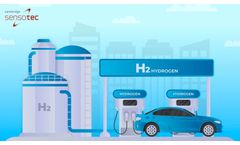
Hydrogen is emerging as a key player in the transition to a cleaner, more sustainable energy landscape. As industries and governments worldwide invest in hydrogen technologies, the need for advanced gas analysis solutions has never been greater. Let’s explore how gas analysis innovations are unlocking the potential of hydrogen and shaping tomorrow’s energy landscape, and how Cambridge ...

Introduction In the quest for cleaner and more sustainable energy solutions, hydrogen has emerged as a frontrunner. Among its various forms, “Blue Hydrogen” has been making waves in the energy sector. If you’ve landed on this page, you’re likely eager to delve deeper into the world of Blue Hydrogen. In this blog post, we’ll provide an in-depth exploration of Blue ...
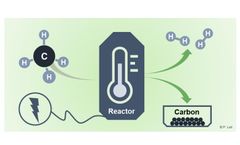
This variety of applications underscores the great potential of establishing a global hydrogen economy as a key step towards a climate-neutral future, but also calls for efficient and large-scale hydrogen production routes that can cover the increasing demand for H2. Since steam reforming of natural gas, which is currently the primary source for industrially ...

Introduction to Green Energy Solutions In our current global landscape, where the urgency for sustainable energy is more pronounced than ever, hydrogen is emerging as a key player in the arena of green energy solutions. This article sets out to explore the critical role of hydrogen in fostering sustainable energy systems. It also highlights the indispensable role of gas analysers in ensuring the ...

Introduction to Hydrogen as a Clean Energy Source The quest for clean energy has become more urgent as the world grapples with the challenges of climate change and energy security. Hydrogen stands out as a promising candidate in the clean energy landscape due to its high energy content and zero-emission profile when burned. As a versatile energy carrier, hydrogen can be used in fuel cells for ...
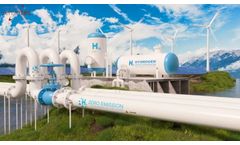
As the global demand for sustainable and clean energy sources intensifies, hydrogen production has come to the forefront of this revolution. Cambridge Sensotec, a pioneer in gas analysis, plays a pivotal role in optimising hydrogen production, ensuring efficiency, purity, and environmental ...

Catalyst research offers a vital contribution to the production of hydrogen energy. Green hydrogen has so much potential to make an impact on the productivity and efficiency of future sustainable energy sources. So, there is merit in understanding what opportunities could come from catalyst advancements and hydrogen utilization. Learn more below about catalyst development and how it can enhance ...

Unleash the power of Syngas Analysis in Biomass Gasification Applications. The aim of this blog is to decode this subject. Delve deep into the process, its impact, and its benefits. An enlightening journey ...
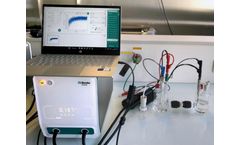
Ammonia is the world’s most common and widely used nitrogen-based fertilizer in the agricultural sector. Due to the exponential growth in world population over the last 140 years, the demand for ammonia continues to rise. Besides its value in agriculture, ammonia has also received significant consideration within the hydrogen economy for its potential as a viable hydrogen carrier to ...
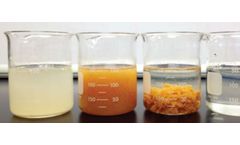
It typically utilizes a process called steam methane reformation. This method uses a vessel to react high temperature steam, a typical catalyst and methane gas to generate hydrogen. ...
Conversion of natural gas or methane to hydrogen and valuable commodities with high efficiency is relentlessly pursued. Compared with the steam reforming of methane, catalytic partial oxidation of methane (CPOM) is a preferred technology to produce hydrogen or synthesis gas with more economic incentives. ...
Electrolysis has been gaining momentum in recent times as an option for carbon-free hydrogen production from both nuclear and renewable sources. Electrolysis uses electricity to separate water into hydrogen and oxygen inside a unit called an electrolyzer. This article will outline the process of electrolysis, how it works, and its ...

Through processes that can collectively be known as “Waste-to-Hydrogen” processes (one of whose key steps is pyrolysis of municipal solid waste), hydrogen can be produced with lower emissions than the conventional route of steam methane ...

It is mostly obtained from natural gas in an energy-guzzling process that is known as steam methane reforming (SMR). In SMR, steam (water vapour) is mixed with natural gas, which reacts with the methane and breaks the gas down into carbon monoxide and hydrogen. [2] To a lesser extent, hydrogen is also produced from petroleum and coal. ...

Methanol is problematic to use- very volatile (explosive), toxic if ingested, and the price can be subject to dramatic changes as the price of natural gas varies (methanol is made on a commercial scale using the so-called steam reforming process). You can learn much about this process from the Methanex Corporation at ...
The problem with this exciting process is that the primary method of hydrogen production is natural gas reformation. Steam-hydro carbonation reforming reacts a natural hydrocarbon such as methane (CH4) with high pressure steam of up to 1,000°C in the presence of a catalyst. ...

In industry, H2(g) is produced on a large scale by a process called steam reforming, to separate carbon and hydrogen atoms from hydrocarbon fuels. ...

DRI is produced from reacting iron ore with a reducing gas generated from steam reformed natural gas. The reducing gas consists primarily of hydrogen, carbon monoxide, and carbon dioxide. ...