
Refine by
Storage Tank Leak Articles & Analysis
54 articles found

The National Park Rapid Plume Assessment showcases the efficiency of LiORA Trends real-time modeling, utilizing 8 sensors to deliver critical insights in a fraction of the time. Get insights on your plume immediately rather than years or ...
ByLiORA
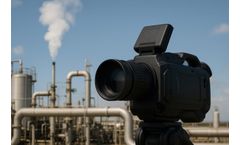
The professional must understand concepts like Delta T (the temperature difference between the gas and the background) and how wind speed affects the visibility of a plume.Identifying Complex CH4 Connections: The Science of the PlumeThe Anatomy of a Leak: A professional LDAR survey is about understanding the entire process flow.Pressure Dynamics: Leaks from high ...
ByOPGAL

As the construction industry becomes ever more complex, building owners and developers are increasingly recognizing the importance of waterproofing. Waterproofing is a critical construction strategy that aims to create a sustainable living space by increasing the durability of buildings while protecting them against water ...

The Groundwater Modeling Problem Nobody Talks About There are roughly 60,000 leaking underground storage tank (LUST) releases in the EPA's active remediation backlog, and over 1,343 active Superfund sites on the National Priorities List.(1,2) The average remediation timeline for both exceeds 10 years.(3) Most of these sites share one thing: ...
ByLiORA

Deploying RemScan for Rapid Hydrocarbon Contamination Detection and Characterisation at a Hazardous Site TMK Consulting Engineers invited RemScan to examine a potentially hazardous site where a hopper had been linked to a waste oil storage tank by a pipe suspected of leaking mixed hydrocarbons onto the soil below. ...
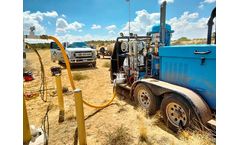
Challenge Houston-based AcuVac Remediation receives calls reporting contamination from a wide range of sources–from oil fields to leaking pipelines and gasoline storage tanks. Untreated, these leaks can pollute aquifers and flow into freshwater drinking sources, threatening public reservoirs, private wells and water ...

Yes, releases resulting solely from an underground injection control system or a leaking underground storage tank are exempt from the notification requirements under these regulations.These FAQs provide a concise understanding of the regulations' key aspects and requirements for environmental consultants and other stakeholders involved in site ...

Fuel degradation in storage tanks is a significant concern for industries relying on stored fuel, such as transportation, agriculture, construction, and backup power generation. Several factors contribute to fuel degradation over time, ...

The public’s attention is focused on the repair of roadways and bridges, but there is also an ongoing initiative to address the existing infrastructure of legacy underground storage tanks, abandoned gas stations and truck stops, that are designated petroleum brownfields. As of July 2021, approximately 21 million Americans were living within a quarter mile ...

Even before it gets to the furnace, oil can be hazardous if its storage tanks are compromised. Leaks from oil tanks aren’t covered by most home insurance policies and can cost homeowners tens of thousands of dollars to clean up. ...

As of July 2021, data suggests that approximately 238 million people live within three miles of a leaking underground storage tank (also known as a LUST). That number accounts for almost three-quarters of the entire population. ...

In aerobic environments, ammonia from agricultural pollution, sewage, decaying protein and other nitrogen pollution sources becomes successively oxidised (nitrified) to nitrite (NO2–) and then to nitrate (NO3–). Nitrate, is of course, a recognised environmental issue due to its role in eutrophication and groundwater contamination. But what about the environmental impact of ...

Fugitive emissions can be a problem for any industry, but they are especially problematic in the petrochemical and refining industries. The leaking gas from these industries is composed of many different hydrocarbons such as equipment leaks and gas from the manufacturing process that have been found to cause respiratory problems, heart disease, cancer and other ...

For example, we can use OGI cameras to detect sources of methane gas leaks on oil and gas pipelines, as well as to detect tiny leaks on large storage tanks. ...
ByOPGAL

Petrox Petrox and Methylnaphthalene Bioremediation Site Summary Petrox micorbes accelerated BTEX and methylnaphthalene bioremediation at a former fueling station in Florida. After a leaking tank underground storage tank (UST) was removed Petrox micorbes were applied to the groundwater. A temporary well showed high ...
Site Information Underground storage tank (UST) leaks from a former gas station contaminated the ground water under a parking lot fora commercial building. ...

If the petrochemical storage tank leaks, it will seriously pollute underground resources. Based on this, heavy duty geomembrane liner, such as chemical tank liners, is used as a means to prevent the leakage of petroleum products into the ground during the design and construction of the tank foundation. ...

International research in 1990 estimated that of the millions of underground storage tanks containing fuels and chemicals, as many as 25% of them could be leaking to some degree. ...

An underground storage tank containing heating oil had leaked off-site onto a residential property and migrated under the building foundation. ...

These liabilities can include present problems as asbestos in buildings, pesticides from present or past agriculture, underground storage tanks, (especially leaking ones), past spills, industrial activities that may contaminate soil or groundwater, or contamination from adjacent activity such as gas stations, landfills, chemical plants, dry ...