
Refine by
Stormwater Bmp Articles & Analysis
9 articles found
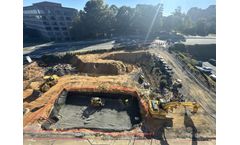
Limited Footprint Within Existing Parking Lot As part of the site redevelopment, the project required parking lot modifications, site updates, and the installation of two stormwater bioretention BMPs to meet low impact development and water quality requirements. The challenge was that the bioretention systems needed to fit within existing parking lot islands that ...

Cities, counties, and municipalities are increasingly encouraging—if not requiring—the adoption of green/sustainable BMPs, including stormwater management and low impact development (LID) strategies as outlined by the US Green Building Council's (USGBC) Leadership in Energy and Environmental Design (LEED) rating system. ...
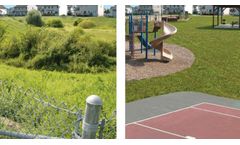
This can be done, and fees can be reduced, by implementing structural and non-structural BMPs: Non-Structural Stormwater BMPs BMPs are typically focused on reducing the amount of runoff and pollutants generated by stormwater. ...

A priority for environmental managers is control of stormwater runoff pollution, especially fecal microbial pollution. This research was designed to determine if fecal bacterial grazing by micro-zooplankton is a significant control on fecal bacteria in aquatic best management practices (BMPs); if grazing differs between a wet detention pond and a constructed ...

Many storm water best management practice (BMP) devices function primarily by capturing particulate matter to take advantage of the well‐documented association between storm water particles and pollutants. The hydrodynamic separation or settling methods used by most BMP devices are most effective at capturing medium to large particles; however, these may not be ...

Storm water is the result of rain or snow melt that collects in an area that can drain from into a nearby body of waters such as a lake or river. The water can collect on roof tops, parking lots, saturated ground, roads, etc. The problem is that many of the pollutants of our modern living such as oil, grease, pesticides, sediment, salt, and animal waste are washed away within the storm water and ...
The term Stormwater Best Management Practices (BMPs) (also known as sustainable urban drainage systems; SUDS) refers to a wide range of stormwater control systems which enable the planning, design and management of stormwater to be tackled equally from water quantity, water quality and amenity perspectives (). ...
This study assesses the performance of stormwater best management practices (BMPs) in industrial sectors and their effluent quality to facilitate the development of technology-based numerical effluent criteria. ...

Urban subsoils are often relatively impermeable, and the construction of many stormwater detention best management practices (D-BMPs) exacerbates this condition. Root paths can act as conduits for water, but this function has not been demonstrated for stormwater BMPs where standing water and dense subsoils create a unique ...