
Refine by
Subsurface Detection Articles & Analysis
24 articles found
Groundwater contamination is rarely a sudden crisis. It is a slow-moving, often invisible process; one that becomes exponentially more expensive the longer it goes undetected. For operators, regulators, and environmental managers, the real risk isn’t just contamination itself. It’s the delay in understanding it. Early detection doesn’t just improve environmental ...
ByLiORA
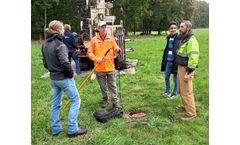
During a recent training trip to Germany, Vista Clara provided extensive, on-site, training and equipment demonstrations to European customers to highlight magnetic resonance (NMR) technology, which enables them to directly detect and image subsurface hydrogeologic properties. The training conducted near Hanover, Germany, provided a comprehensive understanding ...
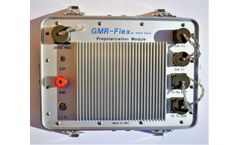
The all-new GMR-Flex Pre-polarization Module provides a controlled and boosted static magnetic field to enable precise, high signal to noise ratio measurement and imaging of water content in the top 3 meters of the subsurface, even when using very small detection loops. The GMR-Flex Pre-polarization Module and software also enable effective ...
Electromagnetic testing (ET) is a non-destructive testing method that uses the principle of electromagnetic induction for the detection of flaws in surface and subsurface levels. Eddy current testing (ECT) is a type of electromagnetic nondestructive testing (NDT) method. ...
Aircraft propellers are designed to work in some of the most pressure-filled environments. The engineering required to ensure safe travel at necessary heights and speeds is often unimaginable. Naturally, it is these speeds and environments that make aircraft propellers particularly susceptible to damage and fatigue. Propeller inspection and maintenance is a constant job, as minor damage or wear ...
When the public watches a train go by, they tend to watch the cars. But people in the industry know that the real action is in the wheels. The wheel rail interface is the most important component of a train’s operation, and it has to run smoothly to guarantee safety and efficiency. The enormous pressure that the wheels are constantly under means that wheels are ripe for encountering ...
Nondestructive testing of austenitic steels can prove challenging because of dead zones. These coarse metals create issues with standard ultrasonic testing, causing inspectors to miss crucial signs of potential distortion or flaws. What makes this even more challenging is how prevalent the use of this metal is across industries. As austenitic steel is both resistant to corrosion and durable, ...
Eddy current testing for aircraft is a tried and true method of ensuring the efficacy of metal components. While it doesn’t work for everything—like composite material—it’s ideal for evaluating crucial components such as multilayer aluminum bodies, fasteners, and bolt holes. It’s also possibly the best way to review material for surface and subsurface cracking, which ...
Steam turbines are elegant in their simplicity. Water turns to steam; steam rotates the turbines; energy is transformed into electricity. But this simplicity belies incredible complexities in their operations and tiny intricacies in their build. These intricacies demand a rigorous testing practice to make sure that the turbines work safely. Increasingly, these turbines are tested using Phased ...
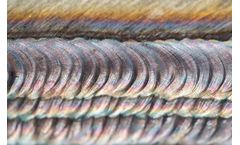
Welds are a critical element in too many large scale infrastructure, manufacturing, and transportation projects to be easily listed. Marine shipping hulls, the steel supports for buildings, oil storage tanks, and the steam turbines that generate power in both fossil and nuclear power plants are just a few of the areas where welds can be found and should illustrate how vital quality welds are for ...

MPI is considered much more accurate, effective, and efficient than inspections that use dye penetrants. MPI is excellent at detecting flaws on the surface of objects. The Drawbacks of Magnetic Particle Inspection Likely the biggest drawback of MPI is that it has a much more limited use for subsurface flaws or cracks. ...
Nuclear Magnetic Resonance (NMR) is a powerful technology for groundwater investigations, leveraging the same physics as medical MRI imaging to directly detect water and characterize subsurface hydrogeologic parameters. In geophysics, surface NMR methods can be used to non-invasively map groundwater aquifers and borehole logging NMR tools can be used to obtain ...
That’s why analysts need modern nondestructive testing (NDT) equipment that can detect even minute flaws, scanning larger areas rapidly with ease. To accomplish this, analysts should be equipped with flexible probes or mechanisms that can conform to the shape of train wheels with ease, allowing them to conduct inspections without needing to remove the wheels during the ...
Using long-range ultrasonic testing, an analyst detects corrosive anomalies over 50 feet away, including the location of the aberrations. ...
Visual inspection experts maintain that visual aids such as those listed below can enhance VI testing quality: Magnifiers Telescopes Microscopes Fiber-optic instruments Endoscopes However, none of these devices can detect subsurface indications and smaller flaws. If inspecting a painted welding sheet, for instance, the visual method would call for ...
The use of phased-array ultrasonic scanners to detect subsurface flaws and defects in important equipment helps companies prevent asset failures, accidents, and liability. ...

The HVSR survey method was trialled to determine if it could resolve subsurface basin features quickly and cheaply. This trial HVSR survey was carried out as a series of transects along open walking tracks. ...
With such an instrument, NDT analysts take advantage of the following: Multiplex frequencies that enhance detection probability for surface and subsurface flaws; and SI technology that boosts quick testing, fosters RFT, and supports up to eight coil pairs or four frequencies. ...
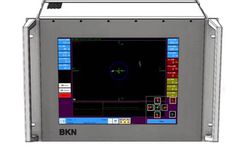
Eddy current testing technology has been widely used in the detection of metal components in the automotive and aerospace industry. ...

Up to eight field teams worked concurrently to detect subsurface utilities and obstructions prior to drilling over 450 test borings totaling over 9,300 vertical feet using direct push probes along with hollow stem auger and select rotosonic drilling methods. ...