
Refine by
Subsurface Water Articles & Analysis
95 articles found

Introduction: Why Chloride Plumes Behave Differently Chloride contamination presents a unique challenge in groundwater systems. Unlike many organic contaminants, chloride does not degrade, volatilize, or readily bind to soil. Once introduced into the subsurface, it moves with groundwater, often persisting for decades. ...
ByLiORA
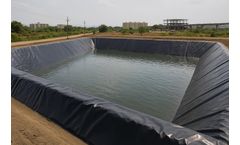
Urban township projects require integrated water management, subsurface protection and long-term durability to support residential, commercial, and utility networks. In the TATA Township Project in Khopoli, Maharashtra, Ocean HDPE Liner (1 mm) was deployed as a geomembrane barrier to support water containment, drainage control, and subgrade ...

The construction industry is constantly evolving with technological advancements and material options, and geosynthetic materials, a significant part of this evolution, provide unique solutions in civil engineering as alternatives to traditional methods. In this article, we will focus on the advantages of geosynthetics, their applications, and their combination with traditional ...
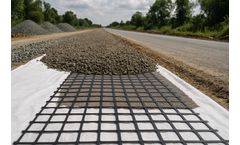
Geocomposite (5.5 mm) – Drainage and Pressure ReliefGeocomposites are engineered combinations of geotextiles and drainage cores designed to facilitate efficient subsurface water flow.Rapid lateral drainage of infiltrated waterReduction of hydrostatic pressure beneath pavement layersPrevention of water accumulation in subgrade2. ...
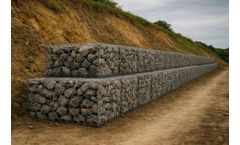
Core functional applications include: Retaining Structures: support soil masses in embankments and cut slopes Erosion Control Systems: protect surfaces from water-induced soil loss Hydraulic Structures: used in river training works, culverts, and drainage channels Slope Stabilization: prevent landslides and soil slippage Gabions are highly permeable, allowing ...
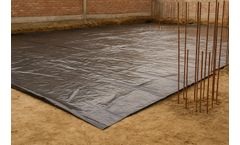
For this project, Ocean LDPE Liner (125 micron) was deployed as a geomembrane barrier beneath foundational and flooring elements to create an effective vapor barrier, prevent water migration from subgrade, and support long-term performance. Project specifics Location: Siwan, Bihar. ...
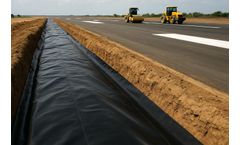
Key functional applications include: Subsurface drainage systems: Prevent water infiltration into pavement layers and subgrade Runoff and stormwater control: Manage drainage and reduce hydrostatic pressure buildup Fuel and chemical containment: Provide impermeable barriers in areas exposed to aviation fuels and lubricants Subgrade protection: Limit ...
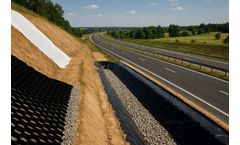
The Indian infrastructure sector is expanding rapidly, with highways, railways, industrial corridors, smart cities, and water-management systems driving demand for soil stabilization, drainage control, erosion prevention, and enhanced structural durability. ...
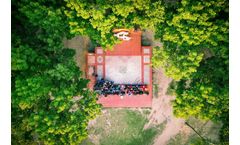
Project Overview Public infrastructure projects, particularly in the education sector, demand solutions that are durable, cost-effective, and capable of delivering long-term value with minimal maintenance. In line with this requirement, Ocean Non Wovens participated in a government school development initiative in Bhopal, Madhya Pradesh, where the objective was to improve site durability, water ...
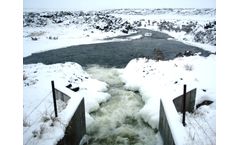
Overview The Idaho Department of Water Resources (IDWR) uses telemetry to view near-real-time water level data and track the response of aquifer recharge basins to changes in flow rates. ...

Depth of cover above the tanks is 1.2 m. All of the collected storm water from this salt shed storage area will be captured and contained within the tank modules for removal at a later stage by vacuum truck. None of the potentially contaminated salt rainwater is able to permeate into the surrounding subsurface. By managing the storm water ...
Emergency Water Stages in the Unforgiving Dry Climate of the Canadian Prairies Many businesses in the prairies rely heavily on rain and melting snow for their water supply. But right now, Alberta and Saskatchewan are facing record-low precipitation. The provinces of Alberta and Saskatchewan have struggled with droughts and water shortages for the last three years, and this year, the world is ...

The goal of this project was to pump and treat polluted groundwater, re-supplying clean water to a nearby wetland and recharging the groundwater layers of a nearby coastal aquifer, in order to prevent saltwater intrusion (Central Greece). During this project Greener than Green Technologies: designed and implement the necessary Subsurface ...
The Water Quality Center (WQC) Lab is located in the Fleischmann Building of the Environmental Research Laboratory, an off-campus University of Arizona facility. The Lab focuses on water quality and is equipped to perform state-of-the-art chemical and biological analyses. Biological analyses include bacterial and viral pathogens and indicator organisms. The Lab also performs tests on other ...
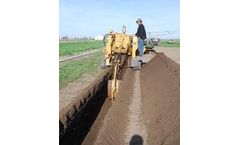
Even though water use in subsurface drip lacks much of evaporation component of Et, it can have higher transpiration rates due to higher crop temperatures (Phene, et al., 1987). The net difference between surface and subsurface drip systems in total Et requirements is small. Fertilization Through Drip Irrigation Subsurface ...
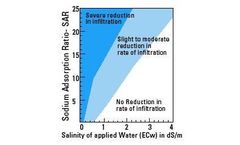
A more appropriate term to describe water entering the soil at the surface is infiltration. Penetration is a term better used to describe the movement of water through the subsurface layers of the soil, once it has infiltrated the surface. ...
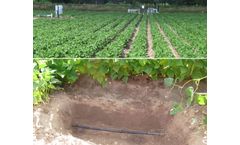
KEYWORDS. Reclaimed water, Wastewater, Reuse, dispersal, Subsurface drip irrigation. INTRODUCTION The continuing effort to conserve and preserve potable water resources emphasizes using alternative water sources for irrigation. ...
Water reuse through a subsurface or buried drip irrigation system is a unique concept that speaks directly to the issues of acceptable wastewater dispersal, water reuse and water conservation. ...
When installed, WELLBOOM® submerges and adjusts to the changing subsurface water levels. It remains buoyant and interacting with the subsurface hydrocarbons due to natural or forced groundwater movement around the ...
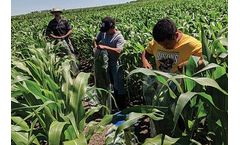
It is also starting to become clear that subsurface replenishment of soil water is another important factor affecting crop yield in dry years. “A good example was the excellent crop yields under the drought conditions of 2017. Subsurface replenishment of soil moisture by high water tables over the growing season were ...