
Refine by
Superfund Articles & Analysis
193 articles found

This research took place at the Nelson Tunnel/Commodore Waste Rock Pile Superfund site in Creede, Colorado. The Nelson Tunnel was constructed to dewater the underground mines along the highly productive Amethyst vein. ...
Operations ceased in 1943 after catastrophic flooding and it is now part of a 400 square mile EPA Superfund Site. The Argo Tunnel Water Treatment Plant (Argo WTP) began operation in 1998. ...

Project Details Iron Creek Group coordinated with a general contractor, the EPA, the state of Idaho and The Coeur d’Alene tribe to clean up over 5.2k tons of creosote contaminated soil in north central Idaho. The material was submerged in a river and was excavated for treatments. ...

The Groundwater Modeling Problem Nobody Talks About There are roughly 60,000 leaking underground storage tank (LUST) releases in the EPA's active remediation backlog, and over 1,343 active Superfund sites on the National Priorities List.(1,2) The average remediation timeline for both exceeds 10 years.(3) Most of these sites share one thing: either no numerical groundwater model ...
ByLiORA

Background Information Lower Passaic is a 17 mile stretch of river in New Jersey Decades of industrial dumping has polluted sediment Passaic River systems’ drainage basin covers 935 miles EPA declared this a Superfund Site to remove contaminants Floatables removal added to the Passaic River/Newark Bay Restoration Program ...
Approach: Site soil and groundwater were impacted with a variety of VOCs and non-standard SVOCs. Thermal Conduction Heating (TCH) was used to treat a targeted zone from 3 to approximately 28 feet below ground ...

Similarly, the United States Environmental Protection Agency (EPA) has incorporated thermal desorption within its remediation technology guidelines, incentivizing cleanup efforts under Superfund and Brownfields programs. The inclusion of this technology in regulatory toolkits fosters broader acceptance and encourages investment despite the comparatively high thermal desorption ...

This study was supported by the National Institute of Environmental Health Sciences, Superfund Basic Research Program ...
A Newterra Solution Proves to be Highly-Effective for a Superfund Site Air Purification Systems helped with the clean-up of a site that was added to the EPA’s National Priorities List (NPL) in 1990. ...

.• Example: The Comprehensive Environmental Response, Compensation, and Liability Act (CERCLA) (Superfund) in the U.S. addresses contaminated sites.5. Occupational and Environmental Health Regulations• Ensure worker safety concerning hazardous substances and environmental hazards.• Example: OSHA Hazard Communication Standard (HCS) requires proper labelling of hazardous ...

• Environmental Justice: About 60% of EPA’s inspections target communities disproportionately affected by pollution. • Superfund Program: Under this program, over 3,900 sites have been cleaned up, and enforcement actions totalling $50.3 billion have been taken. 3. ...

• Environmental Justice: Around 60% of EPA's on-site inspections focus on communities disproportionately affected by pollution, marking a proactive step toward environmental equity. • Superfund Impact: Since its inception, the Superfund program has led to the cleanup of over 3,900 sites, with enforcement actions totalling $50.3 billion. ...

When contaminated material such as landfill waste or contaminated soil is encountered, there are typically two options available - removal of the material or placing a “cap” over it. In most cases, capping is the easier and more cost-effective of the two options. Caps serve to isolate the contaminated material, preventing people and wildlife from coming into contact with ...
The EPA has issued new rules that designate two widely used PFAS chemicals, perfluorooctanoic acid (PFOA) and perfluorooctanesulfonic acid (PFOS) as hazardous substances under CERCLA also known as superfund. This will help to ensure that polluters pay to clean up contaminated drinking water with suitable treatment technologies. ...

Groundwater and soil standards are derived using specific equations from Risk Assessment Guidance for Superfund (RAGS) Parts B, E, and F. Mutagenic carcinogens require age-dependent adjustment factors. ...

As noted by the Dartmouth Toxic Metals Superfund Research Program, “This chemical has serious chronic toxicity with implications for agricultural workers and the environment” (source). ...
Congress recognized the need for better worker protection, so they passed the Superfund Amendments and Reauthorization Act (SARA) in 1986. This law required the development of health and safety regulations to address the issue. ...
But adopting containment and capping is not a sustainable or practical waste management solution as it creates brownfield superfund sites that will eventually require site remediation to accommodate population growth. ...
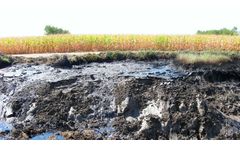
It allows DNREC to deal with locations not remedied by the federal Superfund program. The Delaware General Assembly enacted this HSCA in July 1990. ...
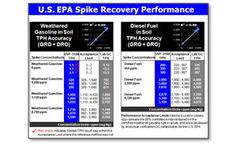
"The UVF-3100A exhibited the following desirable characteristics of a field TPH measurement device; (1) good accuracy, (2) good precision, (3) high sample throughput, (4) low measurement costs and (5) ease of ...