
Refine by
Surface Contamination Articles & Analysis
385 articles found
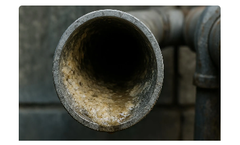
Biofilm is increasingly recognized as one of the most persistent and costly operational challenges across industrial water systems, wastewater infrastructure, agriculture, cooling towers, and food processing environments.Unlike loose contamination, biofilm forms structured microbial communities that attach directly to surfaces within pipelines, tanks, drains, ...

When chloride levels increase, whether from brine spills, industrial activity, or road salts, it can elevate salinity in the subsurface. Unlike many contaminants, chloride does not degrade. It moves with groundwater, quietly altering environmental conditions over time. The result isn’t always immediate or visible. But beneath the surface, salinity changes ...
ByLiORA
At first glance, a brine spill doesn’t always look catastrophic. There’s no fire. No dramatic plume. Often, the impact appears contained: visible on the surface, addressed quickly, and logged as an incident. But what happens below the surface tells a very different story. ...
ByLiORA
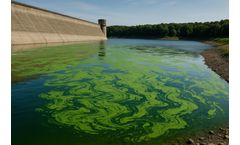
Seasonal planning and reactive treatment are no longer sufficient; utilities managing reservoirs and large surface water systems must confront risks that have built up over years. ...

Why Fume Control Matters in PCB Assembly Soldering is a precision process. Even small contamination affects joint quality and inspection accuracy. During soldering, flux fumes rise and spread across the workstation. If these fumes remain uncontrolled, they affect both workers and the PCB itself. Poor fume control increases defects, inspection failures, and rework ...
Why Flux Choice Matters for Air Quality Flux plays a critical role in soldering. It cleans metal surfaces and helps solder flow correctly. However, when flux heats up, it releases fumes. These fumes directly affect indoor air quality, especially in electronics assembly areas with continuous soldering. Understanding different flux types helps facilities control exposure and choose the right fume ...
Why High-Density Electronics Assembly Needs Fume Control High-density electronics assembly involves many soldering points within a small area. Operators work close to circuit boards for long hours. During soldering, flux and heated materials release fumes that stay trapped around the workstation. Without proper control, these fumes affect worker health, product quality, and overall efficiency. ...

A remote South American mining operation identified extensive failure in HDPE external coatings across multiple pipe segments of 14" OD API 5L Grade B. Surface contamination and mechanical stress compromised the original protective coating, exposing the pipe to external corrosion risks. ...

How biofilm control strengthens food safety programs and supports Salmonella and E. coli risk reduction Introduction: Egg washing as a critical food safety control point Egg washing is a foundational food safety step in commercial shell egg production, designed to remove visible debris and reduce microbial contamination on eggshell surfaces prior to packaging ...
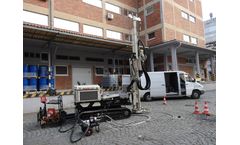
In-situ and ex-situ measurements of physical-chemical parameters, contamination levels, nZVI migration and fate and changes in biota were performed by employing field-ready laboratory equipment as well as advanced analytical techniques. CONCLUSION Pilot application of zero-valent iron nanoparticles (NANOFER 25) for remediation of a deep situated aquifer resulted in decrease in ...

The measurement of manufactured components has evolved across decades. Traditional coordinate measuring machines (CMM) set a foundation for precision validation, while optical metrology introduced speed and non-contact ...

The chemistry of a material’s outermost nanometres often determines its functional performance, making accurate surface characterisation vital for modern materials research. Yet, analysing these nanometre-scale layers is inherently challenging, as many surface-sensitive chemistry techniques, like AES, can modify the material or disturb its native chemical ...

Their rapid life cycles, high reproductive potential, and ability to travel between contaminated substrates and clean surfaces make them an enduring threat to public health and regulatory compliance. ...
Improving Air Quality in Precision Grinding Centerless grinding is a common process in precision machining, but it produces significant amounts of coolant mist. This mist can spread through the shop floor, affecting worker health, lowering visibility, and settling on nearby machines. To address these challenges, Powertech Pollution Controls provided a FumeKiller® unit, which is typically ...

Imagine the first human settlements: people building homes, making pottery, storing water and grain. The material that made all this possible was clay. It is highly plastic, easily molded into any shape, and after firing becomes as hard as stone. Not by chance, clay tablets became the very first “pages” of human history. Even today, clay remains the foundation of entire industries: ...
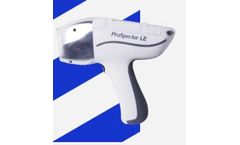
Wood has been part of human life for millennia - from a childhood understanding of it as the “trunk of a tree” to recognizing it as an anisotropic, fibrous material widely used in construction, paper production, furniture manufacturing, chemical industries, arts, and even as fuel. Chemically, wood is a complex structure containing a range of organic compounds and various chemical ...

When it comes to maintaining the integrity of cleanroom environments, human contamination remains the single greatest threat. In a recent webinar featuring Patricia Sitek, a leading biotechnologist and cleanroom consultant, and Jason Kelly, Director of Applications at Lighthouse, industry professionals gathered to discuss the critical role of personal hygiene and behavior in contamination ...

As seasonal allergies affect millions globally, the demand for advanced, reliable treatments is growing rapidly. Behind the scenes of this progress lies a powerful class of materials: fluoropolymers. While often associated with aerospace, semiconductor, and chemical industries, fluoropolymers also play a vital—yet underappreciated—role in pharmaceutical manufacturing, particularly in ...

Features smooth, corrosion-resistant surfaces to prevent contamination. Meets sanitary standards (e.g., FDA, 3A). 7. ...
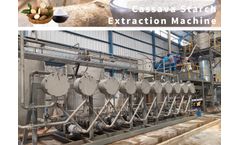
The inclusion of a cassava feeding hopper, a reliable belt conveyor, a high - performance dry sieve, and a powerful paddle washing machine enables a seamless and consistent flow of clean cassava.The dry sieve, with its sophisticated design, is engineered to effectively eliminate surface contaminants. It has a mesh size that is precisely calibrated to catch even ...