
Svoc Articles & Analysis
54 articles found
Approach: Site soil and groundwater were impacted with a variety of VOCs and non-standard SVOCs. Thermal Conduction Heating (TCH) was used to treat a targeted zone from 3 to approximately 28 feet below ground ...

Thermal desorption, at its core, is a process that harnesses the power of heat to liberate volatile and semi-volatile organic compounds (VOCs and SVOCs) from solid materials. The methodology behind thermal desorption units involves subjecting contaminated substances to elevated temperatures within a controlled environment, prompting the targeted compounds to vaporize and separate ...
By subjecting oily hazardous waste to controlled temperatures, volatile organic compounds (VOCs), semi-volatile organic compounds (SVOCs), and other contaminants are desorbed and recovered for subsequent treatment or disposal. ...

From headspace VOC analysis of water to pre-configured Greenhouse Gas Analyzers and GC-MS systems for pesticide residue and SVOC identification, we can provide you with the best solution for even the most demanding applications.Find out more about how we provide for the environmental sector.Contact Us For More InformationIf you are involved in any of the above industries and ...
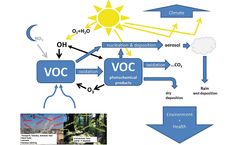
In terms of chemical definition, VOC refers to a large class of organic compounds that are easily volatile, covering a wide range, while in terms of environmental protection, it refers to a class of organic compounds that are active, volatile at room temperature, and participate in atmospheric photochemical reactions at the same time. compound. Whether VOCs, SVOCs or NVOCs are ...
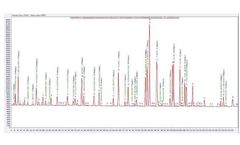
This system therefore makes it possible to extract VOCs from a liquid and analyze them by a GC, in order to identify and quantify all the contaminants in the water : BTEX as well as light to SVOCs. Concentration of BTEX/VOCs can be analysed down to 1 ng/l level and up to 15 000 µg/l with automatic embeded dilution ...

Chromatotec offers solutions for SVOCs, VOCs and PAHs in ambient air The airmoVOC C6-C20+ auto-GC-FID analyzer is dedicated to the measurement of hydrocarbons from C6 to more than C25 (linear alcanes) in the range of low ppt (ng/m3). ...

Its services cover the common organic, inorganic, biological, hazardous characteristic analyses as well as IH/IAQ. Application: USEPA 8270/625 SVOC, 8081A,B/608 organochlorine pesticides, 8082/608 polychlorinated biphenyls, and 8015 nonhalogenated organics Organic pollutants in solvent extracts prepared from many types of solid waste matrices, soils, and water samples are ...
ByBUCHI

Groundwater testing showed contamination with volatile organic compounds (VOCs), semi-volatile organic compounds (SVOCs) and lead. The discharge permit obtained for this project outlined strict effluent limitations and monitoring requirements. ...

A resultant photochemical or ‘Los Angeles’ smog comprising particulates often containing metal oxides, nitric acid, PAN, dissolved VOC’s and SVOC’s. Sulfurous or ‘London’ smog, formed from sulfurous coal burning, comprising water, ash, PAH’s, sulfuric acid and nitric acid. ...

Ultra-Fast Time Response Even for IVOCs & SVOCs Real-Time Ultra-Sensitive trace VOC analyzers from IONICON are known for their response times in fractions of a second and hence are often used to follow rapidly changing processes and VOC signals. ...
Ambient air is polluted by many semi-Volatile and Volatile Organic Compounds (SVOCs and VOCs) coming from anthropogenic and natural sources. VOCs from PAMS, TO14 and TO15 lists can be measured in many ranges of concentration, from pg/m3 up to mg/m3 depending on the location of the measurements. ...
Rapid urbanization and economic development in past decades have led to air pollution problems such as excess of nitrogen oxides (NOx), carbon monoxide (CO) and volatile organic compounds (VOCs) and Semivolatile Organic Compounds (SVOCs). Motor vehicle exhaust, industrial emissions, chemical solvents as well as biogenic emissions are the major anthropogenic sources of VOCs. ...
Ambient air is polluted by many semi-Volatile and Volatile Organic Compounds (SVOCs and VOCs) coming from anthropogenic and natural sources. VOCs from PAMS, TO14 and TO15 lists can be measured in many ranges of concentration, from pg/m3 up to mg/m3 depending on the location of the measurements. ...
Ambient air is polluted by many semi-Volatile and Volatile Organic Compounds (SVOCs and VOCs) coming from anthropogenic and natural sources. VOCs from PAMS, TO14 and TO15 lists can be measured in many ranges of concentration, from pg/m3 up to mg/m3 depending on the location of the measurements. ...

Although there have been a small number of studies analysing volatile organic compounds (VOCs) and semi-volatile organic compounds (SVOCs) in e-cig liquids, these have often required very specialized techniques. ...

This study collected water and sediment samples at various points along the river and measured concentrations of 61 volatile organic compounds (VOCs) and 128 semi-volatile organic compounds (SVOCs) for a period of 16 months (Feb 2014–June 2015). Our analyses show that elevated levels of VOCs were observed near two industrial areas, Dashe and Renwu industrial parks. High ...

Thermal desorption (TD) is widely used for the analysis of volatile and semivolatile organic compounds (VOCs and SVOCs) by GC–MS, in a variety of sample types and over a wide concentration range. ...
The evaluation of semi-volatile organic compounds (SVOCs) in environmental matrices poses many challenges for the analyst, not least the vast number that may be encountered in any given analysis. ...
Rapid urbanization and economic development in past decades have led to air pollution problems such as excess of nitrogen oxides (NOx), carbon monoxide (CO) and volatile organic compounds (VOCs) and Semivolatile Organic Compounds (SVOCs). Motor vehicle exhaust, industrial emissions, chemical solvents as well as biogenic emissions are the major anthropogenic sources of VOCs. ...